Oregon Art Beat; #1005; Virginia Flynn
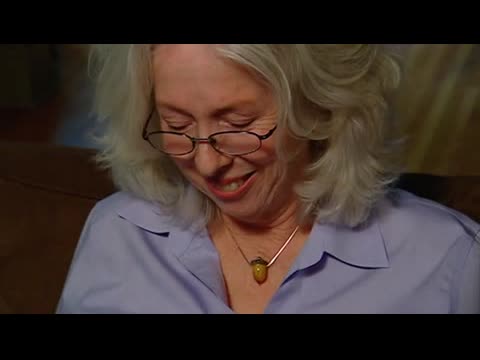
- Transcript
What appeals to you about him? This is Matisse. Yeah. I love Matisse because there is just this wonderful swatavy about him, you know. It looks, his work looks so effortless and it isn't. I know it isn't because I've tried to copy him, you know, and it's just not possible. And the thing that I think I really like about him is, not only do we share paper in a common other paper, but he can pull off color and shape and one doesn't override the other. You know, that's what I really, really like about it. His shapes are so beautiful and there's color to go with. And I guess a common thread between you and Matisse is that he did this out of necessity. This was what was available to him because he was bedroom. This was at the time he was bedroom, right, and he could no longer paint. But
well, you know, actually he did paint the paper. I think he painted in gouache, but he didn't paint, you know, he didn't do his regular paintings, but he painted flat color on the paper and then cut the shapes out. And in a way, because you went to color, or you went to paper cutting because that was a medium that was available to you at a time when you didn't have access to other technology. Well, right. I didn't have access to a press, a printing press, and I tried the method of the back of the spoon. You know, you lay your paper down on your plate and you use the back of a spoon and then you pull. And it was never satisfactory for me to draw these dry spots and everything. And once I tried driving over my plate, you know, using the wheels of my cars, the press, and that was terrible. I knew you broke, you know, or something. So ultimately I came to cutting paper to achieve
the same kind of look that I was looking for, which is like this. You know, this black and white right here on the shapes is negative and positive shapes and line, shapes and line, which is what I really love. And at some point, yeah, it didn't end for him when he was bedridden, it just kept going. And art didn't end for you, too, when you became a mother of a small child. Actually, that's when it really, really began for me when I became a mother because, well, it was a resource, you know, and it was, it sort of kept me grounded. And it also gave me something to do with her, you know, that we both enjoyed a lot. And you could go out with the simple tools of paper and a knife,
and in a short period of time, you don't want more, that satisfied that something inside of it. Right. Yeah. Absolutely. Yeah. Yeah. Just starting. I mean, I love starting, you know, when it's a black, basic, black canvas, so to speak, it's paper. And that first line, you know, it is such a commitment in so many ways, you know, and then you just take off from there. And I do draw, I do my drawing on the back of the paper and sometimes I follow that drawing and sometimes I take off from there, you know, it's just something different. But you know, I always like, I have to say that I always like the results. I don't think I've ever cut, you know, a paper cut that I did not like, really genuinely like. So I like that. Good. Yeah. Yeah. All right. Now I want to take a look at Cara Walker.
Cara. Cara. Cara. I mean, this, this body of work, pictures from another time. First of all, you know, these, these scenes, they're huge, you know, they're life size, I think, at least life size, these figures. And they're silhouette, so, you know, I love that. I can relate to this, her silhouette. But they're, her history, they're her history and they're our history, you know, for America, you know, she is telling, she's telling a story of her history and our history through with these pictures. And they're, they're kind of, you know, some of them are not easy
to look at or to take in. They're quite controversial, there are a lot of people. But it's that beautiful, stark, black and white. It's, nothing gets in the way of that, you know, there's no color, there's no texture. It's just what is and what isn't. And what isn't. Yeah. Sorry, it's a good point. They, um, there's a commonality between all three of these and your work too. There's a childlike nature too. Yet with her work, there's some sinister stuff going on, which makes the, you know, the, the childlike nature of it, with the sinister, you have that vulnerability mixed with the threat right at the same time. That's maybe what makes it controversial. For her. I mean, it's, it's not easy to look
at, I mean, maybe often we don't want to be reminded of that time, you know, of racism and slavery. But she's just putting it right out there and it's a funny play, I mean, it is beautiful and it's also disturbing, you know, it's beautiful and it's disturbing. When I think about the childlike nature of it, some of this stuff reminds me of when almost all of us when we were in kindergarten had our profile though. Yes. Um, and those are silhouettes, like from the Victorian times, I think. And people often had silhouettes done of themselves when they couldn't, could not afford someone to come in and paint their portrait. And then it became the rage, you know, then suddenly silhouettes became the rage.
I think that was like in the 1700s and paper became accessible and I think scissors were being mass -produced, you know, so people just started cutting silhouettes. It's fine one that's, um, particularly one of your favorites, one that we can put on prime time. Oh, right. Okay, let's see. Could I pick up a projector? Yeah. Let's see. Oh, I could, I mean, this is a good example of this. I
mean, something, you know, um, and for this exhibition, you read the whole wall in the whole space. So we're not really sure what's happening in these two pictures, but um, knowing Kara Walker and her history and story she's telling, you know, it has something to do definitely with slavery. Um, and misery. What do you think the black and white is so particularly good because, because both you are all three of you and Anderson and Walker, use it to tell stories. Why do you think the black and white is particularly suitable for telling stories? Well, I think that you just cut to the essence, you know, with black and white. I mean, there isn't anything else to
distract you when you look at this work. You know, what color pants is he wearing and, you know, what, what is that texture of that hat? It's just the shape. I think the shape tells the story. So an artist has to, they'll be able to capture really the essence and what you were saying the other day in a gesture. That is some of the artistry that goes into this gesture. I love gesture. I do, you know, um, when I do my work, it's all about the expression on the face and which comes from the eye, you know, just from the way the eyes are looking straight or to the side or, you know, in disbelief or whatever. And the gesture of hands and arms, you know, in the body language. I think that I'm really good at capturing that. Yeah, I love gesture and I love, I mean,
that people are my inspiration for their gestures, you know. And language too. Language, I wanted to tell you about illustrating a poem for in 20 Blackbirds and it was for my niece and nephew when they were born. I was going to do something original, you know, just my own little story. But I started looking at nursery rhymes and they are so visual. So when you think of it, four in 20 Blackbirds baked in a pie. And when the pie was opened, the bridge began to sing. Isn't that a lovely feast to set before a king? You know, it's so visual. And how they, you know, jump out of the pie and they start singing and the king is in the counting room, counting all his money. The queen is in the collar, eating bread and honey. And then at the end, the maid
is in that garden hanging out the clothes and the lawn comes with Blackbird and bites off her nose. And I was just thrilled with that nursery rhyme because I could illustrate it so well. And I think I just started paying more attention to language after that and hearing pictures. Hearing pictures. That is what I would say about your work. Your work is very narrative. Yeah, yeah. Do you still have that one? And is it all in one thing? Well, I made a book. I made a really fabulous, a courting full book of it. And you don't have it. And I sent it, you know, so I know. But I've been thinking that I'd like to do more, you know, more of those nursery rhymes and more maybe multicultural fairy tales. And like the Grim Brothers,
for instance, their stories are a little bit, you know, macaque and macaque, yeah. But I think they'd be fun to illustrate. Yeah. Well, talk about macaque. Hans Christian Anderson has got some macaque stuff. Oh, he's a promise. He does? Yes, take a look. No. See if you can't pass Christian Anderson. How are you doing? Fine. Okay, good. Okay, that's not particularly macaque. That's kind of weird. Yeah, it's a little. Yeah, sure, but you know, the thing is he did not draw out this paper cut for him. What he did was to fold it in half. And so it's symmetrical, you know, and that's what he did with his paper cuts. And then, you know, you can see where it was cut. But except for up here where he added these elements.
Look how intricate. But do you see what I mean by macaque there? Yeah, you mean the skulls? Yeah. Yeah. It's for whatever was going on with him, you know, internally. I think he was getting old, or he was not well. And the premonition stuff is death from these paper cuts. But I just love, you know, that he will take a piece of newspaper and make a figure. Or that he loved kids. And he would read to them or tell them stories and start cutting, as he told the stories. And when he unfolded it, I think everyone expected it would be a picture of the story. And it wasn't. You know, it was just something totally different. It's like telling a story about butterflies and then he unfolds it. And it's about, you know, bears and
lions and tigers or something. But, you know, look at that toilet phone. Yes. And he did it with sheep's shears. Big giant scissors. And the guy himself was a big giant guy, you know. Big, great big nose, I love noses. And great big hands. You know, I think, when you think of the story, the ugly duckling, for instance. I think he thought of himself as the ugly duckling. Who would then turn into a swindler? And he felt just fine about that. Yeah, he was. I mean, he was a little illiterate. He, I think he gravitated more toward children and towards adults. And he liked hanging out with kids a lot. And I do too. I mean, your kids were just such a short time, you know. And
you can be around kids and not have to talk about politics. So they hang out and be fresh and free with kids. Sunflower man. Made in 1848 in the village in Denmark. Is that one you would pick? Is one of your favorites? I don't know. I don't know. I don't think I would pick that one. But at least, when Millman dangling a dancer. Oh, another thing he cut with white paper. Oh, yeah, that's an opposite to you. Yeah, so he is a windmill man dangling a dancer. Although there's one where there's some people. Oh, there's a portrait that he did. And Storks. There's a Stork show up a lot. And Valerie is in his work. I'll bet a lot of people don't know that he did this. You know, just know him with his stories. Yeah. Two people hanging from a heart gallows.
This guy lost his heart, but they stole hearts. I don't think that you should have to hang for that. I also did a favorite cut when I was doing my idioms. I did one on someone stole my heart. She stole my heart. And she's running, look at this split down the road with the heart. But yeah, he's great. He's great. Oh my gosh. I just realized that he has curved shoes. And a lot of my people have pointy shoes similar to that. So he was at the end. Oh my goodness. He wasn't. They didn't know it. Yeah. Are there any shots you want to get from? You mean in general, or at least cuts? Well, I guess maybe the body of
work they had beyond before they started doing cuts is what made it important. But I guess this kind of work. Why is this so important? What does it add to what we understand about art? Perhaps that there is art continues even when you are no longer physically able to do art. You can still find a way to do art. I mean, I don't know. He did have people take his cuttings and put them up on. People were working for him. You know, somebody was and arranging them up on the wall, you know, to his specifications. Even though he no longer physically could get up and do it. So I just, I'm inspired because even when you think you're done, that's it. Your hands don't work anymore, whatever. You can still be creative. You can find a way. Okay, now, we need you to do it before. Okay.
So looking through this book, you know, I mean, I love every single solitary thing in here. But, you know, I stop on this page because there is that beautiful black and white cut. And I just go there, I respond black and white right away. But the shapes, the shapes are so incredibly beautiful. I mean, they all are actually fun. But my eye goes here. Do you think he drew first? No, I don't think he drew first. I think he just started cutting. I'm pretty sure. The bacteria is right now. Let's ask them. Okay. All right, let's get rid of that. Let's see.
Oh yeah. Kind of a female shape in here. But they're just such happy shapes. They're so alive. Yeah, I wouldn't say that. Yeah, here he's not well, you know, but these are very happy, healthy shapes. These, I don't know. I don't know what was going on with these shapes, but they're more touching. Yeah. Looks like a guy shouting out. But that's the most story like I've seen of his stuff. Yeah. I mean, right away I think of an animal shape. I see
that. This is all a stop. This may be the one that I tried to do once, you know. And then in school, I think I did a class with kids and art class with kids, where we looked at Matisse and then did some work. I mean, they all, everybody thinks, oh, that would be easy. You know, cut, cut, cut, snip, snip, snip, pace, pace. But it isn't, you know, it just. Of course, of course in a card, you know. Let's see. And then, oh, you know, I love the beautiful simplicity of this. And this, I can easily see as a monoprint.
Let's hold that page for a moment. I like the pink surprise. Good. Okay, should we go to different books? Sure. Let's go to the Carol Walker. Carol Walker. I'm in transition. Okay. Do you want me to pull it in or have her page for it? I think you pulled it in before, didn't you? Let's go ahead. Carol Walker. Which is from another time. Can I read a little bit of this?
Okay. Sorry. So, here they are. So, I mean, imagine walking into that room. A very, very, very, very powerful experience. So, she must have entire museums dedicated to her. Yeah. Yes. Let's see. Mm. I'm tired. Mm -hmm. But very emotional. She feels as though she's pleading or praying, you know. Mm -hmm. That's, that's very graphic. Mm -hmm. Yeah.
I'm just wondering if it weren't for the chains, if it would come across as a joyful piece, but I'm not sure it would. And the chains definitely give it away. I'll do some other gestures that I'm noticing that would take this. That's a car. Her crying, her mouth. Yeah. This, this is, this tension. It's not, it's, it's not like a bell, I think. It's like a bell. Mm -hmm. Before I capture that, there's, there's the artistry, I think. And there's a key. It's an interesting little symbol around her neck, a key. Oh, this is interesting. You can look at this one.
Slave owner. Mm -hmm. Terrific. I mean, some of these images are really horrific. Mm -hmm. Mm -hmm. Yeah. And the two big shoes, two big up shoes. Mm -hmm. It's a crying posture. Yeah. Mm -hmm. Oh. Mm -hmm. Yeah, that's not funny. Okay.
You can. Yeah, I realize I would love to spend more time with this book. Yeah. Actually. Yeah. Before I return it to my friend. Where I would think home museums must be devoted to her work. Oh, yeah. She lives in, I think she lives on a East Coast now, New York, yeah. I don't know, I haven't kept up with her. Yeah. It's interesting because her work is making you sigh deeply. That wasn't how you felt about it. No, no, no, no. It's very full. Yeah, I mean, look, just a cry. All those tears. It's just so much misery. And talk about gestures, you know. Look at
him looking at his pocket watch. Mm -hmm. But the thing is that all of these people came out of Kara Walkers. Imagination. Yeah. Yeah. Exactly. Yeah. Because it's just look at how it's pushing you. All right. Let's take a look at what he looks like. Let's take a look at what he looks like. All right. There he is. What if I read about him? I just read somewhere in here with a tall, tall, gangly, a little bit awkward, huge and wonderful, giant nose. But he looks for your pleasant, doesn't he? Kind. Kind. You know what he would say. He's kind.
He could have been horrible. And this might have just been one instance where he was kind, but there seems more deep than that. All right. And here's the line where he always cut with an enormous pair of paper scissors. Now they say paper scissors. But somewhere I did read that. It was she sharing scissors. Mm -hmm. And it was a mystery to me how he could cut out such dainty delicate things at their hand from his enormous scissors. Mm -hmm. That's a good one. Mm -hmm. Yeah. All his favorite things, swans and palms, little architectural elements, and stealer of heart hanging from a gallon. And someone hanging off of someone else. Yeah. That's right. There's someone hanging up in the sea, artist's liberty, and do whatever you want.
When I did that, paper cut up my dog in the park, and I put a turtle on his head, and the bread on top of that. Why not? Yeah. Why not? No, kind of a Turkish stain there. And he gave them away, you know? I mean, that's another thing that I like about him. I also enjoy making paper cuts, giving them away, passing them on. Give away art, I call it. Mm -hmm. Men in a circle holding hearts and hands. I'm also done by folding in here. Folded in half, mm -hmm. Yeah.
And I love this figure. Yeah. Talk about gesture. You've got a sense of age with that man, because of the shrunkenness of his face. Mm -hmm. And, uh, mm -hmm. He's dancing. Let's take it back to that page. Yeah. This is one? Yeah. Okay, good. Yeah. What's the title of this book? Dancing Piero, and it was made for a daughter of a physicist. Oh. Uh, he's not... This is not one before but in now. No. No, this isn't... Oh, I just saw something. Mm -hmm. That's on this one now. Um, I thought he lost his heart, but it's... Oh.
The angle of her pose, it just landed on that heart. Okay. This one was not actually folded in half, or it seems, because this long is locked, isn't it? Mm -hmm. Unless he trimmed it, but yeah. He might have, because this heart, this would have fit in there. Oh, right. Okay. Do you feel you have enough of those? I think so. Okay. Is there any others in there that you can pick up with? Ah. Okay, let's see. Does this look like he folded it? It really doesn't. No, it doesn't. I don't know. I could never. I just... It would not suit my temperament at all to do this type of paper cut. And I'm surprised that such a big guy is hands - Christian Anderson. Could
cut this. I wonder how big it is. Six and three -quarter by five and a quarter. Oh. That's about the size of the things that you... Mm -hmm. Little small one. Yeah, so you just stuck the scissors in there. You know what? Because you just stuck the point in, right? I have tried cutting with scissors. And I don't like it. I don't like it. With the knife is more like drawing. It feels like drawing to me. I don't know. I just have to marvel at it. That's all. There is a little heart. And a woman's name. Oh. So he made it for this young girl for her fourth birthday. It's so sweet. It's sweet and that it survived so that we can now see it in the book. 1874.
- Series
- Oregon Art Beat
- Episode Number
- #1005
- Segment
- Virginia Flynn
- Producing Organization
- Oregon Public Broadcasting
- Contributing Organization
- Oregon Public Broadcasting (Portland, Oregon)
- AAPB ID
- cpb-aacip-dbd9c7693df
If you have more information about this item than what is given here, or if you have concerns about this record, we want to know! Contact us, indicating the AAPB ID (cpb-aacip-dbd9c7693df).
- Description
- Segment Description
- 5 Paper Cutting paper cutting T.Sonflieth D. Kris
- Created Date
- 2008-05-30
- Asset type
- Segment
- Media type
- Moving Image
- Duration
- 00:34:10;17
- Credits
-
-
Copyright Holder:
Oregon Public Broadcasting
Producing Organization: Oregon Public Broadcasting
- AAPB Contributor Holdings
-
Oregon Public Broadcasting (OPB)
Identifier: cpb-aacip-313d0d00b8a (Filename)
Format: Digital Betacam
Generation: Original
Duration: 00:30:00
If you have a copy of this asset and would like us to add it to our catalog, please contact us.
- Citations
- Chicago: “Oregon Art Beat; #1005; Virginia Flynn,” 2008-05-30, Oregon Public Broadcasting, American Archive of Public Broadcasting (GBH and the Library of Congress), Boston, MA and Washington, DC, accessed October 4, 2026, http://americanarchive.org/catalog/cpb-aacip-dbd9c7693df.
- MLA: “Oregon Art Beat; #1005; Virginia Flynn.” 2008-05-30. Oregon Public Broadcasting, American Archive of Public Broadcasting (GBH and the Library of Congress), Boston, MA and Washington, DC. Web. October 4, 2026. <http://americanarchive.org/catalog/cpb-aacip-dbd9c7693df>.
- APA: Oregon Art Beat; #1005; Virginia Flynn. Boston, MA: Oregon Public Broadcasting, American Archive of Public Broadcasting (GBH and the Library of Congress), Boston, MA and Washington, DC. Retrieved from http://americanarchive.org/catalog/cpb-aacip-dbd9c7693df