Report from Santa Fe; Bill Richardson
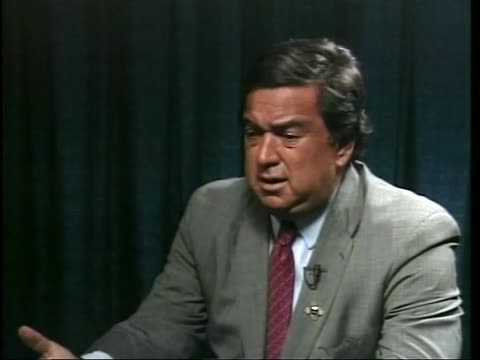
- Transcript
. . Report from Santa Fe is made possible in part by a grant from the members of the National Education Association of New Mexico. An organization of professionals who believe that investing in public education is an investment in our state's economic future. I'm Lorraine Mills. Welcome to report from Santa Fe. Our guest today is the governor of the great state of New Mexico, Bill Richardson. Thank you for joining us. Thank you, Lorraine. It's great to be with you. It's been a while. It has been a while. It's been too long that I've been reading about you because I just want to remind our viewers that the governor has a wonderful book that came out at the beginning of the year. Actually, for Christmas, it's called Between Worlds, the Making of an American Life. And it is full of fascinating stories that I've been privileged to have interviews and tape some of your exploits and adventures. And I also love that section you have about your rules about how good government works. But I have the privilege of interviewing you today at a time when you've recently met with the Mexican ambassador.
You've recently met with the president in Artisia, along with Senators Bingham and Domenici and representatives Udall and Pierce. And so, in a way, you have contacted all the major players in this huge important debate of immigration. So, tell us what's happening. We've got guard troops on the border. Give us a kind of overview of all the players. Well, first, the state of New Mexico. We have a huge stake in this issue. We're a border state. We border with Mexico. We've had a lot of illegal traffic of people and drugs at our border, Deming, Don Yana County, Lordesburg, all that area. Then you have the Mexican government, our neighbor. Great friends of the United States. We've got you well at their border. They want us to treat their immigrants, the 12 million that are in the United States. Fairly, they want us to give them some kind of legalization path. That's their basic position. Then you've got the president, who I believe is on the right track, saying that we need a comprehensive plan, increased border security, but also some kind of path to legalization.
Find those employers that are knowingly hiring illegal workers. You've got the people in New Mexico on the border that just want safety. They want to be sure that there's no cattle rustling, that there's no violence. We've stopped some drugs at the border. They want more law enforcement because the federal government, the border patrol, has not arrived as rapidly as we wanted. We haven't had the equipment. You've got our senators, Pete and Jeff, Pierce and Udall, all who have basically, we all have the same position that we've got to enhance our border and that security, but we also have to deal with the 12 million that are here already illegally in a rational way. You've got all these players and you've got all these interests. It's probably the hottest issue, not just affecting New Mexico, but affecting the country because the Congress is in the midst of debating how we're going to handle illegal immigration. Now, the House and the Senate versions of the immigration bills are so different and so extreme. The House wants to make it a crime to be an illegal alien and the Senate has a much more moderate view.
Are they ever going to reconcile those two and will anything happen before the November 2006 elections? Well, first I believe that it must happen. There has to be a comprehensive immigration bill for the good of the country and because you don't want to get this issue in the next elections, you want to end it now when the House and Senate have passed bills. The problem is that the House has passed a terrible bill and the Senate has passed a good bill. So now you have to reconcile. As you mentioned, the House has a bill that sets up a wall, which I think is unhealthy, that makes criminals out of these 12 million people, that basically says you have to deport them, that basically says their kids, two thirds of them have kids, automatic citizenship are going to lose it. Now, that is, I believe, a terrible approach and doesn't deal with illegalization. Now, what I think the Senate has done is the right path, increased border security, more border patrol agents, helped the National Guard get down there on a temporary basis. But also, they're saying to employers, you're going to get fine more and if you knowingly hire and businesses hire illegal workers, it's not going to be good for you.
And then they say for the 12 million, here's an earn legalization problem. And I think every city in New Mexico has undocumented workers. And what's going to be the alternative? We got to deport them all. So what I believe the Senate has done is said, all right, let's take a 12-year period. And in that 12-year period, let's have earned legalization based on good behavior, not amnesty, not automatic citizenship, but after certain periods of time, if you speak English, if you adopt American values, if you pay back fines for coming here illegally, if you pay fines and back taxes, and you pass a background check, you get a shot at eventually becoming either a permanent residence or getting a green card or eventually citizenship. But you don't get ahead of the line of those that are trying to get here in a legal fashion. So my worry is that the Senate bill, because the House bill is so bad, will have to compromise a lot. And then you end up with what is called the bad bill.
And I was very pleased that President Bush today, in Artesia, recently said, we need a comprehensive bill. And let's be decent about this debate. Let's keep the politics out of it. And I said to him, we rode together in the helicopter, Marine One. And I said you did a good job, but you've got to be the main guy pushing the Congress to do the right thing. You can't step aside, get in there. And in the speech he gave in Artesia. It looks like he's getting in there and that's really needed. Well, he was getting in there literally with his shirt sleeves. Well, it was so hot. But it was so hot, but it was a beautiful New Mexico day. One of the things the president said was, he said, I'm from Midland. This is like my territory. I love it here. I love the open space. I love the people. And of course, you got 85% in Artesia, which I don't get.
But he feels a real connection with Southern and Eastern New Mexico. And you like that because what we want is for the president and the federal government to that little training center in Artesia that graduated 500 Border Patrol agents and has grown enormously is great for economic development and jobs for the state. But also it's reforming a vital function, training Border Patrol agents, air marshals on terrorism. So New Mexico is not just getting good jobs out of it, but helping the country manage this immigration crisis with trained Border Patrol agents. They were teaching him Spanish. They were teaching how to detect illegal workers and trains and cars teaching how to use radio equipment. So it was very, very pleasing to be there and having the president endorse what the the Artesia training center does. Now let's backtrack a little bit. When did you declare a state of emergency on New Mexico for six months ago?
And what happened, Lorraine, is I went down to Deming. I flew in a helicopter and I had gotten complaints from ranchers from the folks in Columbus and Lord'sburg Deming that the flow was huge of illegal workers and drugs were coming in on the other side. And there was this little town across Columbus call us Chepas, which was a staging area for all of this illegal traffic and nobody was helping him. So I declared a state of emergency to send a signal to the federal government. One, we need help. We need more Border Patrol agents, but also to trigger some funds that we could use in an emergency to hire law enforcement to patrol the border. We were able to do that. We heard about 2025 new people that the sheriffs and law enforcement in Doniana and in Luna County, the Deming area that that they can hire to deal with the problem. So you leveled that staging area and I just noticed that recently that Mexico has made some efforts on the Texas border. They have now set aside a preserve that kind of parallels some parks on the other side of the Rio Grande in Texas that will be it's going to be a total of three million acres where there will be no roads.
And that's one thing that the coyotes and the letters need is roads to get you close enough to the border you can walk across. But there will now be in Texas this huge area where there are no roads and where it's way too long. And we have to do a lot more on border security and what I said to the Mexican ambassador, who was my guest at the governor's mansion, I said, look, US and Mexico, New Mexico and Chihuahua are good friends. But you guys in Mexico got to do more. You got to do more in terms of stopping some of the coyotes and the smugglers. You got to do more in terms of joint patrols at the border. Why don't we both work to create jobs on your side so that there isn't such a flow. And I said, you're kind of letting us do all the work. You got to do more in as friends. You should do more. Well, they're in a presidential election and they have stepped up a little more. You mentioned Las Chippas, the governor of Chihuahua actually at my request tried to deal with some of those staging areas in that little town of his and demolish some of the buildings, abandoned buildings so that the smugglers couldn't bring in the illegal drugs and illegal workers.
So he actually helped the governor of Chihuahua, his fellow governor from New Mexico. So there is cooperation, but we got to do a lot more. Well, another thing that some of the pundits have talked about is that if we had a way to help the Mexican economy, they wouldn't have so many people that desperately need to work to support their families. So I know you've done a lot of across the border outreach in terms of economic development. Is there, do you have any plans working in that direction? Well, yes. For instance, the border trade between New Mexico and Chihuahua in close to four years, we've tripled it. So that helps our side. And New Mexico compared to the other border states gets less of a flow than Arizona and California and Texas. But it's still a problem because it strains a lot of our hospitals, our schools. But we're also a humane state. You know, we're the only state that early on said, we're going to let the undocumented workers be part of our society.
We're going to give them drivers licenses so that they are able so we can identify them so that they get higher so that they get insurance for their vehicles. Now, scholarships and colleges, as long as they follow the law, as long as they qualify like any other New Mexican, let them compete for them. So we've had a different approach, but the border emergency, I believe everybody agreed we have to do because you cannot reward illegal behavior. The law is that you can't come in unless you have proper documentation and you get there at the end of the line. So you and the governor of Arizona, Janet Napolitano, how do you say her name? Napolitano. Napolitano. She's an Albuquerque girl, you know. Yes, she is because her father was a very good Republican. Dean Napolitano at the University of New Mexico. Dean of Medicine. So together, you formed a kind of...
We did. We both did a border emergency within days. We both have serious border problems. Border enhanced protection. That's not the Arab highway that they grow that stretch of the Arizona border where it's not illegal. But you know, you know, Lorraine, the fact that we made these border declarations was smart because we got a lot of attention to our problem. And shortly thereafter, New Mexico was promised 265 additional border patrol agents, more sensors, more equipment, more detectors, some of those aerial vehicles. We were promised that. So I'm a little distressed because not all 265 have shown up, but at least they're in the pipeline they're coming in. And I actually saw some of them being trained at that law enforcement academy in our t-shirt. Well, when you declared an emergency, it really just galvanized everyone to look at the problem and to wake up. And I know the people in those counties in Luna County and all that area were so grateful, although they did have... They said they had a lot more press than they'd ever seen.
Everyone descended. Everybody descended on Deming and Largsburg and rightly so Columbus all that area. Now, one thing about Janet Napolitano before we leave, she's the one who said, well, you can build a fence, but if you build a 50 foot fence, somebody's going to build a 51 foot ladder. So what about that whole issue of the fence? Well, I don't believe we should erect walls. It's such a bad symbol. Remember Ronald Reagan when he said, Mr. Gorbachev, turn down that wall. We were a country of freedom. And that's not America. Now, they will run over that wall or cross it. So I don't believe it's practical. What is needed is more detection, more human beings patrolling the border. And those human beings should be border patrol agents. Now, I've gone along with National Guard and we put some of our National Guardsmen as long as it's short-term because they're not trained for that. Our National Guardsmen are in war as they're helping fight forest fires. And as governor, I have control over the guard so that if say we have a fire in Deming or in Touls or in Mara, we can deploy those forces.
And so we got those assurances. So we're going along with the administration on the use of the National Guard as long as it's temporary. It's one or two years until we train all the necessary border patrol agents. Back to the wall. We're not recently at the National Conference of Mayors. Yeah. Where they said it's just such a bad... Most of the mayors led by the mayor of Albuquerque said it's... Why are rec walls? It's such a bad symbol. We have to trade with Mexico. We want a border to border educational and commercial ties. And this is not going to work. They all also said let's have more border patrol agents, which has been what I've been advocating and what is needed more. But also it's not just more border patrol agents. We have some very good equipment to detect illegal traffic, sensors, these cameras, these surveillance equipment that you can detect from the air, man vehicles.
And we need more of that. So to stretch this metaphor a little bit, maybe not walls, but somehow the common denominator is maybe good fences with good gates. And practical measures, practical equipment, and border agents. The reality is that the traffic into the United States is illegal. It's against our laws. You have to have proper documentation. You've got to get at the end of the line. One of the worries is that in those individuals that come forth, there's a lot of bad elements. The coyotes, they bring in drugs. They bring illegal traffic of people. They exploit these people. So give us a thousand bucks and we'll get you across. And then sometimes through the desert, a lot of these people die. And then possibly a terrorist. What if somebody sneaks by? It's not impossible.
The reason I declared the border emergency, I was going in the helicopter and I saw no border patrol. I saw, I said, well where's Mexico right there? Where's New Mexico right here? I said, well, I just saw these folks going right in. Well, that's the problem, sir. I said, that's what I said, well, this is an emergency. We got a problem here. And then in Deming, I was hearing from people that some of their cattle had been killed. They'd taken shots at the mayor of Columbus. They were afraid, ranches there, the Johnson's. I said, we got to do something. I'm getting no help from the federal government. So we got some attention. And I think as you said, it focused people on resolving the problem. And it made you, in many cases, a spokesperson for the issue because you do a lot of national TV. And the one man that has probably brought this issue more to the forefront than anyone else in the media is Luda. I'm on with Luda. Sometimes we spar, but we respect each other, but we have different positions. Well, what is the main difference between your position and his position?
Well, here's where we agree. Both Luda and I agree we need dramatically stronger border security. And we're 100% there. He wants to stop right there. I want to say, okay, well, you've resolved the problem partially of those coming in illegally. What do you do with the 12 million that are here? He really has no answer, but he's against the legalization plan, which is not citizenship. It's not amnesty. What we're saying is over a period of time, those of you that are here, if you have American values, if you speak English, if you pass a background check, if you pay back taxes, you pay fines, you go into a certain category, which could be permanent resident, or you get a green card to do this job that no one else wants to do. And eventually, if you really, really behave and satisfy all those conditions, you know, you get a shot at citizenship, a shot at it, not automatic. What else are we going to do? I say to people, are you going to go knock on the doors of 12 million undocumented workers? You're going to less cruises and say to some cook, are you legal or illegal? Show me your papers. If not, I'm going to deport you.
Who's going to do that? The police law enforcement? You can't do it. Well, the late night comedians had an answer for that because he said, the critics say, how are we going to round up 10 million people and take them to another country? And the answer was, well, ask Mexico, that's what they did. Mexico's do how to do it. Ask President Fox, right? Yes, yes. Now, what does President Fox's stand on all of this? Well, he recently took a trip to the Southwest. He was in California in Utah. And I was pleased with some of the things he said, which is very much in the right direction, that Mexico is going to cooperate more on joint law enforcement. But I still want to see a lot more, that Mexico is going to cooperate in sharing information. I mean, we want to know, for instance, with the driver's licenses, a little more if we're going to give somebody a driver's license that it's undocumented worker. We want to know that person has solid identification of background check. And sometimes we have difficulty getting that information. So President Fox, when he came into office, he and Bush got together and President Bush said, I'm going to deal with the immigration issue.
And we haven't been able to. And it's because the Congress has been unwilling to deal with it. And so all of us here in New Mexico and the border around the country are victims of the Congress saying, this is too hot a political issue. We're not going to deal with it. And the divisions are so strong that they haven't produced legislation that deals with the problem. So we're all urging the Congress, for God's sakes, deal with this problem. But could they deal with part of it before the election, like border security? I think everybody kind of agrees on it. Yeah, but see, then you're dealing with only half of the problem. Yes. You got to deal with it together. They want to get the half that's not going to get them burned. They all want to get reelected as it is really out of issue. Well, but you know, the politics here, Lorraine, is if you only deal with border security, you're going to have a lot of Hispanic voters around the country. Saying, all right, that's fine. We're for that. But what about the 12 million? When you got to deal with that? And that is the controversial part of the bill that probably has the least support, but makes sense to me to do.
And this is where I agree with the president. He's saying you got to deal with both border security and legalization. You got to deal with the people that are trying to come in. Let's keep them out. But then what do you do with those that are here? Let's find a way to deal with it in a rational, humane, sensible, civilized way. Well, it was interesting when the House passed their bill making it a felony to be an illegal alien. That's, I believe, what prompted those huge... Well, that's so unrealistic. That's so unrealistic. Take away the citizenship of their kids. Literally say you're out. Throw them out. Nobody wants to reward illegal behavior, but you want to be practical. Now, the way you deal with that is by saying we're going to plug the border. We're going to do it carefully. We're going to do it with more equipment, more people, because in Mexico you got to do a lot more. And if you're a business and you're hiring somebody illegally, you're going to pay a fine. We haven't enforced that. So we've had all these sort of approaches without any teeth, and that's why you have such a huge problem.
And it's dividing the country. We're a nation of immigrants. And we're really not just talking about undocumented workers from Mexico. They're about 85 percent, but this affects legal and illegal immigration that comes in. Legal migration from Ireland, from Italy, you know, from Europe, in the Far East. So we need to really think through both legal migration and illegal immigration and put it in one package. And the Senate has done that, but the House hasn't. I'm sorry to talk so much about process, but that's where we are right now. Well, we don't have much time, so I'm going to skip just some other very, very quick topics. You've gotten wonderful press about the roadless initiative. Can you talk about that a little bit? Well, we want to protect the New Mexico, the Valle Vidal, Hunter's Recreationists, Anglers, Conservationists. This is a sacred area of New Mexico, but the administration has come with basically roadless rules, which means that in the national forest, they're going to build all these roads for development, not to protect the species that they're going to have oil and gas.
We don't need to, I think there are plenty of areas where we have oil and gas, but you take the Valle Vidal and other parts of the state. So what I'm saying is we want to petition, prove to us for service, that you're going to do this sensibly. And why do you need to, for instance, have roads in the Valle Vidal, which even the Hispanic land-grant families don't want changed? Nobody in New Mexico wants change. Congresswoman Wilson and myself were on opposite sides, agree. So does Hunters and Conservationists and everybody. Another, you were under your leadership, we were one of the first states to join the greenhouse gas emissions. What does it call the Chicago? The Chicago Climate Change basically says New Mexico. We're going to abide by treaties that say we should reduce greenhouse gas emissions because of the great threat the climate change. And we're going to do it in cooperation with our utility companies, our stakeholders, we're not going to do it unilaterally.
So New Mexico is the first state to say we're going to be sure we're not going to pollute the air. So even nationally, when this administration will not go along with the Q&A, we're doing it on our own. We're doing it as we're solving many other problems in the right way. That's right, but so we're about 300 other cities. So it's the state of New Mexico and 300 other cities that are doing it. And more to come. But I'm really happy too. We've gotten great statistics lately. We've reduced DWI fatalities by 12% within one year. We're really making a lot of progress on DWI. And I'm so happy because we've thrown the kitchen sink at the problem. More penalties, more law enforcement, ignition interlocks, just visiting with the head of mothers against drunk driving. He loves what we're doing, especially the ignition interlock, which he was telling me this guy that you're able through your vehicle in 10 years is going to be able to tell you whether you've had plenty to drink and you shouldn't drive. You get in the car and there's going to be something without an interlock. The technology is advancing so much.
Another thing that I'm so pleased that you've done. When you took office, we were number 50 in immunizations, childhood immunizations. Now we've moved up to number 15. And with programs like the Health Department awarding pediatricians who's 90% of their practice are immunized. We've got like this kind of, we're surrounding the problem of childhood diseases. And I think we may be soon one of the patients. We may be soon be one of the best. You know who's responsible for that Barbara Richardson, my wife, who's taking this cause on like gangbusters. And she goes around to talk to schools, to kids. And she's the reason that we have this dramatic progress. She has taken this issue along with reducing domestic violence and really focused on it. She deserves a credit. Well, we will give her the credit because that's, you know, it's an unnecessary evil. Why should children have measly mumps and the ballad here came mumps back again. And also domestic violence is this secret that nobody talks about. Nobody talks about it.
It's really, really good. Well, the fact that nobody talks about it, but we've increased penalties. We've set up treatment programs. We've got hotlines and we're actually making a dent in the problem. It's not solved. It's still big. But more people are talking about it. And there's more community efforts to stop it. And it's something that I believe women have really rallied around to do something about it. Now, I really appreciate the time today that you've taken to present so many aspects of the immigration problem. Is there any last message you'd like to deliver? Well, my last message is that for New Mexicans, this is a bread and butter issue for us. Let's just do the right thing. Let's forget about the votes where the politics are. The right thing to do is to protect our borders, all the way from Dognana County to Silver City. No illegal traffic. Let's try to stop it of people, of drugs, of violence. That's number one. Number two, let's find those that continue to businesses that hire unknowingly illegal workers. Let's increase the good relations we have in New Mexico and Chihuahua, US, and Mexico.
To get Mexico to do more. And then lastly, this is the controversial one. This is the one where probably politicians lose votes, like myself. But do the right thing with a 12 million that are here. Don't give them citizenship. Don't give them ethnicity. But give them a chance with certain benchmarks to apply for resident status, for a green card, as long as they embrace our values, learn English, have a background check, pay back taxes, pay back taxes, pay fines. But let them compete for that prized American citizenship. But don't be a nation that says we're going to deport you. We're going to throw you out. You're a criminal now. That doesn't work. That's not America. Well, thank you very much. Our guest today is Governor Bill Richardson. Thank you for taking the time to explain. It's great to be again on your program. Yes, it's great to have you. And I'm Lorraine Mills. I'd like to thank you our viewers for being with us on report from Santa Fe. We'll see you next week.
Report from Santa Fe is made possible in part by a grant from the members of the National Education Association of New Mexico, an organization of professionals who believe that investing in public education is an investment in our state's economic future. Thank you.
- Series
- Report from Santa Fe
- Episode
- Bill Richardson
- Producing Organization
- KENW-TV, Eastern New Mexico University, Portales, New Mexico
- Contributing Organization
- KENW-TV (Portales, New Mexico)
- AAPB ID
- cpb-aacip-9273987692c
If you have more information about this item than what is given here, or if you have concerns about this record, we want to know! Contact us, indicating the AAPB ID (cpb-aacip-9273987692c).
- Description
- Episode Description
- On this episode of Report from Santa Fe, Governor Bill Richardson discusses his recent book, “Between Worlds: The Making of an American Life,” about how good government works. He also discusses immigration reform, and his recent meetings with the Mexican Ambassador, the President in Artesia, Senators Jeff Bingaman, Pete Dominici, Tom Udall, and Steve Pierce. New Mexico is a border state and has had a lot of illegal traffic of both people and drugs. The Mexican government wants their immigrants to the United States to be treated fairly. The United States President wants increased security at the border and more law enforcement. Governor Bill Richardson believes a comprehensive legislative bill is needed to help deal with illegal immigrants. Bill Richardson believes that the right thing to do is to protect our borders, stop the violence and drugs, find businesses that unknowingly hire illegal workers, and treat the 12 million illegal immigrants fairly that are already in the United States so that they can obtain citizenship. Guest: Governor Bill Richardson. Hostess: Lorene Mills.
- Broadcast Date
- 2006-06-10
- Asset type
- Episode
- Genres
- Interview
- Media type
- Moving Image
- Duration
- 00:28:40.646
- Credits
-
-
Producer:
Ryan, Duane W.
Producing Organization: KENW-TV, Eastern New Mexico University, Portales, New Mexico
- AAPB Contributor Holdings
-
KENW-TV
Identifier: cpb-aacip-06089f263c7 (Filename)
Format: DVD
If you have a copy of this asset and would like us to add it to our catalog, please contact us.
- Citations
- Chicago: “Report from Santa Fe; Bill Richardson,” 2006-06-10, KENW-TV, American Archive of Public Broadcasting (GBH and the Library of Congress), Boston, MA and Washington, DC, accessed June 9, 2026, http://americanarchive.org/catalog/cpb-aacip-9273987692c.
- MLA: “Report from Santa Fe; Bill Richardson.” 2006-06-10. KENW-TV, American Archive of Public Broadcasting (GBH and the Library of Congress), Boston, MA and Washington, DC. Web. June 9, 2026. <http://americanarchive.org/catalog/cpb-aacip-9273987692c>.
- APA: Report from Santa Fe; Bill Richardson. Boston, MA: KENW-TV, American Archive of Public Broadcasting (GBH and the Library of Congress), Boston, MA and Washington, DC. Retrieved from http://americanarchive.org/catalog/cpb-aacip-9273987692c