Biography Hawaiʻi; Koji Ariyoshi; Interview with Roger Ariyoshi 7/21/04 #3
- Transcript
Well, that's different for, and I guess, you were the younger kid, I could hold this one too. You know, it's very different how we approach stuff. That's it, we do it. Yeah, the next little bit will be about the 50s and maybe some of the stuff, like the spin facts stuff. You've already talked about some of that, but let's go through that, the record, but the office was like, do you remember that? You know, a little record, all I remember was it was, you know, a quonset hut, sort of, a building. Yeah, like a quonset hut. Is that shared? It was an 8011 shared, and if I'm not mistaken, it was the address. And their mental is across the street, and I think my aunt had a restaurant right next door. But the back of the building was, I think, made up kind of like a quonset hut.
And all I knew was people would come, and he'd do printing work, and there would be this big press which I would see my father, and I think it was Wednesday nights, feeding the paper. And no matter where he was, he'd always have articles in his hand, and be marking the articles, or writing something. Did your mom at home or wish you had the record? My mom used to help at the record, I guess with printing things and stuff, and she also worked at the ILEW. She was a janitor's there, and that was a job, you know, to bring some income to the family. But she'd stay with my father day and night, and I remember my father would say,
go home, take the kids home, you know, so my mother would bring me home, and we'd have dinner, and maybe later my father would come home, maybe not. But we never waited, you know, it was my mother's job to make sure we got cleaned up, took a bath, did our homework, you know, and off to school the next day. And sometimes my father would be coming back in the morning, and I think, I guess he works at night, too. I wasn't really clear about that. We were only like, how's four or five years old? I'm sorry, she shared some of your impressions about the fallout and the smith act in the arrest. She shared some other ones, and that must have been a special and hard time. I guess I was too young, it's really hard for me to know how really hard it was on my mother and my sister.
I know my mother's family is off on the mainland, and they told her, you better come up, and you better stay here, and bring us with you. My sister and I were with her, but she said, no, our place is here, my husband's in jail, and I have to stay here with him. My mother and father never really elaborated about that time. I guess it was very hard for them. My mother never complained about life during that time. Even in later years I asked her, how hard was it? She says, well sometimes we couldn't buy what we wanted, the food we wanted, but we managed, and we got to know who real friends were, who had come to help us, and bring food and share food with us. I tried to comfort us. My mother had no family here, it was just on my father's side, and as explained earlier, they were afraid.
Everybody was in pretty much fear, so it's hard to have people come and help you, but those who did were very brave people and not afraid to do so. People like Willie Kroger, Ed Robo, David Mitsui Thompson, helped my mother a lot, made sure she was okay, and even in socializing I think they were the only ones in 50s and 60s who I recall seeing come to our house. Come to the apartment we lived in and have discussions with my father. Aside from that my father was not really one for socializing, always too busy doing something, putting out the paper I guess. The Honol record was where we grew up, I remember I used to sleep in the cardboard boxes that the newspaper came in, because I thought this is a great bed, you know, but that's how we grew up.
That's what I asked myself very times. How did we get into the flower business? Actually after the Honolulu record, and then I think it was the Hawaiian reporter, and that close, my father went to work for the teamsters of Rutledge. During that time he had met a man, I think was Marion Sexton, he was a radio person, but he talked my father into opening a flower shop together, and that he would take care of everything. So father, I guess this area would be an interesting thing to do. Apparently when he found out after a while was that Marion knew nothing about flower shop business or flowers to begin with, and either he was going to have to close or my father would have to do something about it.
So he went and quit his job, took on the flower shop full time, and just by books talking to people and things and learn how to do the flower business. Primarily, well, flower arrangements, you know, for local people in the hospitals and things, a laze for people, because we were right in Waikiki, and also funerals, weddings, things of that sort. And I realized one of the things someone commented was, and which my father learned himself was, you know, these bridal bouquets, very minute little flowers and things, and I said, I've always amazed at how your stubby fingers can make these things. And he says, you can learn anything you want, even you can learn this. He says, you read the book, you follow the pictures, it'll come to you sooner or later. I said, no, you have to have some kind of talent or art for it, right?
You can learn it, you learn it, and that's how we helped him in the flower business, grew up in it, you know. It wasn't his first love, of course. It was a way to make a living and to provide for our family, you know. I think one of the joys he had was in later years teaching at the university, teaching ethnic studies, you know, talking to the students, and they also came to help him at the flower shop, you know. Helping deliver flowers and things of that sort, but also get, I guess, more time to talk to him, because time was limited to talk to my father. Even I found that to talk to him, I'd have to catch him late at night when my mother would say, I think your father would appreciate if you could give him a massage.
So he's come home after work, tired out, he's 11 something at night, I said, no, okay, I give him one. But that was the time we had our best conversations, you know. So I guess like the others in teaching in ethnic studies, you know. To get more time, what they helped him, helped him at the flower shop and talked to him, got to know him better, you know. And I think it was a joy for him, you know, teaching those classes. How were they as flower assistants? How were they as flower assistants? They only delivered flowers and unpacked flowers. Nobody else did any kind of arrangements or anything, you know. My mother did some, it was just primarily my father and I, you know. He said, you have to learn. You want to do it, you try.
Give it a try. And I guess there's always some sense of competition or my father was a type to try to ed you on to see how much you could do. So he'd give you so much to do in a day. If you finish that, he'd give you 110% more. If you finish that, then I'd give you 130% more. You know, each time increasing it, and I used to tell my mother, I said, what does he want? I said, I finished it, right. But he gives me more. It never ends. She goes, with your father, it never ends. So you just do what you can do. You know, and it took me years to realize, and finally I said, all right, that's it. I've had it. You know, when enough was enough, and he'd say, he'd give it this look of, I can do more. You know, and it inside, it kind of pushed you in a sense. If you can do it, I can do it.
So I start again, you know, whatever it was, whatever the tasks at hand were. And he'd say, because when I was in college and usually in the busiest times, Christmas, New Year's, we have exams too. So everybody has to study. You know, so his UH students were trying to help him. Chad, Clyde, you know, and Roland. But they have to study too. Everybody is trying to juggle this schedule. And here I said, I got an exam tomorrow and I got some papers. He says, okay, you can work at home. So he'd bring the flowers home for me to unpack or pack or whatever it was. And then he'd come home, maybe midnight, bring my mother home and say, I'm finished yet. I said, yeah, I'm waiting for you to bring me more. I've been waiting over an hour. You know, I just say something sarcastic like that. So again, you know, he'd go back and bring more flowers, who was that type. And so I said, well, I open my mouth. I'd have to do it.
Yeah, my mother would say, you have to be patient. I said, I think I'm very patient with him. Aren't I? I said, I'm allowed to blow my stack at him. I think he's not sometimes she goes, you know, with your father. He's always doing something. You should know that by now. I said, I know, but it doesn't mean I have to accept it, right? And she goes, but this is how life is here. And this is how we live right now. So you do your best. So always people, I think who came in contact with my father. And if they're do something, you know, help him do something each time they find if they say you need help. They always got a little more than they bargained for, which was how he was. You know, but if that's all you can do fine, he'd appreciate it.
Then he'd know what you could or couldn't do, you know, but he was always trying to encourage you to do a little more, you know. That was his real life. But one of the little things he did while he was running the flower shop was when I gathered start the U.S. China people. He talked a little bit about that. In December of 1971, he got an invitation from Madame Song to go back and see new China and visit all the places he had been during the 1940s. And our member was our busiest time. And he said, I've been invited to go to China. And I said, this is Christmas. It's the busiest time. He goes, well, they say to come as soon as I can. So I looked at my mother and I said, I guess it means he wants to go now, ma.
He was on a plane off the China. Three months later, when he did come back, he talked about, he learned that in other parts of the mainland, there were independent chapters of these friendship associations who had working relations with this organization, Chinese people's association for friendship with foreign countries. That's in China. It's just a matter of educational exchange and seeing, you know, sharing what we do in the U.S. and what they're doing in China in terms of education or people's livelihood, how they live and so forth. So my father started, was instrumental in one of the figures to start the Hawaii China French Association. And I think in 1974, it was nationalized. And it all became one of the U.S.-China people's friendship association. But when he did come back, and this was in 72 from China that time, he was so excited about it. And he says they have the right of visas to send people to China.
And that's how it started. He said, go find out. He told me, go find out how to do it. And I said, I know nothing about the travel business. I'm working in the flour. He says, go find out and ask people and find out how to do it. If we can get them on a plane there, get them to Hong Kong. I have friends who will help them get into China. And that's how we started. And it was for the French association because of nonprofit educational organization. And I think it took up sometimes more time than the flour shop business for him. And I said, nobody gets paid. He says, you do it because you want to do it. And I thought to myself, you know, things like this, my father does because he has a great love for China. And that's how it is. He says, you do it. And that's it. You just do it.
And so over the years, he worked on and put out publications for the French association chapter here and, you know, developed with relations with other chapters in the mainland. And I think quite a few of the ethnic studies students got involved in the French association work as well. His first visit was three months. And he was by himself. By himself. At that time, very few foreigners were in China. It wasn't really open for tourists at that time per se. So my mother would get a letter almost every day saying, after the first, I think, three weeks, she said, he says he's coming back shortly. But not exactly when. So I said, that's not even think about it. Let's just go about as we've been going about for the last couple of weeks. He'll be back when he comes back. And it went on and on. I think finally at near three months, he had covered almost all of the places he had been to in China during the forties.
But every letter gave my mother a running account of where he had been, what he saw, what improvements have, you know, he witnessed, or friends he had seen after 30-someone years. It was for my mother, she didn't think about it. And for me, I thought, well, I said, maybe he's going to stay there much. He'll help me back. Three months later, he finally did come back. And then, you know, it was a whole nother ball rolling again with the French Association. Did you ever go to China with him? No. The first time I went was in 1974. And he just said, matter of fact, you think you'd be interested in going to China? I said, well, I work on organizing, helping arrange, making the arrangements for the Thursday. I don't mind. So, when are we going? He says, no, you're going to take this group.
And I said, I've never been out of the country. He said, it'll be okay. You just get to Hong Kong. And some people will be there to meet you. Sure enough, work like that. I used to ask him, and later, he says, I might be going back to, I said, oh, I think I should go with you. Right? Meet your friends. Meet some of your friends. He says, when you go, you meet them yourself, just matter of fact. And that's how it's always been from the first time I went to China. It's called them up. Say hello. They'll come and see you. Sure enough, they did. All these friends were very down to earth people. Some officials even, it's like they meet all kinds of people every day. No air is about them. And I always asked about my father and the family. They took it as a, they really treasured friendship that they had struck up with my father in the 40s. Never went away.
Why do you think they wanted to come for that three months? Well, he had, I remember just prior to him getting the invitation, this Johnny service had passed away and he and my father got together. He had taken a letter from my father to Madam Sun. You know, I guess just asking how are things there and hopefully someday you can come in. He would like to come and see and sure enough when, surely after John service had come back and talked to my father, father got an invitation from Madam Sun to go. And I think he could have stayed there longer if he wanted to. Just asked him, well, who traveled with you? He said just a couple of interpreters and some people from the ministry and he said sometimes he'd be just on the plane by himself flying from one city to the next. Just with he and an interpreter and maybe somewhere from the foreign ministry. That would be it, you know, but he could go pretty much anywhere he wanted.
So he asked to see all the different, revisit the different places he had been in the 40s. I guess it was quite moving for him to see that and actually stand in front of the cave where he lived, you know, and have his picture taken. I said, what was it like? He says, well, now it's, you know, I'm, they've fixed it up a bit. He said, but even at that time, things are pretty much the way they were. Very simple life, very simple caves, you know, for some of the foreigners at least they had brick fronts with a doorway, you know. He said they were, it was quite moving and he said, what struck him was more greenery on the hill sites, you know, when he was there in the 40s, it was just barren land.
No trees in sight, you know, nothing growing hardly. And he said, when he had returned, it was good to see green fields, trees growing, you know. People still working hard, but they're standard living, it changed quite a bit, you know, for the better. And I think it really moved him that way. Was he writing that series of articles of the Star Bull in this time, or was that the next time? That was in, I think, he wrote some on that trip when he was there those three months. And then I think he did a subsequent trip after which he wrote more articles. Can we hold on a bit? I got it. I've asked my father.
What do you want to be remembered for? He looked at me with such a surprised look and said, remember, when I die, I die. I mean, we're just ashes and dirt. He says, it's what you can try to accomplish when you're alive. And I think for him was... That's why I said, you know, his time at the university teaching ethics studies was one of his most enjoyable things because it was sharing in thoughts of different ways of life and having people look at life and other people in the world differently. And making you think, you know, not everything's just our way. The way we do things here is the right way.
And it's how can one better, one's fellow man's life. I think my father always lived pretty much his whole life fighting for the downtrodden. And so to be remembered, it's a hard question to answer. I don't know if he wants to be remembered for really anything. It wouldn't matter to him. Frankly, that's just the kind of person he was. People do things, times change. The one thing he always said was, change is the only constant thing in this world. And you remember that. Things are always changing. He says, and we're just a speck in the universe. But if we can make some contribution to better a fellow man's life, no matter how small it is, you know, it's very important.
And he says, and he says, it's not important for the one who does it. It's important for the one whose life you've tried to improve and help. And he says, thinking about it, that's how my father lived his life. What he was always trying to do, I thought, exposing people to different ways of living, different thinking. But to be remembered for that, no, I don't think he gave it a second thought. Yeah, this is going to be an even harder one. That's what he probably would have wanted. What do you think from your perspective, what would you want people to know about your father? That he was personally, I think my father was a very patient man.
Really, really got angry with me. And I think if I were in his position, I'd be angry at me all the time. You know, but that's how he was a very patient person. I was always trying to teach you something. How would we like him to be remembered? Hopefully as someone who shared his thoughts with other people, which maybe stirred you to think of something else. And hopefully that concern improving somebody else's life. I think that would, excuse me, I guess that would mean the most to me. How he tried to go about improving people's lives and their livelihood, the standard of living, and not just pointing out the differences, but trying to make life a little more equal for everybody.
Particularly during his earlier years, things were quite difficult during the smith time and things like that. I guess people have all kinds of different thoughts of my father. Some might even gossip, who knows. I've always heard pretty much good things of my father, but even his friends in China said he was quite a stubborn, disciplined man. When he did pass away, they offered to send some funds to my mother, which took us quite a back. But I talked to my mother about it, and I said, I should let you know that they want to help you.
And my mother looked at me and said, you know, your father's ashes would turn over in his grave if we did something like that. And how could we do something like that? And I said, you're right. I said, but I have to ask you. She says, your father provided for us. We always had a room.
- Series
- Biography Hawaiʻi
- Episode
- Koji Ariyoshi
- Raw Footage
- Interview with Roger Ariyoshi 7/21/04 #3
- Contributing Organization
- 'Ulu'ulu: The Henry Ku'ualoha Guigni Moving Image Archive of Hawai'i (Kapolei, Hawaii)
- AAPB ID
- cpb-aacip-61e89d1c39d
If you have more information about this item than what is given here, or if you have concerns about this record, we want to know! Contact us, indicating the AAPB ID (cpb-aacip-61e89d1c39d).
- Description
- Raw Footage Description
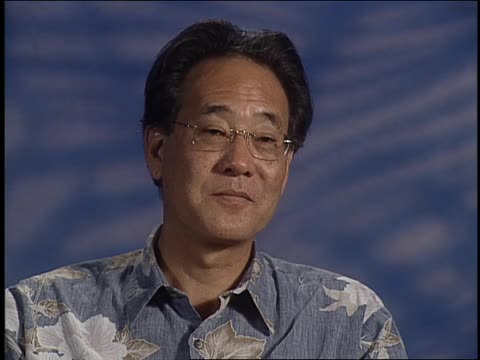
- Interview with Roger Ariyoshi, son of Koji Ariyoshi, recorded on July 21, 2004 for Biography Hawai'i: Koji Ariyoshi. Topics include Roger's memories of the Honolulu Record Newspaper and his mother's involvement there; the impact of his father's arrest on his immediate family; how Koji got involved and learned the floral business; Roger's role in the family floral business and what it was like working under his father; Koji's involvement in the formation of the Hawai'i-China Peoples Friendship Association & his 3 month trip to China in the early 70s; Roger's first trip to China in 1974; Koji's philosophy of life as well as his views of death & remembrance & what Roger would want people to know & remember about his father.
- Created Date
- 2004-07-21
- Asset type
- Raw Footage
- Subjects
- Ariyoshi, Koji 1914-1982; Hawaii -- Politics and Government -- 1900-1965; Japanese Americans -- Hawaii -- Biography; Hawaii -- Social Conditions; Industrial Relations -- Hawaii -- History; Labor Movement -- Hawaii
- Media type
- Moving Image
- Duration
- 00:31:13.172
- Credits
-
- AAPB Contributor Holdings
-
'Ulu'ulu: The Henry Ku'ualoha Guigni Moving Image Archive of Hawai'i
Identifier: cpb-aacip-8419fdd530b (Filename)
Format: Betacam: SP
If you have a copy of this asset and would like us to add it to our catalog, please contact us.
- Citations
- Chicago: “Biography Hawaiʻi; Koji Ariyoshi; Interview with Roger Ariyoshi 7/21/04 #3,” 2004-07-21, 'Ulu'ulu: The Henry Ku'ualoha Guigni Moving Image Archive of Hawai'i, American Archive of Public Broadcasting (GBH and the Library of Congress), Boston, MA and Washington, DC, accessed October 12, 2026, http://americanarchive.org/catalog/cpb-aacip-61e89d1c39d.
- MLA: “Biography Hawaiʻi; Koji Ariyoshi; Interview with Roger Ariyoshi 7/21/04 #3.” 2004-07-21. 'Ulu'ulu: The Henry Ku'ualoha Guigni Moving Image Archive of Hawai'i, American Archive of Public Broadcasting (GBH and the Library of Congress), Boston, MA and Washington, DC. Web. October 12, 2026. <http://americanarchive.org/catalog/cpb-aacip-61e89d1c39d>.
- APA: Biography Hawaiʻi; Koji Ariyoshi; Interview with Roger Ariyoshi 7/21/04 #3. Boston, MA: 'Ulu'ulu: The Henry Ku'ualoha Guigni Moving Image Archive of Hawai'i, American Archive of Public Broadcasting (GBH and the Library of Congress), Boston, MA and Washington, DC. Retrieved from http://americanarchive.org/catalog/cpb-aacip-61e89d1c39d