Biography Hawaiʻi; Harriet Bouslog; Interview with Mari Matsuda 8/15/02 #1
- Transcript
You know, I'm the sputnik generation now, so we know how to cut down. Well, I think we're all within, like, about 18 months, each other. No, not me. Oh, that's right. I forgot. Auntie. Okay, for any time. What kind of place was Hawaii when Harriet Bell's log arrived here in 1939? It was a very different place. The term that the political scientist used was, it was an oligarchy, that is a small number of business people that were connected with business and family ties. Basically ran everything.
They ran the social system. They ran the legislature. They decided who the judges would be. And the plantations needed a labor supply that was compliant, docile. And they got it because they were able to arrange the legal system and all the structure around how labor was contracted for Hawaii to their advantage. So that workers were considered dispensable. They weren't considered really fully human. They didn't have rights. They didn't have citizenship. In many cases, they were immigrants. They couldn't leave their jobs. It was made very difficult to leave their jobs. If you left your job, you would picked up for bankruptcy. You had to stay on the plantation. If you ever objected to anything that was unfair or dehumanizing on the plantation, you were blacklisted and you couldn't get a job anywhere. Not just on the plantations, but the other merchants and other businesses in Taiwan would hire you. So other observers who came from the outside and looked at it said it was like a serfdom.
It was, as Harriet would say, not a good place for the little people. What kind of training or experience did she had beforehand on the mainland respond in a kind of liberal or radical way to these conditions? Harriet had a pretty conventional upbringing. She went to college, she got a standard liberal arts education, and then went to law school and also got a pretty traditional legal education in Indiana. So she didn't have a lot in her educational background that was explicitly left or radical. But I think a lot of the straightforward, Midwestern values that she got from her parents had the seeds of a kind of radicalism because there was a belief in decency and fairness and democracy. Her father was a soil conservationist.
He worked really hard to stop erosion, things like that. And I think out of that comes the sense of you care about the community you live in. You try to do something to make it better for people. And I think coming from that kind of background and then coming to Hawaii and seeing these near feudal conditions that people were living under, were the seeds of a kind of a radicalism in Harriet Balson. You mentioned in your biography of her that this managed to war or saccharonic entity, what kind of cases or issues in the 30s would have sort of been there to inform her responses when she came? If you were an intelligent, educated, fair-minded, idealistic young person coming up in the 30s, you would hear about these high-profile, very public events like the trial of saccharonic entity and anarchists who were widely believed to be framed up because of their political beliefs, not because they were actually going to engage in any kind of violence. And there was an international campaign to save their lives. Harriet heard about that and was incensed by the unfairness of the framing of saccharonic entity.
She heard about the Spanish Civil War. She was a fan of great literature and all the literary heroes of that era, people like Ernest Hemingway, were sympathetic to the cause of democracy in Spain. And when Spain fell to the fascists, people at that time really felt it as a heart-breaking, heart-wrenching, terrible tragedy that democracy was dying in Spain. And Harriet was exposed to all these things. She talks about this as the beginning of her political consciousness, because these were the things that smart intellectual people at that period were outraged about and talking about at their parties. And Harriet heard this and it was the beginning of her thinking of the world, both in international and structural terms, that this is a world of halves and have nots, of fascists and anti-fascists, and you have to pick which side you are on. And the cool people were on the side of anti-fascism and on the side of working people. And that's where Harriet was starting to align herself intellectually and politically.
When Harriet came out here, she was actually hoping that Charles Beaux-Log would support her as she became a writer. How important do you think that sense of literature or writing was to her? The people who practiced law with her would say about Harriet that she was a great writer. She knew how to use words both in oral and written advocacy. So I think her early love of literature, the fact that she was a great reader and a prodigious memorizer of poems when she was a child, led, I think, both to her great use of language and to her sense that she was an intellectual. And to be an intellectual in the 30s and 40s, often met having sympathy with radical causes. This isn't on here, but I know you can probably respond to it, just came up at this point. Harriet left, and one of the reasons she suggested she left was because of the imposition of martial law. She just talked about martial law as something that Harriet responded to and how that would have shaped her understanding of the word.
It was a very scary time in Hawaii, and many people who could leave left. In part there was the threat of war and the threat of invasion because Hawaii was very strategic militarily. But I think the greatest offense for someone trained in the law like Harriet Balsog was the suspension of constitutional rights in Hawaii. Not many people know about this, but martial law meant that the Bill of Rights didn't apply in Hawaii. There was no habeas corpus in Hawaii. These are fundamental cornerstones of what it means to live in a democratic society, and with those gone, it's a very scary place. It means the military was running everything, and anyone they didn't like get locked up in no right of due process. Even some of the conservative lawyers in town like Garner Anthony, because they were lawyers, they were so offended by the imposition of martial law that they publicly and very actively opposed it.
So Harriet decided that Hawaii would not be a good place to wait out the war and she went to Washington DC. During the war, suddenly became a place where there was opportunity for professionally trained women because many of the men left. And there was a shortage of people. The person who had become Harriet's partner, Maya Simons, was in the trenches. He was fighting in combat in World War II. People like that who were bright educated lawyers, if they were male, went to war, and particularly if they were opposed to fascism.
And there weren't enough lawyers in DC, so Harriet had a lot of opportunities that she might not have had as a woman before that. She eventually became a lobbyist for the ILWU in Washington, which meant that she was in the halls of Congress every day. She was working with the top people in the radical labor movement at the national level, and she got to know them there. And they got to know her abilities and her loyalties to working people because of that experience. And that led to her eventually coming to Hawaii. She got sent back by Harry Bridges in 1946 to deal with the aftermath of the sugar strike. How has the way changed in that seven years? Before 1946, there had been many strikes in Hawaii, and they had had horrible outcomes. Workers had been shot at, jailed, run out of town, literally run out of town. You're given a one way to get to leave and never come back.
The plantations would do anything to prevent a viable labor movement in Hawaii. When the ILWU started organizing, for the first time they were organizing on a multiracial basis. That is, rather than organizing Filipino workers separately, Japanese workers separately, Puerto Rican workers separately, they said we're going to be one union. Everybody's going to be in it, and we will not tolerate any disparagement of any other racial group. And with that strategy, for the first time, they got a unified strike. And the plantations tried the same tactics that they'd always tried, arresting hundreds of workers and trumped up charges, bringing conspiracy charges against the union. And it had always worked before, so they thought it would work again. But the ILW had learned from the mistakes of the past, and because they had this very radical vision of racial equality, they had the potential of a successful strike for the first time. But the hold of the oligarchy on the state was so strong that you couldn't find lawyers willing to defend show workers who were jailed during the strike.
It was a very scary thing. If you were a lawyer, you represented them. You'd never work again in this town. So, the ILWU, so to her, it was like, we need you to go to Hawaii. You know Hawaii you've lived there before. We trust you. You've got to go. And she said, oh, I'm not a criminal defense attorney. I can't do this. And they said, we need someone we trust more than we need an expert in criminal law. So Harriet came out here, and she landed at the airport and immediately went to work. She started bringing constitutional challenges to these trumped up charges that were brought against the workers. And no one had ever done this before. No one had ever given poor plantation workers legal representation in Hawaii. And so the other side was not prepared for this, because before they would bring trumped up charges, the judges were judges that they, the sugar planters had hand picked.
They picked where the judges would be. So, when Harriet and later her partner and my assignments brought these legal challenges, wow. The Constitution is going to apply in Hawaii. That was news, because they thought they didn't have to abide by the law. And the strikers were led out of China. That's very empowering for the rankant of the union to see, gee, in the old days they would put us in jail and we stayed there. Now we got lawyers, and as soon as the lawyers show up, we get out, because there really wasn't a legal basis for locking up people just because they wanted to join a union. And before they would say, oh, you spit on the sidewalk, boom, you're in jail. But they couldn't do that anymore, because suddenly there was a difference. So, I wouldn't go so far as to say that the lawyers made all the difference. It was the rankant file of the ILWU that made all the difference. But it was important for them to have this tool at their disposal, that they could get out of jail when Trumped up charges were brought against them, that the Constitution would apply. And that helped with the goal of empowering and organizing workers and teaching them something that for a hundred years they had learned they could not do, which was stand up to the bosses.
I'm going to ask a little bit about specifics here. Could you talk a little bit about periods impact on the Constitution of juries? Yeah. All right. For years in Hawaii, the grand juries and the juries had been made up of white men. And no Filipinos, no Hawaiians, no Japanese, no Chinese, and certainly no plantation workers. Now, under the U.S. Constitution, this is unconstitutional. Particularly once people have attained citizenship, they have a right to be on a jury, and a criminal defendant has a right to a jury of their peers. But again, no one had challenged this before. Myersheim is a Harriet Bauslogg challenge the existing jury system in Hawaii. It's interesting because the system for picking juries was very obscure. And what the government tried to say in defense was, well, it just so happens that randomly these are the names that we've come up with.
Now, statistically, that was impossible. But Bauslogg and Simon's were never able to get the government to admit that they had a racially exclusive jury system. They never admitted it. But once the challenge was brought, magically, suddenly, names that were not holly, not white, started appearing on the jury rules. So they changed the jury system permanently, not by having a full out finding a fact that it was racially exclusive. But once the light of day was shining on this system, they had to operate in a more fair and equitable manner. Did that extend over to her employment of ABS Corpus as well? Yeah, suddenly with ABS Corpus, applicable to workers because they had a defense. See, the thing that's tricky with all these things, the law didn't have to change.
It had to change was workers had to feel they had a right to representation that the law applied to them for a change. And everyone had just assumed in the past that because of the power structure in Hawaii, the laws that protected workers didn't apply in Hawaii. But with boss log and Simon suddenly representing workers, the laws did apply and they could go to mainland judges, federal judges under the three judge district court system to bring constitutional claims. So it wasn't just this cozy little cronyism bunch in Hawaii that was running everything. How much money do you have? How did Harry boss log relate to the rank and file members of the IOU that she had their representative came contact with?
Harry boss log was an incredibly charming woman. She wasn't a grassroots kind of person. She was very elegant and patrician and carried herself like Bernard Lloyd, a full command of the situation. So I don't picture her hanging out at the Union Hall having beers with the guys. But I think they certainly respected her, got a big kick out of her about the flamboyance of her personal style. And the fact that a holly lawyer from the mainland was representing people from the plantation was astonishing, given the social system that existed. It was possible to grow up on a plantation and never talk to a white person. I'm sure that most of my mom's peers and my mom grew up on MacWilly plantation never talk to a white person the whole time they were growing up.
You were looked down on, you were a separate cast, you were separate from white people. So now to have this holly lawyer, white lawyer from the mainland, come to work for you because the IOU philosophy was the lawyers work for the rank and file. They take their orders from the rank and file. That was an inversion of the expected social circumstances that plantation workers were raised with. And I think they loved it. And many of them expressed a great deal of affection for Harriet Balsog and the other lawyers who worked for the IOU. As she pursued her career in the courts for representing her clients. Harriet's style was highly individualistic, resistant to social pressure. She was her own person, probably a little crazy in that sense. I think that's what it took to make it as a woman wear. She embraced her outsider status. She didn't try to conform to male norms or male expectations.
And she did very well. She was a successful lawyer. She won a lot of cases. She was dramatic before a jury. If she had to, she'd break down in tears talking about the circumstances of her clients. And she won more cases than she lost. I think if you could, I want to go to Politico majors. And if you could start by just describing why that was a significant trial or why that was, why that had such an impact, just the circumstances of the trial. The major political case, you only understand if you put it in the context of many of the death penalty cases that had come before in Hawaii, like the Massey case, where working class Hawaiian was murdered outright murdered by elite whites. And they got away with it. They spent one hour in elite Ilani Holly. That was their punishment. And there was no defense. They never said we didn't do it. They never said we didn't intend to do it.
It was a revenge killing over an alleged rape that never happened. Most historians, I think, would agree that there's very tenuous evidence that this rape ever happened. So it was akin to a sudden lynching, a trumped up case of rape and a brown skinned person murdered in cold blood, no consequences. People in Hawaii were very aware of that. There had been other death penalty cases involving Japanese who had been strung up in the gallows under circumstances where if they'd had a full defense and the law applied equally, it never would have happened. Everyone who suffered the death penalty in Hawaii prior to Major's Politico had been poor and non-white. And so this pattern existed. And then along comes Major's Politico. This is a case in which a wealthy society woman died in a botched burglary basically.
And it probably was some kind of negligent homicide or a homicide of some type. But it wasn't by then standards and by contemporary standards murder in the first degree. That is, these burglars never made a plan intentionally to kill this woman. They bound and gagged her and she died. But they were facing the gallows and it became high profile because the ILW took up their cause because the ILW was intent on breaking down racial hierarchy in Hawaii as part of bringing about the successful union organizing in Hawaii because the race and class system were so intertwined. And Bob McElrath was, he was one of the organizers in ILW, made this a high profile case by talking about it on the radio, talking about it in public. It was already in the papers every day because the victim was a wealthy white society woman and that's the newspapers were affiliated with that segment of society. So they were talking about it.
Everybody's talking about this case and these two men are being marched off to the gallows. They're about to die. And one minute before they hang, Harriet walks in with the papers, staying the execution because she had agreed to take on their case. She and my assignments worked on it together to challenge the way the death penalty was being applied in Hawaii. So the significance of the case is this is the first constitutional challenge to the application of the death penalty in Hawaii. And she succeeded in getting one stay after another. So everybody in Hawaii is watching. And several times these men almost die, they almost get hanged and boom, incomes the lawyer with another stay. So it was incredibly dramatic. Whatever you stood on the political spectrum right or left, everybody was on edge, waiting to see what was going to happen.
And eventually the political pressure the ILW organizing was big enough that they were able to stop the execution for good and commute the sentences of these two poor, very dysfunctional, small time criminals. They live to tell their story. And ultimately, I think this led to the abolition of the death penalty in Hawaii. There were other challenges to the death penalty in that period, but none of them were successful. It wasn't until the 60s and 70s that a strategy of challenging the death penalty nationally in the civil rice community arose. And it was never completely successful.
I mean, to this day, the struggle over the death penalty is going on nationally in the United States. And we're really behind the rest of the civilized world. And all of our peers in the democratic world have abolished the death penalty. And it puts a lot of pressure on the United States. We still haven't resolved this. But in Hawaii, we resolved this. We got rid of the death penalty. We saw that the class and race inequities of the death penalty would always be with us. And the only way to avoid that was to get rid of the death penalty altogether. So we were the leading edge in Hawaii. And the rest of the United States will catch on. But it may be another 50 years. Why do you think Harriet committed herself so strongly to that case? Because that was all profile, basically. The Major's Politico case had all the elements that attracted someone like Harriet Balslag. It was high profile. And she was someone who enjoyed the limelight.
It was a challenge because it was a loser in then contemporary terms. This was not a winnable case. And so that was a challenge turn. In fact, the story is that she was sitting around talking with some labor people at a dinner party. And they were decrying the Major's Politico situation. And Priscilla Yada looked Harriet in the eye and said, I bet you can't do anything about that. And that's what it took. You know, give this woman a challenge. And she would rise to it. And then it fit into Harriet's sense of justice that this was people on the bottom, the people who nobody cared about against people on the top. This wealthy society woman tied in with the big five corporate oligarchy in Hawaii against people who had nothing. No money, no influence. And that was a kind of case that Harriet Balslag loved.
- Series
- Biography Hawaiʻi
- Episode
- Harriet Bouslog
- Raw Footage
- Interview with Mari Matsuda 8/15/02 #1
- Contributing Organization
- 'Ulu'ulu: The Henry Ku'ualoha Guigni Moving Image Archive of Hawai'i (Kapolei, Hawaii)
- AAPB ID
- cpb-aacip-5eff2646e37
If you have more information about this item than what is given here, or if you have concerns about this record, we want to know! Contact us, indicating the AAPB ID (cpb-aacip-5eff2646e37).
- Description
- Raw Footage Description
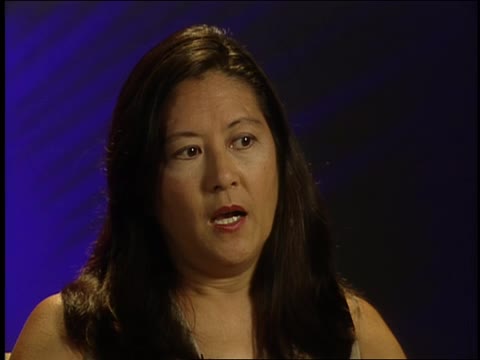
- Interview with Harriet Bouslog biographer & retired UH-Manoa Law Professor Mari Matsuda, recorded on August 15, 2002 for Biography Hawai'i: Harriet Bouslog. Topics include the type of place Hawai'i was, socio-economically, when Harriet Bouslog first arrived in 1939; her previous training & personal experiences on the mainland that prepared her for her law career in Hawai'i; the issues & law cases in the 1930s that were influential in shaping her responses to labor issues in Hawai'i; the personal importance of literature & writing to Harriet; the imposition of martial law in Hawai'i in the 1940s & Harriet's reaction to it; her time & experience in Washington, D.C. & how Hawai'i changed in the seven years she was there; her work for the I.L.W.U. when she returned; her work's impact on the constitution of juries & her employment of habeas corpus in cases involving the I.L.W.U. rank & file; the degree to which Harriet related to these same rank & file union members; how her "patrician" personal style worked for her in her legal practice; the circumstances & significance of the Palakiko-Majors case & the reasons behind Harriet's strong commitment to it.
- Created Date
- 2002-08-15
- Asset type
- Raw Footage
- Subjects
- Labor movement -- Hawaii; Labor lawyers -- Hawaii; Communism -- Hawaii; Woman lawyers -- Hawaii; Labor and laboring classes -- Hawaii
- Media type
- Moving Image
- Duration
- 00:27:24.243
- Credits
-
- AAPB Contributor Holdings
-
'Ulu'ulu: The Henry Ku'ualoha Guigni Moving Image Archive of Hawai'i
Identifier: cpb-aacip-e15d0e35f8b (Filename)
Format: Betacam: SP
If you have a copy of this asset and would like us to add it to our catalog, please contact us.
- Citations
- Chicago: “Biography Hawaiʻi; Harriet Bouslog; Interview with Mari Matsuda 8/15/02 #1,” 2002-08-15, 'Ulu'ulu: The Henry Ku'ualoha Guigni Moving Image Archive of Hawai'i, American Archive of Public Broadcasting (GBH and the Library of Congress), Boston, MA and Washington, DC, accessed September 21, 2026, http://americanarchive.org/catalog/cpb-aacip-5eff2646e37.
- MLA: “Biography Hawaiʻi; Harriet Bouslog; Interview with Mari Matsuda 8/15/02 #1.” 2002-08-15. 'Ulu'ulu: The Henry Ku'ualoha Guigni Moving Image Archive of Hawai'i, American Archive of Public Broadcasting (GBH and the Library of Congress), Boston, MA and Washington, DC. Web. September 21, 2026. <http://americanarchive.org/catalog/cpb-aacip-5eff2646e37>.
- APA: Biography Hawaiʻi; Harriet Bouslog; Interview with Mari Matsuda 8/15/02 #1. Boston, MA: 'Ulu'ulu: The Henry Ku'ualoha Guigni Moving Image Archive of Hawai'i, American Archive of Public Broadcasting (GBH and the Library of Congress), Boston, MA and Washington, DC. Retrieved from http://americanarchive.org/catalog/cpb-aacip-5eff2646e37