The MacNeil/Lehrer NewsHour
- Transcript
INTRO
JIM LEHRER: Good evening. Computer problems plagued yesterday's election in El Salvador. The moderate candidate is ahead anyhow. The French continued their troop pullout from Lebanon while the Christians and the Moslems there continued killing each other. The three remaining Democrats running for U.S. president exchanged barbs in Connecticut where tomorrow there's another primary. A new flap erupted over Democratic charges the Federal Trade Commission is soft on deceptive business practices. And four men convicted in the Massachusetts gang rape received prison sentences. Robert MacNeil is away this week; Charlayne Hunter-Gault is in New York. Charlayne?
CHARLAYNE HUNTER-GAULT: Tonight we'll have a detailed look at the El Salvador election with an on-the-scene report on yesterday's voting from correspondent Charles Krause.
CHARLES KRAUSE [voice-over]: It was to have been the most honest and efficient presidential election in El Salvador's history, but today many Salvadorans were describing the election as a fracasso, a mess.
HUNTER-GAULT: We'll get a view of it all from U.S. Ambassador Thomas Pickering. We'll look at what next in El Salvador with two members of Congress who don't see it the same way. Also, we have a debate over whether or not the government is adequately protecting consumers from deceptive advertising. It's between the government's number one protector-in-charge, James Miller, head of the Federal Trade Commission and, one of his key critics, Congressman John Dingle of Michigan. Kwame Holman has a report on legal case that could change the course of history in the nation's 50th state.
KWAME HOLMAN [voice-over]: There's a fight about land reform going on, and it's not in El Salvador. It's in the United States. That fight is in Hawaii.
HUNTER-GAULT: Finally, we focus on the man who is at the center of President Reagan's controversial nomination for the Medal of Freedom award. Whittaker Chambers.
WHITTAKER CHAMBERS: Mr. Hiss represents the concealed enemy against which we are all fighting and I am fighting. Salvador Election
LEHRER: Very unofficial and incomplete returns show Napoleon Duarte leading in yesterday's El Salvador presidential election. Duarte, a former president who is considered a moderate, reportedly is getting some 47% of the vote to 27% for Roberto D'Aubuisson, the rightist candidate, and 17% for a third-party contender. If those figures stay that way, it will mean a runoff between D'Aubuisson and Duarte before the issue is finally decided. The important elections were marred by leftist guerrilla actions to disrupt them and by bureaucratic and computer problems which first delayed voting and then stopped the tabulating last night and most of the day today. Back in Washington, however, this afternoon President Reagan declared them a success.
Pres. RONALD REAGAN: Yesterday those valiant people braved guerrilla violence and sabotage to do what we take for granted -- cast their votes for president. Well, the final vote count is not yet in. It looks like the turnout is another victory for freedom over tyranny, of liberty over repression and courage over intimidation.
LEHRER: Voting in El Salvador was, at best, tricky business. Not only did some voters have to avoid rebel patrols on their way to the polling stations; once there they had to figure out how to deal with the complicated voting procedures. Charles Krause, on assignment for this program in San Salvador, reports it was for many a frustrating experience.
CHARLES KRAUSE [voice-over]: It was to have been the most honest and efficient presidential election in El Salvador's history. The army provided security at more than 5,500 polling places throughout the country. The guerrillas did stop the voting in areas under their control, but except in a handful of small towns they failed to disrupt the election elsewhere. It was the government itself that prevented tens of thousands of Salvadorans from voting. The mass confusion was most evident in San Salvador, El Salvador's capital and largest city. For example, the Flor Blanca soccer stadium. Despite or possibly because of an elaborate computer system paid for by the United States, many voters had trouble finding their voting booths. Others found them, closed.
SALVADORAN VOTER: There's ink missing, there's a seal missing, the act [unintelligible], memorandums. I don't have it. How can I start doing anything?
KRAUSE: And do you think that, from what you've seen here today, is this being well organized or not?
VOTER: Oh, of course not. Not well organized.
KRAUSE [voice-over]: Alvaro Magana. El Salvador's current president, was able to vote at the soccer stadium, but his son Neto told us he was turned away. The voting system was designed to prevent fraud. Instead it created chaos. Each clear plastic ballot box was limited to 500 voters. They were supposed to find their voting station by matching the number on their national identity card with lists of polling stations published in El Salvador's newspapers. But in some cases the lists were long. Voters were sent from polling place to polling place, often miles apart, only to find that their polling stations didn't exist at all. Others couldn't understand the system. These two women appealed to us for help. We asked them if they'd looked in the newspaper. They told us that they, like 40% of El Salvador's other voters, couldn't read or write. [five voters confirm inability to vote] Many of those who could not vote feared the consequences. They could be fined or accused of deliberately boycotting the election out of sympathy for the guerrillas. Others became frustrated and angry.
VOTER [through interpreter]: For weeks, for months they've tried to motivate the people, speaking to them of the peaceful way to solve the country's conflicts. And instead we've been slapped, frustrated by this disorganization. It makes us think the situation could become radicalized. This could cause a radicalization, a worse polarization. It's frustrating for the Salvadoran people.
KRAUSE [voice-over]: El Salvador's election council characterized yesterday's voting as a civic fiesta. They claim the long lines and even the thousands who were prevented from voting prove that Salvadorans prefer democracy to the guerrillas.
LEHRER: The official U.S. group that went to El Salvador to observe the elections returned to Washington today with an upbeat appraisal. There was even some bipartisan agreement from Republican Senator William Roth and the Democratic House Majority Leader Jim Wright.
Rep. JIM WRIGHT, (D) Texas: There was an uncomplaining, happy spirit, almost a festive spirit among the people with whom I talked. In some cases enduring considerable inconvenience and sacrifice for the privilege of voting. They -- I didn't see a single individual who was unhappy or grumbling or complaining, not withstanding the difficulties, the flaws, the mortal imperfections, I am convinced that all of the observers who went from our country came back with a very profound impression that the elections were valid elections, that they deserve to be honored by our country and throughout the world.
Sen. WILLIAM ROTH, (R) Delaware: I didn't find one person, one person that said he was there because he had to be. They all said that they were there because it was for the good of their counrty or, more often, that it was for the sake of peace. So I agree there were some serious problems, but when 70% of the people vote. I think we can take great confidence that this is a major step forward.
HUNTER-GAULT: The United States government invested several million dollars to insure a democratic outcome in El Salvador's election. We now get an assessment of how the election went from Thomas Pickering, U.S. ambassador to El Salvador. I spoke with him late this afternoon via satellite from San Salvador and asked him about the reports of widespread chaos preventing thousands of Salvadorans from voting.
THOMAS PICKERING: We're getting figures from the political parties who, getthe ballot results right at the ballot box. They participate in counting. Those are coming in now; they're getting up around the 60% returns, unofficial returns, and they indicate quite a high proportion of people voted. But the observers did see confusion. Part of that was because voting materials arrived late. In part they arrived late because they were shipped late. The central election commission had an enormous job to put into effect a brand-new voting system with a register. Before, they hadn't used a register, in 1982. And part of the problem was that the guerrillas in effect put out the lights in El Salvador the night before the election, so people who had to prepare materials in the various towns during the night before the election were not able to do that very effectively. So that's at least part of the reason. The other reason was that people had to vote in specific places in many instances, and finding those specific places by the number of their national identity card, which is their voter registration document, was very difficult for them to do as well.
HUNTER-GAULT: House Majority --
Amb. PICKERING: I felt --
HUNTER-GAULT: Excuse me. House Majority Leader --
Amb. PICKERING: That's okay. I just wanted to say that wherever we went -- and I went to five or six places here in San Salvador, out in the east. I found Salvadorans volunteering to help other Salvadorans find their way through the difficulties. So there was a lot of good will, and there was a lot of patience, and there was a tremendous amount of enthusiasm in the voting public here. And those kinds of things can't be wiped out by any amount of confusion, in my view.
HUNTER-GAULT: House Majority Leader Jim Wright was quoted as saying that he thought the system was just too sophisticated for the average voter to understand, that that accounted for a large part of the chaos.
Amb. PICKERING: Yes, I think it does. He and I had a chance to tour a good number of polling places together, and we both felt it was a very sophisticated system based in large measure on the fear of the Salvadoran political parties, which agreed to put this system into effect, of fraud in the elections based on the fact that before the election of 1982 fraud was frequently the case here unfortunately. So you had a good fraud-proof system, but it was a system in terms of its complexity for the everyday voter which discouraged the voter after he had to look around three or four times to find the proper ballot box and then wait in line, although Salvadorans have been waiting in line to vote and indicated to me their tremendous enthusiasm to vote. People were in line in the hot sun many hours to assure the vote.
HUNTER-GAULT: Well, one of the smaller --
Amb. PICKERING: The other interesting thing is that right at the end of the voting process, within three hours of poll closing, in many places around the country the polls were opened up and the registry was put aside, in effect, and people were allowed to vote just by recording their name and their i.d. card number. So their enthusiasm returned to the process near the end of the day.
HUNTER-GAULT: You feel that the amount of money that the U.S. spent was justified? You're satisfied with the results?
Amb. PICKERING: Oh, absolutely yes. When 70% of the people start voting in the United States I think we will be proud. Certainly that very large number turnout here, and it looks like it's going to be close to that number, is an enormous, in a sense, evidence of an act of faith in the democratic process and a tremendous amount of interest in voting in this country. And to me, despite the fact that in fact we had predicted that there would be problems that would reduce the turnout somewhat over 1982, we think this was a tremendous celebration of faith and democracy here yesterday.
HUNTER-GAULT: Mr. Ambassador, most press reports said that bureaucratic problems were bigger obstacles than bullets. You referred to the guerrilla left a few moments ago.How disruptive was the left, in your view?
Amb. PICKERING: Well, they were also very disruptive. Roughly 44 municipalities did not vote; 22 of those 44 were direct areas where guerrilla fighting interrupted the voting -- burning of ballot boxes. In addition to that, the guerrillas had a campaign within recent days to tear up or to sequester voter identification cards, national identity cards here in the country. That has had an effect. We think that perhaps between 35,000 and maybe as many as 50,000 people in all were not able to vote because of guerrilla actions, and that's based, in effect, on the number of ballot boxes and thus the number of registered voters that were not able to complete their voting or to carry out their voting in the towns that I just mentioned -- the 44 towns that I just mentioned. That's a preliminary look, but that gives you an indication. In addition to that, the guerrillas launched armed attacks all around the country, cut the electrical power supply on the night before the election, which interrupted the voting process. So there were both direct and indirect results, some of it adding to the bureaucratic confusion on election day.
HUNTER-GAULT: Based on Mr. Duarte's lead at the moment, is it likely -- is it safe to assume that he would be the likely winner of such a runoff?
Amb. PICKERING: No, because the runoff, of course, will pit two candidates against each other, and they will also be fighting hard for the votes case for the parties that don't win in this election. So there may be quite a large number of votes out there still to be garnered by these candidates in the runoff. And I think, as we look at it now, that election will be very close. A lot is going to be determined by what the leaders of the losing parties do and, secondly, about how tight a control they have over the voters within their party. And then, finally, of course, by what kind of campaign is run.
HUNTER-GAULT: Right. Well, the military isn't fond of either of those two contenders.They sat out this election by requirement. Do you think that they would be content to sit out the runoff, not involve themselves, or interfere in any way?
Amb. PICKERING: Yes, I do, really. This election has had its share of silent heros. One set of silent heroes were the people who worked overtime -- tremendous hours to get the electoral register together despite the problems they had. The other silent heroes were the army that stayed out of politics, and we looked at that very carefully. And I think all reports from us and from other foreign observers are generally favorable and have protected the election. They have committed themselves to accept the results. We're certainly hopeful that they will. Up 'till now they've comported themselves magnificently in defending these elections. They had heavy losses yesterday and the day before, some 50 or so people killed and wounded, in doing their best to defend the elections, and so we believe that it's time for the army to be protecting elections and accepting the results, and we have indications that's what they intend to do, and certainlyour hope is they will continue to do so.
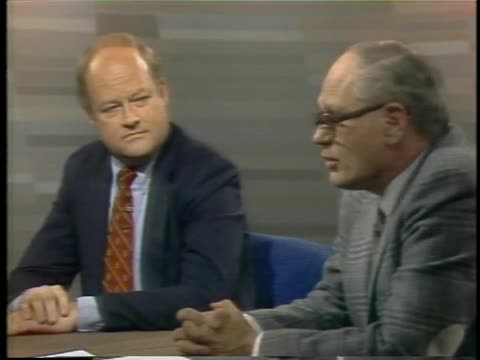
LEHRER: The debate in this country over what yesterday's elections means, both in the short and long runs, has already begun. And we begin it tonight with two congressmen who see it all very differently. Jack Kemp, a Republican from New York, who was a member of the President's official observer team yesterday, and George Miller, a Democrat from California, chairman of the Central American task force of the Arms Control and Foreign Policy Caucus in the House.First, Congressman Kemp, what is the significance of this election to you?
JACK KEMP: Well, Jim, I agree with Ambassador Pickering. There was an amazing amount of spirit shown by the people of El Salvador. I had the opportunity along with Solomon Ortiz, a Democratic member of Congress from Texas, to visit several places in far-out provinces of El Salvador. The people lined up since 6 o'clock in the morning to vote. It's clear that they were participating in the democratic experiment. It is still an experiment in El Salvador. It's far from perfect, but I think that was a big step towards moving the country democratically to the center. Hopefully this country will continue to build up the center in El Salvador and that we will see the progress in El Salvador that we've seen in Argentina and Venezuela and other Latin American countries.
LEHRER: Congressman Miller, do you agree that, regardless of the outcome, that this was a significant step toward democracy?
GEORGE MILLER: No, I don't, not at all. I think that what we have is we have demonstrated the Salvadoran people's desire to vote, desire to participate in democracy and their enthusiasm to go out to the polling place. The real question that is posed by this election is, what will the policy in the future be of the United States?Will we formulate a policy that has the support of other Latin American nations toward a peaceful resolution of the problems in El Salvador, or will we continue a policy that has as its bottom line a military victory over the guerrillas?
LEHRER: Well, let's --
Rep. MILLER: If we continue in the latter approach there can be no peace, and this election is nothing more than what we've seen in the past.
LEHRER: Let's take -- the ambassador said that it would be a mistake right now to predict that Duarte is definitely going to win.But let's say he does maintain a victory 30 days from now when the runoff occurs. Would you support a government run by President Duarte?
Rep. MILLER: I would certainly be encouraged by the people selecting Mr. Duarte. However, Mr. Duarte has been president of the country in the past. He won an election once before and had it taken away from him, and during time that he's been in office before we've seen the presence of the death squads, as we have in the last two years. Don't forget, we had an election two years ago that was hailed by its participation, and the long lines, and people standing in the sun and perserverance over the guerrillas. Since that time we've had mounting activity by the death squads, even to the embarrassment of this administration. We've had no movement on the prosecution of those who murdered the American citizens down there. So the elections are good, and they're interesting, but they don't go to fundamental policy either by this government or the government of El Salvador.
LEHRER: You disagree, Congressman Kemmp?
Rep. KEMP: Yeah, I really do. I think it's disappointing. George has been there on the scene, so have I. He wasn't there this time, but he's been there before. I give him credit for going and showing the interest in El Salvador that needs to be shown by more members of Congress. Having said that, it seems to me that this is more than just a good step, it's more than just a modest show of democracy. It really does demonstrate that people are voting for the future. Those people really went through a lot to vote yesterday and they did in '82. And just to discount it as George does I think does a disservice to the fact that this country has a big stake in what happens in Central America. We have a big stake in, as I said, building up the center democratic --
LEHRER: And you think Duarte's --
Rep. KEMP: -- part of El Salvador.And I was just going to say --
LEHRER: Sure.
Rep. KEMP: I think if you look at the history of Latin America, there are now about 75 to 80 percent of the people of Latin America who live in a democracy -- Venezuela and Argentina have both moved democratically. I would hope that our future policy is predicated upon continued reforms. We met -- I didn't meet personally; Jim Wright did, and other members of the delegation -- with the archbishop, Rivas y Damas, and he mentioned quite specifically that this is a repudiation of the guerrillas, it's a repudiation of communism by the people, and he said, finally, that there's been a marked -- there's been marked progress, demonstrable progress in the last six months towards observance -- observation -- observing -- excuse me -- human rights, and so this progress should not be taken so lightly by members of Congress.
LEHRER: Do you see this as a repudiation of communism and the left?
Rep. MILLER: No, I think this is an expression of the desire of the people of El Salvador for peace, that they're not happy with the guerrillas, that they're not happy with the current government. And that's why the elections in and of themselves do not solve the policy issues. And those are issues for the Salvadoran government that has maintained its close connection and direction on the death squads and for the Reagan administration, which has continued to come to Congress to ask for hundreds of millions of dollars to fund that government. And to say that there's been progress in human rights in the last six months -- we had the Vice President down there just before Christmas telling them to knock off the death squad activity.That doesn't sound like progress.
LEHRER: How do you answer that?
Rep. KEMP: Well, there has been progress, according to the archbishop. I realize George has his own source of information, but I think it's demonstrably progressive to see that country doing what it has done in the middle of a very serious conflict on the left and the right. I don't deny that. But I think not only has that progress been evident to more than just observers in President Reagan's party. Those members of the international team that went to El Salvador, including Contadora countries, including international observers, including Freedom House. AFL-CIO, while there are mistakes and there will continue to be mistakes, we need to put more pressure on El Salvador to be more progressive and more democratic, progress has been made, and I think the elections are part and parcel of the attempt to do more than just bring peace, but bring about a better climate for progress, social change, economic progress and an end to the war.
LEHRER: What's your view of Duarte as president? You've heard what --
Rep. KEMP: I personally believe --
LEHRER: -- Congressman Miller said.
Rep. KEMP: -- it is the height of arrogance for members of Congress, including myself, to be deciding the most precious right that people have, the right to determine their own leaders. I'm going to vote for assistance, I'm going to support economic and military assistance -- not billions or millions of dollars -- it's $61 million in a supplemental coming up in the Congress. And, as far as I'm concerned, for me to sit here and say that I'm not going to support one candidate unless that's the right person would be, I think, the height of arrogance and elitism. If democracy is to work they should pick their own leaders and should not be interferred with by members of Congress.
LEHRER: What's your view of that, Congressman, in terms of the support for the government under Duarte or someone else?
Rep. MILLER: Well, I think you have to compare Duarte to Mr. D'Aubuisson, and I've met with both of them and had long conversations with Mr. Duarte, and I think actually he's a man of great courage. He is, however, straddled with a system that places great power and emphasis on the military, on the death squads and the oligarchy. And they're one and the same, and he has admitted to our last congressional delegation that I was a part of that went down there that that was -- that that power was not his. I met with the present president of El Salvador, who admitted there was not a power that he had within his grasp. And the question is will the United States weigh in after this election is over, as we did after the last election, but this time, will we weigh in on behalf of the principles that this government stands for and not weigh in to continue in place a military operation that is corrupt and a government that continues to slaughter its own citizens?
LEHRER: So you don't think, even if the winner is Duarte, that he can do anything about this?Then what's the answer, Congressman?
Rep. MILLER: I think he's a man of great courage, but he's going to need a great deal of support by this administration, by the Congress and others for actual, real reforms. Now, mind you, we said that was going, to come about after the last election. Land reform has gone backwards; death squad activity has increased. So I think it's up to the United States to start to say where the emphasis is. The death squad activity increases, and we continue to send money.
LEHRER: We have to go, but I assume, Congressman Kemp, you've already said that there has been progress, correct?
Rep. KEMP: Well, I think there is progress, and the elections prove it, and there is tremendous effort by the administration and members of Congress on both sides of the aisle to bring about more reforms in El Salvador. But I submit to you that if we just cut them off at the knees and turn our back on what's going on, that attitude would have turned Greece and Turkey over to the communists in 1946 and '47.
LEHRER: Congressman Kemp, Congressman Miller, thank you both very much. Charlayne?
HUNTER-GAULT: Moving on to another part of the world, in Lebanon at least 15 people were killed and 40 wounded as fighting went on along the Green Line dividing the Christian and Moslem quarters of Beirut.And the French contingent, the last troops left from the multinational peacekeeping force, began to withdraw.
In France, a Lebanese Terrorist group claimed that it shot and wounded Robert Homme, the American counsel-general in Strasbourg, as he was driving to work this morning. His injuries are not serious.
And, in Chile, four bombs exploded in the Santiago subway system on the eve of a day of protest against the country's right-wing military ruler. No injuries were reported and subway service was not disrupted. Nevertheless, the government decreed an all-night curfew for tonight and tomorrow night.
[Video postcard -- Shinnecock, Long Island]
HUNTER-GAULT: Turning to politics, the three remaining Democratic presidential candidates blitzed two Northeast states today -- Connecticut, where there will be a primary election tomorrow; and New York, which votes next Tuesday. Senator Gary Hart moved into Connecticut after scoring a solid victory in the Montana Democratic Party caucuses yesterday. No delegates were chosen directly in the Montana meetings, but Hart captured more than three fourths of the counties participating and 49% of the votes. Former Vice President Walter Mondale got 35% and Jesse Jackson won 5%.
In Connecticut, a poll taken by the University of Connecticut showed Hart leading in that state with 48% of the vote to 28% for Mondale and 5% for Jackson. And the poll published by today's edition of the newspaper USA Today shows Mondale leading in New York, with 44% of the votes to 37% for Hart and 8% for Jackson.
In today's campaigning Hart said American lives would be lost by 1990 if the United States kept troops in Central America during any negotiations with Nicaragua as Mondale has proposed. But Mondale appeared to have changed his views. He said today that the forces of all the big powers should get out of Central America and let the people make their own choices. Jackson said he would eliminate poverty in America within three years by dropping of freezing the program to build the MX missile, the B-1 bomber and nuclear aircraft carriers.
Jim? Reagan's FTC: Deregulated Deception?
LEHRER: Since the Reagan administration came to power three years ago, Democrats and others have accused it of being anti-consumer, of trying by deregulation fiat to return to a laissez-faire, buyer-beware marketplace. It's a charge the Reagan people have continually denied. Today there was another such charge and denial involving the Federal Trade Commission. Several House Democrats and the attorneys general of Vermont and Iowa accused FTC Chairman James C. Miller of trying to pull back government policing of deceptive business practices. It all happened at a House subcommittee hearing presided over by one of the critics, Congressman John Dingle, Democrat of Michigan. He is here tonight, as is FTC Chairman Miller. Congressman, first to you.What is Chairman Miller doing that has upset you so much?
Rep. JOHN DINGLE: Well, 45 years ago the Congress of the United States said that the law of caveat emptor, buyer beware, was no longer matter in the marketplace. And it was the view of the Congress that what we ought to do was to see to it, and the law was so amended, that false, deceptive, misleading advertising became under the purview of the Federal Trade Commission. The Federal Trade Commission was compelled to move to bring this to a halt. This had been the settled law for 45 years, and last fall, what do we find but the FTC decides that there are going to be at least two major changes in that law laid in place. The first was the requirement that the buyer act reasonably in the circumstance. The second was that the law be likely to deceive instead of having a tendency or a capacity to deceive, as the law has traditionally said.This we and the Congress find to be an unacceptable retreat from wellsettled, long-established patterns of law with regard to the protection of consumers.
LEHRER: Why? Why is that? Those two changes, why are they so important.
Rep. DINGLE: Well, we asked Chairman Miller, who, incidentally, I very much like. We share a common conflict of interest. We both oppose false advertising with regard to bald-headed men. But the hard fact of the matter is we are -- I am very much distressed to see the subtle pattern of this administration is being unsettled by decisions which I regard as being out of conformity with the law, essentially, a judicial or quasi-judicial legislating.
LEHRER: Well, Mr. Miller, why did you make those changes, and what do you say to the Congressman's reaction to them?
JAMES MILLER: I think Chairman Dingle and I really have -- are very much in agreement that we need to eliminate -- rid commercial advertising of any deception. I guess our disagreement really is over the appropriate means. I think it's so important for people in the private sector to understand what our standards are and to say that an advertisement is deceptive if it has a tendency or a capacity to conceive really isn't saying much. As a tautology it's really an incantation, not a test. What we've said is that we don't want anyone advertising anything that's going to mislead a consumer and in any way that could possibly matter to the consumer. And I think that our record at the Commission in the Reagan administration illustrates our commitment to that premise.
LEHRER: Give me an example, Congressman, of where you disagree. I mean, a specific ad or a specific action that Mr. Miller and his commission has taken that you think wrong.
Rep. DINGLE: Well, why don't I cite some rather well-known authorities in the matter?
LEHRER: Okay.
Rep. DINGLE: The state attorneys general almost unanimously came out with a resolution denouncing the action of the Federal Trade Commission and pointing out that this would very much hamper them in their little Federal Trade Commission acts, which usually must mirror the action of the Federal Trade Commission, and pointing out that their action to protect the consumer would be very much impaired by this action because, a) the burden of proof would be enormously increased and, b) the law was being changed so it'd be much more difficult to enforce. If you take two points on the spectrum, you say "tendency or capacity to deceive" and then you say "likely." Likely means, in the language of the dictionary, that it probably will deceive, the chances are more than 50/50 that it is going to deceive. In the other instance the --
LEHRER: Well, now, why -- give me an example where that would be important.
Rep. DINGLE: Oh, there haven't been enough cases since this occurred --
LEHRER: Well, make up one, I mean, a hypothetical where, using that technical language, where there could be a difference in terms of the average person looking at an advertisement either on television or in a newspaper or a magazine or what --
Rep. DINGLE: It's really very hard to come up with an example. I think you have to just use semantics at this particular point because we really don't have enough cases yet which would show the difference. My only point is, settled pattern of law enforcement is being retreated from. And a more difficult standard of proof and a more difficult burden of proof and a more difficult text of the law is being substituted.
LEHRER: Well, now, he's right about that, is he not, that the burden of proof is more on the consumer under this plan than would be on the advertiser the other way?
Chrmn MILLER: Jim, let me just see if I could articulate it a little differently. What is says is the Commission won't do some things that in the past it did, and I think wasting taxpayers' resources.
LEHRER: For instance?
Chrmn MILLER: Well, for instance, in the 1940s the Commission went after a company that proposed that -- announced that it had an improved hair dye, and it said that their hair dye was permanent. And what they meant by that was it didn't wash out when you took a shampoo. Now, the Federal Trade Commission interpreted that claim as meaning that your hair would grow out the same color in the future and, since it wasn't true, it said that that commercial advertisement couldn't go on the air. So I think --
LEHRER: Under the current rule that would be all right?
Chrmn MILLER: Under our articulation of the standards we wouldn't go after that sort of advertisement. Instead, we'd go after the kind of boiler-room operation with these oil and gas lottery-schemes that have been ripping off consumers, going after that sort of thing, going after some nationwide deceptive advertising. We want people on notice in the private sector that they engage in deceptive advertising, they're in real trouble with this Federal Trade Commission.
LEHRER: But you say they're sending ot a different message to the business community?
Rep. DINGLE: Well, if you substitute the tendency or the capacity to deceive or you substitute for that the fact that it is likely to deceive, or if you add the requirement that the buyer must behave reasonably in the circumstances --
LEHRER: Now, why is that a bad deal?
Rep. DINGLE: Well, buyers -- you never expect buyers to behave responsibly. Buying is a spur-of-the-moment activity. It also is something that is done by persons with a college degree, economists like my friend the chairman or lawyers like me. And even we get taken occasionally.
Chrmn MILLER: It's true.
Rep. DINGLE: But if you require that test to be applied to some poor guy who is barely literate or who is illiterate, a child, in the case of children's television advertising, you're imposing a burden that they can't carry.
LEHRER: What about that point?
Chrmn MILLER: Really, the reasonableness test that is in the Commission's statement doesn't go to the question of whether the person is acting reasonably in response to the claim, but whether it's a reasonable interpretation of the claim. Let's go to an example that Chairman Dingle mentioned earlier. If someone were advertising a salve to grow hair, the reasonableness test goes to the question of whether it's reasonable to interpret the claim as indeed growing hair. The question of reasonableness is not whether it would be reasonable to believe the claim.
LEHRER: You mean the individual consumer doesn't get graded on a reasonableness standard?
Chrmn MILLER: No, the question is the reasonableness of the interpretation of the ad. The hair dye that I talked about earlier, to assume that the advertiser means that the hair grows out that color is an unreasonable interpretation of that claim.
LEHRER: What's wrong with that. Congressman?
Rep. DINGLE: Well, first of all, the state attorneys general, who deal with this kind of statute every day, find that it's very bad. a) It increases the burden of proof, b) it shifts the law against the consumer whereas previously the consumer had greater shelter. The interesting thing is that it's done without sanctity of law. Now, last year or thereabouts the chairman sent us up a suggested change in the law. The Congress rejected that. But, lo and behold, what do we find? That since the Congress has rejected it, up comes Chairman Miller with a change in the law that he is enacting. Now, I know the difference between his job and mine. I have great respect and affection for him, and I try to protect him in the exercise of his function. His function is to interpret the law; the function of the Congress is to see to it that the law is written properly.We also do try to see to it that it carries the law out properly.
LEHRER: Gentlemen, we have to leave it there. Congressman, Chairman Miller, thank you both. Charlayne?
HUNTER-GAULT: Another regulatory agency was in the news today, the Nuclear Regulatory Commission postponed a decision on whether to allow a California utility to start up the troubled Diablo Canyon nuclear plant. The action was taken after an NRC inspector from Chicago testified that quality control problems with hundreds of miles of piping within the plants may be much worse that officials had thought. At least 47 possible violations of NRC regulations were found by the inspector. Today's move is the latest in a series of problems and delays that have plagued the plant for the past 10 years.
The United States Supreme Court today heard arguments in a case affecting tens of thousands of Americans who are pushing their own brand of land reform. It's happening in the state of Hawaii. Here is Kwame Holman's background report on the case. Land Reform in Hawaii
KWAME HOLMAN [voice-over]: This is Hawaii. For the four million tourists who visit the islands every year, Hawaii is a state of warm tranquility, of sunny beaches and of blue ocean waters. But a fight is going on in Hawaii, and it's not about water; it's about land. The island of Oahu, where Honolulu is located, has over three-quarters of a million people, but over 70% of the land is owned by just 22 major landlords. These landowners traditionally have refused to sell their land. So many people, like Bob Lawton, cannot buy the land beneath their homes.
BOB LAWTON, homeowner: What I want is to be able to own my land, have economic peace of mind when I retire and, when I'm gone, to have something to leave to my children.
HOLMAN [voice-over]: Attorney Dennis O'Connor is fighting for the right of Bob Lawton and thousands of other homeowners to buy their land. He has taken that fight all the way to the Supreme Court.
DENNIS O'CONNOR, lawyer: These large tracts of suburban land are owned by one landowner who is leasing the land to the people who live there. They're renting the land instead of owning their own homes. And that is substantially different from anything else -- anywhere else in the United States.
HOLMAN [voice-over]: At one time leased land was preferred by many homeowners because it made the price of purchasing a home more affordable.The yearly rent on those leases was remarkably cheap. But then land values began to escalate, and when long-term leases came up for renegotiation homeowners were hit with devastatingly high new bills.
Mr. LAWTON: When I acquired the house inititally in 1970 the lease rent was established at $155 a year. I would say that the lease rent, come the year 2000, will jump to something like $6,000 a year.
HOLMAN [voice-over]: In order to force large landowners to sell to individual homeowners, the Hawaii state legislature passed a land reform act based on the power of eminent domain. A jury would decide the selling price. That law has gone all the way to the Supreme Court because the Bishop estate protested. The Bishop estate owns the land under Bob Lawton's home. It owns thousands of other residential lots, 100,000 acres of agricultural land and some of Hawaii's most valuable commercial property. The estate is worth over $1 1/2 billion.
The Bishop estate may seem to be a perfect target for land reform, but there's another side to the story. The money the estate earns goes to support a good cause, the Kamehameha School, a school for children of native Hawaiian ancestry.[dance class]
LOUIS AGARD, former Kamehameha student: One thing they need is a sense of identity and pride. It's being lost by, I guess you'd call it, westernization. The school is, I think, the repository for much of the training, the chanting, the music that is no longer available.
HOLMAN [voice-over]: The school provides an education for 3,000 young Hawaiians, and through its outreach programs in the public schools it helps another 30,000 educationally disadvantaged Hawaiians. Neil Hannahs is the school's director of community relations.
NEIL HANNAHS, Kamehameha School: We have roughly 10 applicants for every position that we have vacant for the school. There's a lot of people who want to come here, a lot of people for whom this is really a leg up, an opportunity to change their condition in life.
HOLMAN [voice-over]: The needs of these students were foreseen when the Bishop estate was formed in 1884. Princess Bernice Pauahi Bishop willed that all proceeds from her immense landholdings were to be used to educate her people. In her lifetime she saw her native Hawaiians literally decimated by poverty and disease, reduced in number from 400,000 to 40,000. She saw education as their only salvation.
Today, although Hawaii is known as a polyglot society where races mix freely, native Hawaiians still rank at the bottom of the socio-economic ladder. They suffer 50% more unemployment than the general population.Their life expectancy is significantly lower, and their educational needs are still vast.
Mr. AGARD: Kamehameha is a school would be more than just a symbol. It is the keystone, the foundation and the centerpiece of our culture and our future. And you will see that when the school is threatened in some way the Hawaiian community will rally round.
HOLMAN [voice-over]: So, much of Hawaii is divided between those who support the homeowners' effort to buy the land they live on and those who support the Bishop estate and the Kamehameha School. Many native Hawaiians give their allegiance to the estate. They know that the loss of this case alone would not bankrupt the school, but they fear the law might be extended to include the Bishop estate's vast agricultural lands as well.
Mr. AGARD: After you sell the land money in your hands is almost like water. It leaves, it gets through the fingers, and then you have no money and you have no land.
HOLMAN [voice-over]: But the real issue is a legal one. The Supreme Court must decide whether the state can take property from one private landowner and sell it to others all in the name of the public good.
Mr. O'CONNOR: We believe that a very valid state purpose is being served by this land reform situation. We have a very bad -- have had a very bad land situation in Hawaii for residential landowners.And it's a situation which can only lead in the future to social unrest and to really bad problems in our state.
Mr. HANNAHS: I think it's very difficult to make a case that this has any public good involved in it. Now, on the other hand, you've got an institution that, if hurt by this law, that is using its private resources to influence and improve the public schools in ourstate. Now, which of those two are the greater public good?
LEHRER: The Supreme Court is expected to rule on the merits of this case later this spring.
The four men convicted in the barroom gang rape case were sentenced to prison today. Three received nine-to-12-year terms; the other, six to eight. Television cameras were back in the Fall River, Massachusetts, courtroom when Superior Court Judge William Young pronounced sentence. Judge Young said in a sentencing memorandum that the four men stood guilty of brutalizing a defenseless woman, and such a crime warranted a significant sanction. Under Massachusetts law a prisoner must serve two-thirds of a sentence before being eligible for parole, meaning three of the defendants would be eligible in six years, the other in four.
Charlayne?
HUNTER-GAULT: Once again, the main stories. The moderate candidate appears to be leading in incomplete returns from the Presidential election in El Salvador.
The fighting went on in Lebanon as French peacekeeping troops continued to withdraw. At least 15 people were killed and 40 were wounded.
The Nuclear Regulatory Agency postponed a decision on whether to allow test operations to begin at the troubled Diablo Canyon power plant.
Three of the men convicted in the Massachusetts gang rape case were sentened to prison terms of nine to 12 years. The fourth got six to eight years.
And the latest poll showed Gary Hart leading in the Connecticut primary election tomorrow.
Jim? Whittaker Chambers
LEHRER: The highest award a civilian can receive from the U.S. government is the Medal of Freedom, and 13 of them were handed out today by President Reagan. The recipients, both dead and alive, came from all areas of achievement, from Western novelist Louis L'Amour, economist Leo Cherne and the late Egyptian President Anwar Sadat to Senate Majority Leader Howard Baker, singer Tennessee Ernie Ford, former NATO chief Andrew Goodpaster, Mrs. Eunice Kennedy Shriver and Dr. Norman Vincent Peale. Mr. Reagan had something to say about each, including these words about two others, actor Jimmy Cagney and baseball player Jackie Robinson.
Pres. REAGAN: He bravely demonstrated to all that skill and sportsmanship, not race or ethnic background, are the qualities by which athletes should be judged. In doing so, he struck a mighty blow for equality, Freedom and the American way of life. Jackie Robinson was a good citizen, a great man and a true American champion.
James Cagney has left his mark not only on the film industry but on the hearts of all his fellow Americans. In some 60 years in entertainment, performing on stage and screen, he mastered drama and action adventure as well as music and dance. James Cagney's professional and personal life has brought great credit to him and left unforgettable memories with millions who have followed his career.
LEHRER [voice-over]: Of the 13 honored there was only one about which there was a controversy, a public disagreement over its justification, and that was Whittaker Chambers, a key figure in the famous spy case against Alger Hiss.
Pres. REAGAN: At a critical moment in our nation's history, Whittaker Chambers stood alone against the brooding terrors of our age. As long as humanity speaks of virtue and dreams of freedom, the life and writings of Whittaker Chambers will enoble and inspire. The words of Arthur Koessler are his epitaph: "The witness is gone; the testimony will stand."
LEHRER: Not everybody remembers the story of Whittaker Chambers. Correspondent June Massell, on assignment for us, refreshes the memory with those on both sides of the issue.
WILLIAM RUSHER, publisher, The National Review: I think President Reagan's nomination of Whittaker Chambers for the Medal of Freedom is an act of great magnanimity and considerable courage and an overdue recognition of a man who, to the best of his ability, turned from being an enemy of the United States to being one of its greatest friends, defenders and patriots.
VICTOR NAVASKY, editor, The Nation: It's a conscious attempt to play election politics in 1984 by recycling and reviving the idea of the internal Red menace.
JUNE MASSELL [voice-over]: Victory Navasky is editor of The Nation magazine and author of a book on the McCarthy era.
Mr. NAVASKY: To me Whittaker Chambers at best was an informer who committed suicide and, at worst, was a liar and, on the evidence, was a pathetic man who was unable to distinguish fact from fantasy.
MASSELL [voice-over]: Who was Whittaker Chambers and why do some consider the man Reagan is honoring as a hero a scoundrel? The answer requires a look at the times, the late '40s.A Red scare was beginning to sweep America. Communist subversives were thought to be lurking in many corners.The Hollywood Ten, a group of writers and directors, had just been held in contempt of Congress for refusing to name names. In the summer of 1948, Whittaker Chambers took the hunt for Communists one step further, to the doors of government itself.A senior editor at Time magazine and an ex-member of the Communist Party, Chambers appeared before the House UnAmerican Activities Committee and accused several federal employees of having been members of the Communist Party in the 1930s. Among those he accused was Alger Hiss, president of the Carnegie Foundation for International Peace and a former State Department official. Hiss denied the accusation.
ALGER HISS [August 25, 1948]: I am not and never have been a member of the Communist Party.
WHITTAKER CHAMBERS [August 25, 1948]: Mr. Hiss is lying.
MASSELL [voice-over]: The clash between Hiss and Chambers intensified and soon became the microcosm for a larger ideological battle. Historian Allen Weinstein is an author of a book on the subject.
ALLEN WEINSTEIN, historian: For American liberals the attack on Hiss initially was seen by most of them as an effort by a conservative-dominated House Committee on UnAmerican Activities to impugn the integrity of the Roosevelt and Truman administrations of the New Deal and the internationalist policies of those administrations. To American conservatives the evidence presented by Whittaker Chambers was clear indication that the allegations previously made by a committee such as HUAC of the existence of Communists high up in the federal government during the Roosevelt-Truman administrations had a great deal of validity.
MASSELL [voice-over]: But Chambers' charges that Hiss was a Communist were largely unsubstantiated, and Hiss continued to deny them. It was essentially one man's word against the other. Hiss' credentials were impressive. He had been a clerk for a Supreme Court justice and adviser to the Secretary of State and an adviser to President Roosevelt. Chambers' background was more controversial. He had joined the Communist Party in 1924, served as editor of a Communist newspaper and then, according to Chambers, went underground as a covert agent. But in the late 1930s a change of heart prompted him to leave the party. Later at Time magazine he was known as a fervent anticommunist who changed reporters' copy to make it conform with his new right-wing views.
Mr. CHAMBERS [August 25, 1948]: I don't hate Mr. Hiss. We were close friends, but we're caught in a tragedy of history. Mr. Hiss represents the concealed enemy against which we are all fighting and I am fighting.
MASSELL [voice-over]: Hiss eventually sued Chambers for slander, but then Chambers turned around and stunned Hiss by producing secret State Department documents which Chambers said he got from Hiss. Chambers also said the documents proved not only that Hiss was a Communist, but a Soviet spy as well. Word of the documents soon leaked to a young unknown, Richard Nixon, then congressman from California, who had become Chambers' staunchest supporter on the House UnAmerican Activities Committee. Almost immediately Nixon went to Chambers' farm in Maryland and found microfilm documents hidden in a pumpkin.
RICHARD NIXON [December 6, 1948]: I am holding in my hand a microfilm, of very highly confidential, secret State Department documents. These documents were fed out of the State Department over 10 years ago by Communists who were employees of that department.
MASSELL [voice-over]: In testimony before a grand jury, Hiss denied passing the documents to Chambers and was indicted for perjury. In 1950 Hiss was found guilty and sentenced to five years in prison. Yet, there has been an ongoing controversy about the verdict and the famous Pumpkin Papers. Were they real or forged, and did Hiss pass them to Chambers, or did Chambers get them from another source? Chambers' own credibility was, and continues to be, in question. During the trial he admitted to perjuring himself before a grand jury. But that didn't affect the Hiss verdict.
Mr. CHAMBERS [January 21, 1950]: The verdict is a great victory for the democratic process. I hope the American people will realize the debt that they owe to this jury.
MASSELL [voice-over]: After the verdict Chambers returned to his Maryland farm where he wrote a best-selling book about the case that would become a bible for conservatives in the 1950s. And Richard Nixon, benefiting from the publicity, was elected senator from California. In 1961 Whittaker Chambers died at the age of 60. To this day Alger Hiss maintains his innocence. And to this day the controversy continues.
Mr. RUSHER: All that matters with respect to the actual guilt of Alger Hiss is that it be noted and remembered. He has paid the prison penalty for his perjury in regard to it. We need not beat that subject to death, I think. But, in a quite different way, it matters for a country to remember and to honor its patriots, and that is what at the last Whittaker Chambers became and that is his significance.
Mr. NAVASKY: He remains a mystery and an enigma, which makes it that much more of a mystery as to why the President should choose to give him this medal unless one looks at the political payoff to the President himself. But if that's the case then it seems to me he dishonors the Medal of Freedom and he dishonors the other nominees for the medal by awarding it to a man like Chambers.
LEHRER: The reporter on that story was June Massell. Good night, Charlayne.
HUNTER-GAULT: Good night, Jim.That's our NewsHour for tonight. We'll be back tomorrow night. I'm Charlayne Hunter-Gault. Good night.
- Series
- The MacNeil/Lehrer NewsHour
- Producing Organization
- NewsHour Productions
- Contributing Organization
- NewsHour Productions (Washington, District of Columbia)
- AAPB ID
- cpb-aacip/507-js9h41kc1g
If you have more information about this item than what is given here, or if you have concerns about this record, we want to know! Contact us, indicating the AAPB ID (cpb-aacip/507-js9h41kc1g).
- Description
- Episode Description
- This episode's headline: Salvador Election; Reagan's FTC; Land Reform in Hawaii; Whittaker Chambers. The guests include In Washington: Rep. JACK KEMP, Republican, New York; Rep. GEORGE MILLER, Democrat, California; Rep. JOHN DINGLE, Democrat, Michigan; JAMES MILLER, Federal Trade Commission. Byline: In New York: CHARLAYNE HUNTER-GAULT, Correspondent; In Washington: JIM LEHRER, Associate Editor; Reports from NewsHour Correspondents: CHARLES KRAUSE, in El Salvador; KWAME HOLMAN, in Hawaii; JUNE MASSELL, in Washington
- Date
- 1984-03-26
- Asset type
- Episode
- Rights
- Copyright NewsHour Productions, LLC. Licensed under a Creative Commons Attribution-NonCommercial-NoDerivatives 4.0 International Public License (https://creativecommons.org/licenses/by-nc-nd/4.0/legalcode)
- Media type
- Moving Image
- Duration
- 00:58:08
- Credits
-
-
Producing Organization:
NewsHour Productions
- AAPB Contributor Holdings
-
NewsHour Productions
Identifier: NH-19840326 (NH Air Date)
Format: U-matic
Generation: Preservation
Duration: 01:00:00;00
If you have a copy of this asset and would like us to add it to our catalog, please contact us.
- Citations
- Chicago: “The MacNeil/Lehrer NewsHour,” 1984-03-26, NewsHour Productions, American Archive of Public Broadcasting (GBH and the Library of Congress), Boston, MA and Washington, DC, accessed September 24, 2026, http://americanarchive.org/catalog/cpb-aacip-507-js9h41kc1g.
- MLA: “The MacNeil/Lehrer NewsHour.” 1984-03-26. NewsHour Productions, American Archive of Public Broadcasting (GBH and the Library of Congress), Boston, MA and Washington, DC. Web. September 24, 2026. <http://americanarchive.org/catalog/cpb-aacip-507-js9h41kc1g>.
- APA: The MacNeil/Lehrer NewsHour. Boston, MA: NewsHour Productions, American Archive of Public Broadcasting (GBH and the Library of Congress), Boston, MA and Washington, DC. Retrieved from http://americanarchive.org/catalog/cpb-aacip-507-js9h41kc1g