The NewsHour with Jim Lehrer
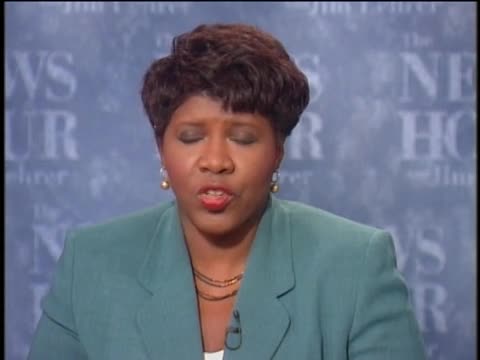
- Transcript
JIM LEHRER: Good evening. I'm Jim Lehrer. On the NewsHour tonight, the latest in the increasingly confusing legal battle over who will be the next President of the United States. We'll talk to campaign officials, legal experts and four newly elected members of Congress, among others. The other news of this day will once again be at the end of the program tonight.
HISTORY ON HOLD - DAY 6
FLORIDA RECOUNT
JIM LEHRER: The political struggle over the presidential vote in Florida became a legal fight today. On one front, a federal judge in Miami refused to stop hand recounting in several counties. Governor Bush's campaign had sued to end those recounts. There was no word on a possible appeal. On a second front, the Gore campaign went to state court to overturn Florida's chief election officials' ruling that all counties must certify results by 5:00 PM tomorrow. As of today, the unofficial Associated Press tally had Bush ahead of Gore by 388 votes statewide. Betty Anne Bowser begins our unfolding of this day.
BETTY ANN BOWSER: Election officials continued their labor-intensive manual recounts today in three Florida counties. Over the weekend, Volusia County chose to count all 184,000 ballots by hand, as did Palm Beach, where over 400,000 ballots were cast. Broward is hand counting three precincts. If there is a significant change from election night, officials said they will consider a full recount. And in a fourth county, Miami Dade, officials will meet tomorrow to consider a manual count there. But as their work continues, the two presidential campaigns are engaging in legal battles that could preempt their efforts. Today each side won a procedural victory. The first dispute concerns a Florida state law that says all county vote tallies must be done and certified by tomorrow evening if they are to be counted at all. Under the statute returns must be filed by 5:00 PM on the 7th day following the general election. If the returns are not received by the Department by the time specified, such returns may be ignored. Early this morning, Gore's running mate, Senator Joe Lieberman, argued against implementation of that law.
SEN. JOSEPH LIEBERMAN: To cut off the counting of votes in Florida would strike me as so extreme that I'd be very surprised if someone, particularly people in Florida, want their votes to be counted did not go to court. And, you know, the effect of that would be to delay this process even longer.
BETTY ANN BOWSER: The decision to enforce the 5:00 PM deadline came a few hours later.
BOB CRAWFORD, Florida State Election Canvassing Board: The instructions to me are clear; that we have to review the votes that are submitted by 5:00 PM on Tuesday. So, we looked very closely to see if there was any discretion. There is no discretion.
BETTY ANN BOWSER: Meanwhile officials in Palm Beach County explained why they went to court to seek an extension of the deadline.
JUDGE CHARLES BURTON, Chair, Florida Canvassing Board: I was concerned that in the process of doing a manual recount that clearly cannot be completed by 5:00 PM tomorrow, that in the process we were not going to disenfranchise every vote in the county.
BETTY ANN BOWSER: Volusia County sued too, even though officials there think they will finish on time.
DAVID BYRON, Volusia County Spokesman: We will be represented, are being represented this morning, in Miami in the federal action. Our layman's terms response in the federal action is that this canvassing board has the right to do what it's choosing to do.
BETTY ANN BOWSER: This afternoon, attorneys for the Gore campaign joined Volusia County in this Florida state courtroom asking that the deadline for certification of the vote tally be extended. Meanwhile, the refusal of a Miami federal court judge to stop the hand count was a victory for the Democrats. One of their lawyers was Harvard Law Professor Lawrence Tribe.
LAWRENCE TRIBE: If the district court had decided to shut down the process of manually recounting the ballots and to interfere in the operations of the state, it would have been quite a landmark. I think as it stands what he did was fairly normal and standard. It's important because the presidency of the United States might turn on it.
BETTY ANN BOWSER: Another Harvard law professor, Alan Dershowitz, has been retained in the suit by several Florida voters.
ALAN DERSHOWITZ: I think it takes incredible chutzpah for a candidate for President of the United States, who ran on a platform of leaving it to the states and leaving it to the local communities and keeping the federal government out of supervising the states and against judicial activism, to come into a federal district court this morning and ask to stop an ongoing state process, which is why I was asked by seven voters in Palm Beach County to come in to court and represent their interests this morning in trying to oppose the federal cost granting the injunction. We won and that means that the count goes on.
BETTY ANN BOWSER: Bush's lawyers had argued the hand count in four counties discriminates against residents in the other 63. Governor Bush's attorney said he was disappointed in the decision.
THEODORE OLSON, Bush Campaign Attorney: We think that these issues are quite fundamental and fairly basic. Every person in this country is entitled to have their vote valued and weighted equally and to be counted by persons who do not have an interest in the outcome. The Florida process allows individuals who are interested in the outcome to participate in the process and to make decisions with respect to how a person intended to vote and that that process treats Florida citizens differently, depending upon which county they reside in. We think that that is a fundamental flaw in the system. It violates the equal protection clause of the Constitution of the United States and every citizen's right to due process.
REACTION
JIM LEHRER: Further reaction from the two campaigns on what happened today: Vice President Gore spoke himself briefly this afternoon at the White House.
VICE PRESIDENT AL GORE: I'll just make a very brief statement. There is an awful lot at stake here, and what is at stake is more important than who wins the presidency. What is at stake is the integrity of our democracy -- making sure that the will of the American people is expressed and accurately received. That is why I have believed from the start that while time is important, it is even more important that every vote is counted and counted accurately because there's something very special about our process that depends totally on the American people having a chance to express their will without any intervening interference. That's really what is at stake here. And so that's what I'm focused on, not the contest but our democracy -- to make sure that the process works the way our Founders intended it to work. Look, I would not want to win the presidency by a few votes cast in error or misinterpreted or not counted. And I don't think Governor Bush wants that either. So, having enough patience to spend the days necessary to hear exactly what the American people have said is really the most important thing because that is what honors our Constitution and redeems the promise of our democracy. Now, if there's any saving grace at all to the extra time that this is taking, it is this: Schoolchildren all over the United States are learning a lot about how a President is chosen in this country. They're learning a lot about our democracy. And families are able to make the point without the fear of ever again being disputed that it matters whether or not you vote, and every vote counts. So, register and vote and participate in our democracy. So that's basically all I wanted to say.
JIM LEHRER: Joining us now from Tallahassee is Ron Klain, Vice President Gore's former chief of staff who is heading up the legal operation in Florida. Mr. Klain, welcome.
RON KLAIN: Thanks, Jim.
JIM LEHRER: So at the end of this day, let's take these things one at a time. The secretary of the state of Florida still intends to certify this vote at 5:00 tomorrow?
RON KLAIN: That's what she told us this morning when we met with her, Jim. And, of course, we think that's very unreasonable. The vote couldn't be final at the earliest until Saturday anyway when the foreign absentee ballots are counted, so that there's really no purpose served by a Tuesday 5:00 P.M. deadline, other than just cutting off the rights of hundreds or thousands of Floridians to have their ballots counted. That seems unfair and that seems wrong to us.
JIM LEHRER: Now what about the suit, the state court trial? Where does that stand right now?
RON KLAIN: Well, literally right now, our legal team is in state court here in Leon County in Tallahassee, Florida challenging Secretary Harris' arbitrary 5:00 P.M. deadline and seeking a court order saying simply this: The counties in Florida that have decided to count their ballots by hand should be able to conduct a hand count, and then those votes should count to the overall total in the state. It's a pretty simple principle, Jim. People's votes should be able to count.
JIM LEHRER: But there's no resolution of that as we speak, right?
RON KLAIN: No, that proceeding is ongoing even as we speak, Jim.
JIM LEHRER: Do you expect it to be resolved tonight?
RON KLAIN: Well, I think we expect the arguments to be completed tonight. The judge hasn't indicated to us whether or not he will rule tonight or take it under consideration tonight and rule in the morning. We're just not sure yet.
JIM LEHRER: Now, the bottom line for your campaign is that you expect the hand counting to result in Vice President Gore getting more votes than Governor Bush, correct?
RON KLAIN: Well, we certainly hope so, Jim. But what the Vice President has made clear is that he's prepared to accept any full, fair and complete counting of the ballots. We obviously believe our candidate got more votes on election day. We think a full, fair and accurate count would reflect that. But the point is no one really knows until the votes are counted. And Secretary Harris' decision to put an end to the counting seems both unfair and really I think it's unfair to both Governor Bush and Vice President Gore. I think it's unfair to Governor Bush because I think if he becomes President under these circumstances, the question will really be what would a full count of the votes have actually shown?
JIM LEHRER: You mean you think that Governor Bush, if, in fact, he does end up President of the United States as a result of this decision today by the secretary of state of Florida he would not be a legitimate President?
RON KLAIN: Well, that's not my place to say, Jim. What I'm saying is this: The best thing for everyone, both candidates, the best thing for American democracy, the best thing for the voters in Florida is to do what county officials have ordered: Do a careful, complete, but expeditious count of the ballots and let's see who got more votes.
JIM LEHRER: All right. The second issue is the federal case this morning in Miami. And you won that one, right?
RON KLAIN: Yes, we did.
JIM LEHRER: Now, there is some suggestion that this may be appealed by the Bush campaign. Are you all prepared to stay on the appeal all the way to the Supreme Court if that happens?
RON KLAIN: Well, it would be unfortunate if they appealed it. I think the case... I've seen not just our view but the view of many legal commentators -- was a fairly frivolous piece of litigation. The suggestion that the Constitution of the United States forbids the counting of ballots by hand when that's the way ballots have been counted in the country for hundreds of years is a pretty absurd argument. The judge dismissed it right on the spot, declined their request for relief right on the spot in an oral ruling this morning. If the Bush campaign, however, insists on pursuing this delaying tactic, this tactic to drag out this proceeding, then, of course, we will respond and defend on appeal as far as the Bush campaign takes it. That's their lawsuit, Jim. And the question of how far and how long it goes lays at the feet of the Bush campaign, not us.
JIM LEHRER: That's their lawsuit, but the one we were just talking about, those are your lawsuits. Is this what the Founding Fathers had in mind for the Supreme Court of the United States....
RON KLAIN: I certainly don't think so, Jim. But I think there's a big difference between the two lawsuits. The Bush campaign brought a federal lawsuit this morning to try to stop the counting of votes in Florida. The only litigation we've brought is litigation to try to allow the counting of ballots to be completed. I have to tell you, when I went to law school, the idea that someone would go to federal court to disenfranchise voters is contrary to everything I learned about constitutional and civil rights litigation. The role of the federal courts is in trying to get people the right to vote, not in trying to cut off the right to vote. So I think what we did in federal court today I think was right and just. I think our effort to set aside Secretary of State Harris' rule -- that arbitrary cut-off of ballot counting that will take place tomorrow at 5:00 PM -- is also right and just. There's a principle at stake and the principle is that people not only have a right to vote but have a right to have their votes counted.
JIM LEHRER: Mr. Klain, less we go too mired in the legalities of this, I mean, this is still a political battle, is it not? In other words, you all want hand counting because you feel that will result in more votes for Vice President Gore. The Bush folks want it to stay the way it is, the recount that has been done thus far to be certified because that will result in more votes for Governor Bush, period, right?
RON KLAIN: Well, Jim, I just disagree. I understand it sounds a little self-serving but the fact of the matter is we want the counting to be complete so we can see who got more votes. We believe Al Gore got more votes. Of course we believe that.
JIM LEHRER: Why do you believe that?
RON KLAIN: Of course, Al Gore got more votes in the popular vote nationwide, and certainly when one considers the thousands of people in Palm Beach County who thought they were voting for Al Gore and had their votes counted as votes for Pat Buchanan or not counted at all, there's no question that more people went to the polls on election day in Florida thinking they were voting for Al Gore than voting for George Bush. But the first step in this process, before we even get to Palm Beach County, is figuring out what a full, fair and complete count of the ballots would show. And that may show that Al Gore got more votes or George Bush got more votes. But we really don't know. And the fair thing is to count them and to see.
JIM LEHRER: But you believe it will show more votes for Vice President Gore, just for the record?
RON KLAIN: Well, I do, Jim, and certainly that's our hope and our expectation.
JIM LEHRER: All right. Now, then -- there's the overseas absentee ballots.
RON KLAIN: Yes, sir.
JIM LEHRER: Do you have any idea as to how many of these have yet to come in or have not been counted? Sorry.
RON KLAIN: Sorry about that. We really don't. There's no accurate numbers on that. I think the best guess is there may be a couple thousand of those ballots. In 1996 there were 2300 ballots. This was a higher turnout election. I think everyone expects there to be more of those votes. But no one really knows for sure.
JIM LEHRER: And do you expect those to go in Vice President Gore's favor?
RON KLAIN: Well, that's completely speculative. I don't even want to guess. Obviously, we hope more of all the votes go to Vice President Gore. We think he was the better candidate. We ran the better campaign. We were on the issues. And I certainly hope that as many people voted for him as possible. But anyone who speculates about those foreign overseas ballots is doing just that: Speculating.
JIM LEHRER: In a word, do you see an end game for this anytime soon? Could this thing be over at the end of the week, or do you think it's going to go and on and on?
RON KLAIN: Well, I don't think anyone wants it to go on and on -- at least we in the Gore camp don't. We'd like to have an expeditious end with a full, fair and complete count of the ballots and some resolution to the Palm Beach County situation. I think that's what we want; we want this process to move to completion as quickly as possible. As the Vice President said today, moving it along quickly is important but getting the fairest and most accurate outcome is the most important goal.
JIM LEHRER: All right. Mr. Klain, thank you very much.
RON KLAIN: Thank you, Jim.
JIM LEHRER: Now the Bush positions. Neither Governor Bush nor his chief legal representative former Secretary of State James Baker made public statements today, but earlier this evening his director of communications, Karen Hughes, spoke to reporter in Austin.
KAREN HUGHES, Bush Communications Director: It's becoming increasingly clear that Vice President Gore's campaign simply wants to keep counting votes until they like the results. The Vice President's remarks today are troubling. All week the Vice President and his campaign have said that Florida's laws should be followed, yet today the Vice President essentially said we should ignore the law so that he can overturn the results of this election. According to Florida's laws, counties have until 5:00 PM tomorrow to certify the results of an election that took place now almost a week ago. The Vice President now wants to waive that law so Democrat officials in Democrat precincts can try to overturn the results of this election-- results which were confirmed not just by one count but by two fair and accurate counts. The people of Florida, as I said earlier, deserve to have their votes counted fairly and accurately, not selectively or subjectively. The Gore campaign says it wants a fair and accurate count of votes. The only way that is now possible is to accept the results of the recount of Florida's votes, along with the final count of the overseas absentee ballots that are due in by law by Friday. Governor Bush has agreed to abide by that fair and accurate count, no matter what it might be. And Vice President Gore should do the same. I'll take a few questions.
REPORTER: Are you prepared to appeal the federal court ruling this morning? And if the 5:00 deadline tomorrow is abandoned, will the Bush campaign litigate or petition to open up counties such as Duval?
KAREN HUGHES: Carl, on the first part, the lawyers in Florida, I understand, are discussing that. There have not been any decisions made as to whether to appeal the federal court's ruling this morning. What was the second part?
REPORTER: If the 5:00 deadline is not kept for tomorrow and the recount to be certified, and if it's extended, will the Bush campaign seek to open up other counties for recounts?
KAREN HUGHES: Well, Carl, obviously we have to make those decisions at the time things happen. We continue to hope that Florida... that the law will be upheld. The law is very clear according to our lawyers. It says that the vote shall be certified by 5:00 PM on Tuesday.
JIM LEHRER: More on the Bush campaign's position now from Theodore Olson, the attorney who argued the Bush case in the Miami federal court this morning. Mr. Olson, welcome. I can't hear you. Can you hear me?
THEODORE OLSON: I can hear you just fine. I hope you can hear me.
JIM LEHRER: Now I hear you. Magic. It's working.
THEODORE OLSON: Thank you.
JIM LEHRER: Mr. Olson, Karen Hughes said no decision had been made yet on whether to appeal. It was up to you all in Florida to make the decision. Have you made it yet?
THEODORE OLSON: No, no decision has been made. The discussions are ongoing, and I can't tell you exactly when that decision will be made.
JIM LEHRER: On a scale of 1 to 10 how likely is it, it will be appealed?
THEODORE OLSON: I think we probably wait until a decision is made before we start to speculate about something like that.
JIM LEHRER: I mean, the decision was made... Oh, I see, your decision.
THEODORE OLSON: The decision with respect to the appeal.
JIM LEHRER: I see. You heard what Mr. Klain just said. Did you hear what Mr. Klain said, that the judge's ruling was so strong it seems unlikely that you all would win this on appeal.
THEODORE OLSON: Well, he wasn't at the hearing. I don't know who he was talking to. The judge said that the concerns that we expressed in this litigation were very, very serious. And he was concerned that since it was probably going to have to be decided by a higher court that he didn't want to give an injunctive relief at this time, and he thought that those decisions should be made by a higher court, but he said the concerns that you've expressed about this process are very, very serious. Now, let me tell you why he said that and why we have brought the case that we did: The process that we have here is a selective hand manual recount after the votes in Florida have been counted not just once but twice by a process that's objective and fair and reasonable by machines that have no interest in the outcome of the case. The process that we're seeing now involves selective counties, selected by Democrats, for recount according to unreviewable and inconsistent standards. We have one set of rules in one county, another set of rules in another county. In Palm Beach on Saturday, many Americans saw the rules being changed during the process itself, and the ultimate decision as to whether to count a vote or how to count it is being made under that system by Democrat officials. So, if your vote is going to be evaluated by an official who has an interest in the outcome opposite yours, you are going to be concerned about that. All Americans are entitled to have their votes measured equally by a consistent process, and that's the exact opposite of what is happening in Florida.
JIM LEHRER: So your expectation, your campaign's expectation is that if this manual voting is allowed to continue, the end result will be Vice President Gore will win Florida?
THEODORE OLSON: Well, I have no idea what the outcome of it will be, but it is clear what the objective of the Gore campaign is. As Karen Hughes said, they are interested in recounting and recounting and recounting until they're satisfied with the result. On top of that, as we heard in court today, there are more than eight lawsuits filed. The lawsuit that was filed to extend the deadline is yet another one. The deadline, by the way, is mandatory in the statute. At 5:00 PM on Tuesday, the process must come to an end and the results must be certified. This is another example of what doesn't matter what the law says, we're going to try to keep the process open. So we have perpetual recounts. We have perpetual lawsuits; and we even heard the lawyers for the Gore campaign in federal court today suggest that there ought to be additional elections in certain areas -- undoubtedly the areas that would be favorable to them. So we have a process that the Gore campaign is very sad what is happening in this country. They will not accept the outcome of a duly, fair process where the votes were counted twice; so recounts must go on, lawsuits must go on, and the threats of further dislocation and chaos in this elective process.
JIM LEHRER: But the legalities... I'll say the same thing to you as I just said to Mr. Klain...the bottom line here is you want this thing stopped tomorrow afternoon at 5. That means Governor Bush carries the state and wins the presidency, correct?
THEODORE OLSON: Well, it happens to be... I don't know what the result, the certifications will be by 5:00 tomorrow. The law of the state of Florida says that that is a mandatory ending date. The position that the Bush campaign has been throughout all this process is let's comply with the laws of the state of Florida with respect to the count and the recount. The only thing that we've objected to is the constant barrage of litigation and this process of selective recounting according to standards that don't exist that put the decision with respect to the counting of ballots in the hands of partisans. And people saw what a chaotic process that is -- people handing ballots to one another, holding them up to the light, changing the rules. This was chaotic. It's a very, very sad thing that this process has turned into this.
JIM LEHRER: What's your reading of the state court hearing that is still underway as we speak? Do you think you're going to win there or do you think the Democrats will prevail?
THEODORE OLSON: I don't know because I was not there at that state court hearing. But what I do know is what the position... our position... the position of our lawyers are in that case and the secretary of state and, an elected official of the state of Florida, looked at the statute and said, "I don't have any discretion here. There isn't any emergency. It will be seven days after the election last week. The statute says that the certifications must take place at 5 o'clock on the seventh day, by 5 o'clock on the seventh day, and that must be the end of it." Now, the Gore campaign thinks, "well, we want to continue to count ballots until we're satisfied with the result and the courts ought to interfere and extend that deadline apparently interminably."
JIM LEHRER: But, Mr. Olson, doesn't the same thing apply there? The secretary of state is a Republican who supported Governor Bush. The same complaint could be made about her that you're making about the Democrats doing the hand counting?
THEODORE OLSON: Well, no because she's complying with the statute that was enacted by the legislature and is in the books and has been in the books for a long, long time. All she's saying is that the statute and anyone who would read the statute would find that the statute means what it says. I mean it's very clear. So all....
JIM LEHRER: I'm sorry. Go ahead. I was just going to say, wouldn't the outcome of the election of the President of United States constitute an emergency for a little discretion on her part?
THEODORE OLSON: She said if we had a hurricane or if we had certain events like that, just because someone wants to keep the process open to some interminable, never-ending date is not a good reason to do it. Remember, we're only talking about four counties here -- four counties selected by Democrats for recount because they could have the recounts done manually, subject to the individual discretion of the vote counters and those vote counters are Democrats. So it's a process that's extraordinarily unfair. Think of the other 63 counties in Florida who aren't going through this process. Their votes were counted and presumably are complete through a process that weighs votes equally. And yet four counties are going to go through this process where they keep getting changed and added to and so forth. It's unfair and it violates the Constitution to have an inconsistent process that has no end to it.
JIM LEHRER: Mr. Olson, thank you very much.
THEODORE OLSON: Thank you, Jim.
FOCUS - THE CHALLENGE
JIM LEHRER: Gwen Ifill now has some expert legal analysis of this situation.
GWEN IFILL: For that, I'm joined by Bill Lash of George Mason University who supports Governor Bush; Roy Schotland of Georgetown University who supports Vice President Gore; Brenda Wright of the National Voting Rights Institute, a non-partisan public interest organization, and Richard Briffault of Columbia University School of Law.
Mr. Schotland, explain to me why the Gore position on this is the better one.
ROY SCHOTLAND: I wouldn't go that far. I would say each of them is half right. I'd say Ted Olson clearly right when he speaks of chaos. I'd say Ron Klain is clearly right when he says that the argument they made, that is, that you cannot have hand recounts was an absurd argument. But I do not agree with Klain that the Ted Olson lawsuit, the Bush lawsuit is frivolous. They should be making exactly the same complaint that the Democrats are rightly making about the secretary's insistence on tomorrow's deadline. This is arbitrary action, arbitrary by the secretary, arbitrary and without standards and guidance by the recount process. The recount process should be regularized. This morning's "Post" notes that Florida law is one of the loosest in the country. There's no guidance given. What the Bush people should be doing is insisting on the rule of law instead of on the preposterous idea that you can't have any hand counts. The rule of law means due process of law, which means steps to stop arbitrary action. They should freeze the recounts until the secretary of state of Florida or the election commission puts out standards on how to conduct those recounts.
GWEN IFILL: And Al Gore should give up this idea of pushing that 5:00 PM deadline back tomorrow?
ROY SCHOTLAND: He should stay with that. It's the same legal proposition. Officials cannot act arbitrarily. When they do, that is a lack of due process.
GWEN IFILL: Bill Lash, how about that for the Bush campaign, from the point of view of a Bush supporter? Why is his argument better in this?
WILLIAM LASH: Well, Bush is actually lucky because he has the statute to fall back on. The statute speaks of a must. There is a mandatory requirement. Votes must be certified seven days after the election at 5:00 PM. That's what we're looking at. This question of letting mandatory recounts by hand keep continuing and continuing flies contrary in the face of the statute. The secretary has no discretion, and putting aside the question of partisanship, she's supported by Mr. Crawford who is a Democrat on the commission who says her hands are tied. The statute is an absolute. The discretion that she stated only refers to situations of emergencies -- again a Hurricane Hugo. The drafters of that statute knew you would have close elections, they knew there would be ambiguity; they knew there would be time for recounts. Those recounts can occur and they will occur but they must occur during the time period specified. You have seven days, that's it.
GWEN IFILL: Mr. Lash, what are the legal options, the legal recourse, which the Bush folks should be pursuing right now?
WILLIAM LASH: Well, again, I think supporting the secretary's action is a leading effort that should be engaged in... and obviously the action at the federal court, they knew that was a risky strategy. But I think that was a defensive tactic. You know, people are claiming that ...
GWEN IFILL: Excuse me. Should they appeal that decision?
WILLIAM LASH: It's funny. The court leftist wide open by making statements that again we don't want to interfere with an election but we recognize the importance of the arguments that are being made. And I think the door is wide open. Again I have not read the entire order. But the door is wide open. They just simply felt that an injunction was not appropriate at this time. They didn't say this was a bad argument. Again, like Ted Olson said, they realized it was a serious matter, a very grave matter.
GWEN IFILL: Brenda Wright, most of us are paying attention for the first time to this notion of recounts and votes being, you know, hanging shads, new terminologies we never heard of before. How unusual is this really?
BRENDA WRIGHT: Well, you know, there's nothing terribly unusual about a recount in an election situation. It's something that happens in almost every election. Often it happens at the local level, the county level, state legislative level. The reason this is getting so much attention is simply because the stakes are so high. And I think we're really in danger of losing sight of something very important here, which is that it's not ultimately in the end just about which candidate wins or loses. What's really key here is determining the will of the people, and what's really key is making sure that every voter gets to vote, that no one is disenfranchised. People have died in this country for the right to vote. And I'm not just talking about the civil rights struggle. I'm talking about World War II veterans, some of whom may be living now in the Golden Lakes Retirement Village in Palm Beach County, that put their lives on the line to protect the right to vote. And if we say to those people, maybe you stood in line for an hour but I'm sorry we just don't have time to count your vote, I think that would be tragic for our system. It would send a terrible message to people. We have a problem with voter apathy and we need to encourage people to feel that their vote will count.
GWEN IFILL: Professor Briffault, we heard the Bush campaign say that because of the manner that this manual recount is happening with people holding up ballots to the light toe see what it is that basically it's an illegitimate process.
RICHARD BRIFFAULT: That's not right. I think manual recounts exist in many places in the country. Governor Bush himself signed into law in Texas a law that states that a manual recount is the preferred form of recount after an election. The manual recount gets at - is the fact that machines sometimes make mistakes. Machines don't pick up all the votes as they are counted. Machines sometimes see a stray mark and they treat a ballot as spoiled when if you looked at it manually you will see that the voter actually picked a candidate. I think most of the effect of the manual recount is going to be not to disenfranchise anybody but to actually add in votes which the machines concluded were... where the machine concluded the voter's enough. It could be that by actually eyeballing a ballot that preference becomes a lot clearer. Just today the "Washington Post" reported that there were... that the machines in New Hampshire were off by 1,000 votes, this there was a computer error. They treated some votes as the date and ignored it. That's not going to happen in a manual recount. There's no reason to believe that a manual recount is more inaccurate than another count. Here you actually have representatives of both parties present in public eyeballing the ballots and resolving uncertain questions. I don't see that the manual recount is inherently troublesome.
GWEN IFILL: But, Mr. Schotland, we're talking about a manual recount only in certain heavily Democratic counties.
ROY SCHOTLAND: That is part of the problem. That is the lack of standards to conduct the recounts because this county may do it this way and that county may do it that way. I agree with everything Richard Briffault has just said, I always do but he hasn't spoken to the fact that this particular recount is being conducted in an incomparably looser fashion than is normal. That's why four hours into it in Palm Beach County they changed. Why did they change? Because they remembered that, gee, we have some rules from 1990. That is no way to run official action of any sort let alone the stakes as high as this.
GWEN IFILL: Bill Lash, what is it that you would advise if they were calling you, the Bush campaign, and asking you how far they can take this politically as well as legally in terms of appealing it, in terms of making case that every vote shouldn't be counted if the Gore people were to have their chance to describe it that way?
WILLIAM LASH: Again I think the Bush campaign is cleverly and properly recognizing that the question is, is the law being followed? The ballots must be certified tomorrow by 5:00, end of story. Now, the question of the recount, I agree with Roy Schotland that the arbitrariness of looking at the tri corner shad, which is one little dimple pushed out, or the impregnated shad. No one in law school discussed such things about the indented shad. If you're allowing people who are partisans to decide the fate of a country and the fate of an election by their definition of the will of the people by looking at stray marks I think the whole system is going to be in trouble. I do believe that the challenge should continue under the statutes. I do believe also that if the... If they believe that the court was in error today in not granting the injunction junction, they have the right to appeal. What disturbs me is when the Gore campaigns talks about we have other options, and by that I mean litigation by proxy, the other eight or nine lawsuits that Gore supporters have introduced in Florida.
GWEN IFILL: Brenda Wright, there are also questions being raised by tight race in other states. Do you think there should be a federalized ballot, a way of taking the power away from the states for these kinds of decisions and having one common ballot that can't be challenged on a state-by-state basis?
BRENDA WRIGHT: Well, I think that there are some difficulties with that simply because every state's elections can be so different. Some states have ballot initiatives, other states don't. Some states have non-partisan elections that might go along with some of the partisan races. There are so many variations locally that there are some practical problems with doing that, even though it might be nice to set some standards that states could perhaps adapt to their own individual circumstances.
GWEN IFILL: Would you like to weigh in on that, Mr. Briffault?
RICHARD BRIFFAULT: Well, it a tricky question because on the one hand we might want to have uniform national standards for the federal part. But, of course, voters are voting in state elections at the same time, and it would be hard to give two separate ballots. If I could comment for a second on the clarity of the Florida law, it is not completely clear; yes, the count is supposed to be done by 5:00 PM tomorrow. But Florida law also says that the counties have authority to conduct manual recounts, that the final count shall include machine ballots, absentee ballots and write-in ballots, and manually counted ballots. So it's hard to see how you can do both. Absolutely true that the statute says 5:00 PM tomorrow -- but the statute also says the counties can choose manual counts and that the manually counted votes have to be included in the final result. I also think Roy Schotland is, of course, right about the problems of variation among the counties. In some ways that just extends the issue of whether we need to have a national ballot but remember, of course, that we've already had that variation in the ballot itself in Florida. Palm Beach County used a different form of ballot than the other 66 counties. And I think what this whole episode points up is that we have national elections but they are locally administered and local administration is kind of the Achilles Heel of our entire electoral process. We need to spend much more time figuring out... investing resources in how local governments actually administer our elections.
GWEN IFILL: Mr. Schotland.
ROY SCHOTLAND: Gwen, I think you've made the most important point in this whole discussion, which is what can we do to avoid recurrence of this? Can we come up with some kind of national ballot or minimal standards? Now, the Constitution does give the time, place and manner decisions about elections to the states, but in the same provision, if you don't stop reading, it gives Congress the power to say otherwise, that is, to regulate. And our election administration around the country has been, let us face it not in everywhere but too many places a disaster. Where Richard is right now 300 machines are impounded by the police because of a hung-up state Senate election; in St. Louis the mayor says we have terribly election administration. Hey, Mr. Mayor, how about it? The only way we're going to avoid a recurrence of this kind of thing is with some kind of federal statute. And we won't have separate elections. If the states don't want to have the same kind of election machinery and administration going on, they can go to off years.
GWEN IFILL: Mr. Lash, I just want you to pick up on Brenda Wright's point earlier about the rights of the voters. Exactly how do you get back to the question about voters' rights in all of this?
WILLIAM LASH: The voters had their rights. Even in Florida law... the Florida constitution, they expect voters to have a minimal level of intelligence, take the certain amount of deliberation given the seriousness of what they're doing. And mere confusion, coming in and saying a day after, two days after, after someone solicited you and put it in your head, maybe I voted the wrong way, is not going to mean you were disenfranchised. I think frankly the loose use of the word disenfranchisement is really an insult to people who actually were disenfranchised over the years in this country. People who made mistakes in country because they were either too busy, didn't study the ballot in advance -- in the civil case people said I think I made a mistake but the line was too long to get back on again -- so let it ride. I can't feel sorry for people who throw away their rights.
GWEN IFILL: Well, we're going to have to leave that there for tonight. Thank you all very much.
FOCUS - A HOUSE DIVIDED
JIM LEHRER: Now how all of this looks to some newly elected members of Congress and to Margaret Warner.
MARGARET WARNER: The new members are two Republicans, Shelley Moore Capito of West Virginia, and Pat Tiberi of Ohio; and two Democrats, Steve Israel of New York and Brad Carson of Oklahoma. Welcome to you all. Congratulations on your wins.
Shelley Capito, let me start with you. How do you feel about this whole unfinished election and all the legal wrangling that is going on in an effort to resolve it?
REP.-ELECT SHELLEY MOORE CAPITO: Well, I have the same feelings that I think every citizen across the nation probably has of an unsettling feeling. I'd like to see a resolution come, you know, sooner than later. And I feel that we don't want to damage our process in electing our President, which is absolutely the most important thing we can do. But in terms of being in Washington today, it's... it adds to the excitement of being here. I'm not sure how it has inter-played with our day, but we still have plenty to do.
MARGARET WARNER: Steve Israel, to you next. How do you feel about it? Do you think all of this wrangling we're seeing in Florida, does it look like a fair process to you, a constructive one?
REP.-ELECT STEVE ISRAEL: Well, Margaret, I think about 50% of the American people voted for a moderate Democrat. About 50% voted for someone who said that he's a moderate Republican. This is a mandate for moderation. And I believe that we in Congress have an obligation now to work in a bipartisan constructive spirit and move ahead on a common sense agenda for our country and not exploit the divisions that seem to be occurring in Florida.
MARGARET WARNER: How do you feel about it, Mr. Tiberi? In terms of first of all - and I want to get back to what you all in Congress can do, but what you're seeing going on in Florida? I mean, is this unsettling or do you say to yourself, well, the best minds in both parties are working this out and the result is going to be a fair one?
REP.-ELECT PAT TIBERI: I think partly it adds to some cynicism as people see what's happening down there now. And my hope is -- is that we can get by this as soon as possible and begin a new Congress in Washington, D.C. , with a new President and bipartisanship.
MARGARET WARNER: What do you mean it adds to cynicism? Do you mean in the American public?
REP.-ELECT PAT TIBERI: Sure, I think so. And certainlywe've all just been through elections. And when you have 50% turnout, that's great in America today. I have an uncle here from Italy. They have 88% turnout. That's normal. So when you see something like this that kind of goes on for a week now, I think it does add cynicism to some folks.
MARGARET WARNER: And Brad Carson, how do you see it in terms of the impact it's having?
REP.-ELECT BRAD CARSON: I think it reaffirms for everyone that importance that every vote counts. I don't think we're in a crisis situation. I don't think people even find it unsettling. But people do want a resolution. We have to balance our need for an expeditious result in this election with the even greater desire to have a sense of legitimacy when you go into the presidency. If you don't have that moral authority behind you, it will certainly lead to unhappy times in the future.
MARGARET WARNER: Shelley Capito, as you look as what's going on in Florida, does it appear to you that the folks there-- maybe this is very obvious-- but it's been driven purely bipartisanship? Do you get the feeling -- would you even go further that someone is really just trying to win this election, even steal this election however they can, or do you have confidence in the way it's unfolding?
REP.-ELECT SHELLEY MOORE CAPITO: I have confidence in the fact that the elected officials in Florida are moving forward to obey the election law as it stands in Florida. I do almost have a sense that we're going through another election. You know, you see the battling of the different Gore and Bush camps and in a way that was portrayed through the election. But I have full faith in our system, and I have full faith in the American people to get together and unite behind whoever comes out whenever. My hope is that we settle this sooner than, as I said earlier, sooner than later in an objective fashion. I think we can do that.
MARGARET WARNER: All right. Steve Israel, how do you think... let's turn now to one of these men will finally get picked as the winner. How do you think all of this will affect his ability to lead, the way he's regarded? For instance, if George W. Bush is ultimately declared the winner, are you going to regard him as a legitimate President with a legitimate right to lead?
REP.-ELECT STEVE ISRAEL: Of course. Look, I was a local town councilman in a very Republican town working with a very Republican majority in my town hall. I had to learn to reach across party aisles and throw partisan labels aside. That's what I'm going to do here in Congress. Whoever is elected President is the President. And we have a special obligation, Republicans and Democrats, on the Hill to lead by example and to show our constituents that we can work together. We're not going to exploit this. We're not going to allow the divide to deepen. We're going to come together and preserve Social Security and pass a prescription drug plan and do what's in the best interest of our constituents.
MARGARET WARNER: Pat Tiberi, how do you think this will affect the ability of the new President to lead and to lead this Congress?
REP.-ELECT PAT TIBERI: I think you have a number of people coming in, and I've had the opportunity to work in the minority with a Democrat majority and in the majority with a Democrat majority.
MARGARET WARNER: In the Ohio house.
REP.-ELECT PAT TIBERI: And we did that to get things done and put aside the partisanship. I think that Shelly has done the same thing and Steve, obviously, and Brad has as well. And so I think you're seeing some folks who have just been elected who are ready to put aside differences to work for people.
MARGARET WARNER: Brad Carson, I'm hearing from all of you this not just hope but confidence that you all can make a difference here in Washington. What is going to be different? Why will it be, do you think, if this is what you're all saying, not as acrimonious, not as bitter, not as partisan?
REP.-ELECT BRAD CARSON: I think what will be different is the circumstances of the presidential election are going to force upon us the need to have even more good faith, to extend credit to the other party, to make sure that no one in the country, regardless of what political differences might arise see the president, whomever that might ultimately be, as illegitimate. Before us are a couple of alternatives. Rutherford B. Hayes, who was in this position in 1866, had a terrible presidency. On the other hand, John F. Kennedy won in a very close election with widespread allegations of fraud in 1960 and was seen as legitimate, having a great deal of authority. So the difference is going to be the spirit of the people who are elected the spirit of the people across the country and making sure that even though there will be differences of policy that we never question one's right to be in the office in the first place.
MARGARET WARNER: Why do you think it will be different? I'm sorry. I was turning to Ms. Capito; I should have said so.
REP.-ELECT SHELLEY MOORE CAPITO: I think it will be different because I really think the American people by having so many close races across the nation, not only the presidential race, my race, many, many races, I think the American people are saying enough of the divisiveness, enough of the partisanship; let's work together; let's get some of these issues that we've all talked about in our campaigns decided and worked in a bipartisan way so we get the best solution. So I feel the fact that we're having close elections everywhere to me is the fact that the American people are listening, and they're paying attention to their candidates and what they're talking about. So I'm an optimist. I'm encouraged. We're going to come out of this just fine.
MARGARET WARNER: Steve Israel, you sounded optimistic from the get-go in our little discussion. From being here just this day or two, one, how do you find your fellow freshmen and, two, how do you find the leadership in that regard? In other words, do you feel -- are you hearing anything different? This is the same leadership that's presided over a pretty acrimonious couple of years.
REP.-ELECT STEVE ISRAEL: Yeah, I think that there are several important distinctions. First of all we're a freshman class of over 40 people. And I believe that virtually all of us heard on the campaign trail our constituents say, "end the partisanship. Don't close the government down. Learn how to work together." I believe that's a mandate that we all carry to this institution. We were in a meeting, the Democrats were in a meeting this afternoon, with Leader Gephardt. And he made a very strong appeal on the need for bipartisanship. He said, "look, you guys have to work together. You need to have relationships with Republicans. You need to reach across party aisles." He noted that he had had a conversation with Speaker Hastert. That's the model that we have to per sue because the alternative is more years of paralysis. And that's no alternative.
MARGARET WARNER: But why, Pat Tiberi, I keep coming back to this -- why do you think it will be different? I mean, in other words, all these members of Congress -- including the members who have been here a long time -- were also elected by ostensibly folks who said we want you to work together.
REP.-ELECT PAT TIBERI: Well, I think Shelly hit the nail on the head. We have a number of people who are in close elections. We have a situation in Florida right now, we have a razor-thin majority in the House and in the Senate. And I think there's going to be an extraordinary effort by Republicans and Democrats to work together in a bipartisan style.
MARGARET WARNER: All right. And what are you hearing from the leadership here?
REP.-ELECT PAT TIBERI: Same thing what Steve just talked about, that we need to work in a bipartisanship style to move the ball forward, to get things done for the people of America.
MARGARET WARNER: Brad Carson, are you getting the impression from the leadership that working together, that they're ready to actually compromise, which is, I mean, you can always have nice feelings but ready to give?
REP.-ELECT BRAD CARSON: They're all saying that we want to compromise. I do think that the country is ready for that kind of moderation, for that kind of compromise where we get actually something done. You know, maybe the triumph of hope over experience but that's the nature of running for office is that you believe you can do something differently. The country is ready for an end to this kind of massive gridlock where people use issues not to help people but as a wedge to try to win the next election. I believe people are tried of that. People are saying today that we come from all across the political spectrum, that we want to do something different and actually effect change rather than simply worry about using something as an issue to club the opponent with.
MARGARET WARNER: And, briefly, I'd like to get around to all four of you. How difficult is it for you to envision, starting with you, Shelley Capito, to envision what it is going to be like as a member without knowing who the President is going to be?
REP.-ELECT SHELLEY MOORE CAPITO: Well, quite honestly, Margaret, there so much to learn that we learned today that I'm putting my head down, I'm almost in the campaign mode and just trying to study. So, as I said, whoever comes out on top we'll unite behind them. We're looking forward to the resolution.
MARGARET WARNER: Steve Israel?
REP.-ELECT STEVE ISRAEL: Well, I'm still learning how to find my way to the rest rooms. Look, I think I can work with anyone. That's why I was elected on a campaign pledge of bipartisanship, so no matter who the President is, I'm going to support my President and work for a legislative agenda that makes sense.
MARGARET WARNER: Pat Tiberi?
REP.-ELECT PAT TIBERI: Same thing. We have to work together to make America a better place to live and work and raise a family.
MARGARET WARNER: And it isn't hard for you to think ahead not even knowing who the President is going to be?
REP.-ELECT PAT TIBERI: No. We have a lot on our plate and a lot to do in the next couple of months.
MARGARET WARNER: All right. Brad Carson.
REP.-ELECT BRAD CARSON: Well, I agree. I think by the next couple of weeks we'll know who the President is. By the time any of us get to Washington and start casting votes we'll have a President and a full cabinet.
MARGARET WARNER: Great. Well, thank you all four very much and good luck.
NEWS SUMMARY
JIM LEHRER: In the other news of the day, Palestinian gunmen killed four Israelis in ambush attacks in the West Bank and Gaza Strip. Two of those attacks were in Israeli-controlled areas. The commander of the Palestinian Fatah movement had called today for taking the conflict into Israeli sectors. Fatah is the organization headed by Palestinian Leader Arafat. Also today, three Palestinians were killed in clashes with Israeli troops. A fourth died of wounds suffered on Saturday. In Washington last night, Israeli Prime Minister Barak meet briefly with President Clinton at the White House. Afterward Mr. Clinton did not comment but a top Israeli aide said the President hoped to see peace talks resume before he leaves office in January. Barak said the fighting would have to end before negotiations can resume. In Austria today, rescue teams began removing the first bodies from the scene of a deadly cable car fire. At least 159 people died in Saturday's blaze, including eight Americans. The car caught fire in a tunnel on its way to a mountaintop ski site. Police in Salzburg says large parts of the car were melted, and many bodies were burned beyond recognition. The cause of the fire was not known. New federal safeguards against repetitive stress injuries were announced today. The Occupational Safety and Health Administration said the rules would take effect in January. More than 100 million Americans would be covered. Businesses could be required to alter work stations or simply provide information on ailments like carpal tunnel syndrome. Business groups said today the rules were too vague and too expensive. It will cost a penny more to mail a letter or card next year. The independent postal rate commission approved that rate increase today. It's likely to take effect January 7. The price of a stamp will go from 33 to 34 cents. Rates for other kinds of mail will also rise. The last increase was in January, 1999. We'll see you on line and again here tomorrow evening with our continuing coverage of the presidential election story among other things. I'm Jim Lehrer. Thank you and good night.
- Series
- The NewsHour with Jim Lehrer
- Producing Organization
- NewsHour Productions
- Contributing Organization
- NewsHour Productions (Washington, District of Columbia)
- AAPB ID
- cpb-aacip/507-183416tj02
If you have more information about this item than what is given here, or if you have concerns about this record, we want to know! Contact us, indicating the AAPB ID (cpb-aacip/507-183416tj02).
- Description
- Episode Description
- This episode's headline: Recount Reaction; The Challenge; A House Divided. ANCHOR: JIM LEHRER; GUESTS: VICE PRESIDENT AL GORE; RON KLAIN, Gore Campaign Counsel; KAREN HUGHES; THEODORE OLSON, Bush Campaign Attorney; ROY SCHOTLAND, Georgetown University; WILLIAM LASH, George Mason University; BRENDA WRIGHT, National Voting Rights Institute; RICHARD BRIFFAULT, Columbia University; REP.-ELECT SHELLEY MOORE CAPITO, (R) West Virginia; REP.-ELECT STEVE ISRAEL, (D) New York; REP. -ELECT BRAD CARSON, (D) Oklahoma; REP.-ELECT PAT TIBERI, (R) Ohio; CORRESPONDENTS: FRED DE SAM LAZARO; BETTY ANN BOWSER; SUSAN DENTZER; RAY SUAREZ; SPENCER MICHELS; MARGARET WARNER; GWEN IFILL; TERENCE SMITH; KWAME HOLMAN
- Date
- 2000-11-13
- Asset type
- Episode
- Topics
- Politics and Government
- Rights
- Copyright NewsHour Productions, LLC. Licensed under a Creative Commons Attribution-NonCommercial-NoDerivatives 4.0 International Public License (https://creativecommons.org/licenses/by-nc-nd/4.0/legalcode)
- Media type
- Moving Image
- Duration
- 01:04:16
- Credits
-
-
Producing Organization:
NewsHour Productions
- AAPB Contributor Holdings
-
NewsHour Productions
Identifier: NH-6896 (NH Show Code)
Format: Betacam
Generation: Preservation
Duration: 01:00:00;00
If you have a copy of this asset and would like us to add it to our catalog, please contact us.
- Citations
- Chicago: “The NewsHour with Jim Lehrer,” 2000-11-13, NewsHour Productions, American Archive of Public Broadcasting (GBH and the Library of Congress), Boston, MA and Washington, DC, accessed October 11, 2026, http://americanarchive.org/catalog/cpb-aacip-507-183416tj02.
- MLA: “The NewsHour with Jim Lehrer.” 2000-11-13. NewsHour Productions, American Archive of Public Broadcasting (GBH and the Library of Congress), Boston, MA and Washington, DC. Web. October 11, 2026. <http://americanarchive.org/catalog/cpb-aacip-507-183416tj02>.
- APA: The NewsHour with Jim Lehrer. Boston, MA: NewsHour Productions, American Archive of Public Broadcasting (GBH and the Library of Congress), Boston, MA and Washington, DC. Retrieved from http://americanarchive.org/catalog/cpb-aacip-507-183416tj02