Inner-View; Interview with Tony Orlando
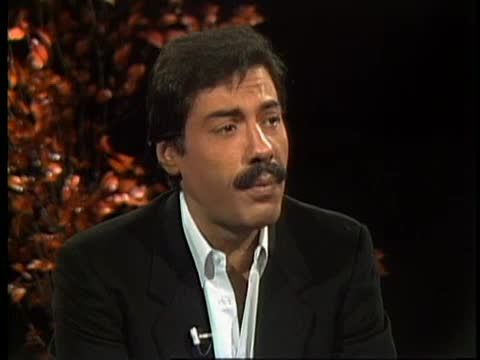
- Transcript
A. You know you feel with your most problems. And as you can tell the guest here is Tony Orlando. Welcome. Thank you. Thank you. Thanks Well look since you're such a dull entertainer there's nothing really to talk about but there's so much to talk about because you straddle so many decades really and as as young as you are you know it's kind of you're.
You're not unique but there are not too many like you who have been in the business that long. Well I just I don't think I've been in it long enough. When I look at the career of George Burns or Bob Hope To me that's that's thing time you know that's thing you have a few more hours a few more hours that hopefully you know. But it's been you know it's been 20 years for me. I'm 38 years old and I look forward I'm just beginning to scratch the surface of this business there's so much to learn and so much to do and I am amazed how new it feels to me all the time. Just like for instance recently doing Broadway last year in Barnum Charles was a new experience I mean it's a totally different form doing films is a totally different forms and I'm now doing all the time thank goodness and it's a whole new exciting adventure for me. Even though it's in the same business that I've been living in for twenty two years what I want to study yellow ribbon anywhere you like so it was about how it came about the album the record and why.
OK a yellow ribbon is a story. When I watch this kind of form with entertainers I always notice that the story is very similar when it comes to their biggest success. Usually it's a song or a movie that they never thought would sell. But they never thought was good. That they never thought would do well. And lo and behold that's the very thing that ends up being the big one the one that you think is going to be the big one usually ends up going like that yellow ribbon was exactly that. When I was looking for material and this was now to just put it in the framework of time of the beginning of 1973 I had just finished recording with the girls. A few hit records in a row. Two of which reached number one. But after those first two the next maybe three or four I think reached the top 10. The first two were so huge Charles that they the next few didn't seem as big even though they were hits and we had to find that one more
hit record that I knew would put us over the hump as just not being a one record act. So we had candida knock three times then that spell and looking for material for an album I felt it was time. To do an album that was really full of all kinds that was a very eclectic album and I felt that maybe the way to go was to do everything from rhythm and blues to country to whatever it was to experiment to find a new way musically. They came to me with a song to write his own Levine and Larry Brown I did not write you know we've been watching and they came to me with this song that I thought was the worst song I've ever heard in my life. I thought it was a Hopi title. I said Tie a Yellow Ribbon Around the old oak tree is something I don't I can't imagine myself saying. I don't think anybody would even want to hear about it. And I'll grow my song in as things told me the song had all of the the elements of being a hit record
or a hit song. So I shelved it for about a month and I found myself while in the studio constantly referring to the melody in my head all the time. Tie a Yellow Ribbon I kept singing it. And I walked in and I said to the producers at the time had made use of Apple who had produced all the records we've had so we went on records. This song is haunting me. Even though I'm not crazy about it it's haunting me and any song that haunts me that much I think deserves attention. We went into the studio and we tried several different ways it was played to me originally as a country song. You know just kind of a country strum and we went in and finally found a groove for it. More or less in it to feel like a Mack the Knife at least in the bass line which she she she. That kind of feeling and I started to sing it very much as Bobby Darin would approach the song. And the rest was history the record came out it was the biggest record I ever had any resistance and they
want you to do it as a country. So you know we were searching for a very often a song. Has all the elements accept how it is to be played. Sometimes a song can be played slow and if it was presented to you in a fast tempo it has met more magic in a slow tempo. So when you're in the studio one of the things that you try to do is find a feel for it. Sometimes you walk in the feel is already written in the song you don't need to think about it. This particular one we didn't know exactly how to approach that song and when we did we knew just listening back on the basic tracks that we had something very special. We did know that how special. I had no idea it was going to become a signature for me a song that will remain with me as a as a Mack the Knife in the body down were Bojangles with Sammy. John you sing right. No you don't sing. Do you remember the record the record for sure. What what appealed to you.
Well Heather So tell us your name. John of Varus I had a lot of good feelings it was that I could relate to it seem like you know some of the things that I've been through in my life coming home and you know things that you suspect maybe somebody I want to be wait in our care to say again you know. So it did catch that kind of a nerve and yeah I think the song it's interesting John should say that because I think the song was one of the few that was a love song. With another kind of twist another kind of story to it. It wasn't just boy girl it was a story about a guy who was in prison for three years coming home hadn't seen or she'd written to him. It was it was a story very much in the kind of in a folk kind of a way in a very Americana. The story's a very American of kind of story yellow ribbon. And so we did not realize it when we first recorded it that that
back in the days of the Civil War. We were in yellow ribbons in your hair meant greeting home. She Wore A Yellow Ribbon like in the John Wayne film. You know she wore yellow and here was a custom a tradition American tradition in a welcoming home the soldiers. We did not even realize that because the song was written about this prisoner. It was based on a true story that supposedly did happen down in Florida although there is no proof of that. The original concept the story was written in Reader's Digest that's where the writers first saw the story of a Yellow Ribbon there was a movie made of it three years before we ever even the song was even written about this very guy. It was a reversal. Usually the song comes before the film. In this case if a film came before the song Why did they come to you. I mean there are a lot of singers that they could have come to why you. Well the two writers that wrote the song were writing for us at the time the
group. Exclusively really role. We were writing for us all the time. Although I tell you something is interesting you should say that because I was suggesting the song for friends. For instance I said you know you should show this song to Bobby Vinton I think Bobby would have a big hit with it. I remember calling Jimmy Darin who's a buddy and calling him up and saying boy I found a smash for you Little did I know I would be giving away you. How do you know and he said to me on the phone I'm not writing no song called Tie a Yellow Ribbon in the way man and. And I was trying to pass it out you know and give it to friends I just didn't want to cut it. And thank the Good Lord. And what was the instinct that you should know not country. It wasn't a matter of it being country Charles. The problem I had with the song was that I had just come off a song that was a novelty song called Knock Three Times. I knew that if I had to build a credible act other than a recording act but a performing act that would appeal to them that says I
had to try and find songs that weren't just novelty songs. I was afraid of getting into a novelty bag. And when I heard that title after not three times I thought to myself well maybe people would misconstrue it as a novelty song. I was looking for a pure love song or two to transform the act into another stage in our career outside of just being one of two records. And I was afraid of it when you know it's time to change and to or that you might be getting locked into when they don't. But do you but there isn't more to it than that. Do you feel it in performance that. I think it's a matter of instinct. I think it's a matter of decision that you make within your own gut. I don't think that there's any scientific basis or fact to what I think you just sort of like you know that if you can keep keep at least a pulse on what's happening with music in radio and society in general and
I try to keep in touch with the pulse of of of changes sociological changes because I think they influence music and vice versa I think music influences that. And I try very hard to and still do even though it's been a while since I haven't had a hit record a hit single. I believe one of the reasons for that is that socially logically the kind of records that I was making are just not fitting within that group. I just not fit in within the pattern. They're not just they're just not up to date. And what I have to do now and which I have done is I took three years and here's an example where I did not record at all. I decided not to make any records because I didn't feel that I could make a record. That would be competitive with all the records that were out there. I did not feel that I could create a sound or even have the sound vocally that was in the mainstream of what was selling. So rather than go and waste the record companies money and producers time and my
energy I focused my energies into theatre and films where I felt my growth was needed to enrich my career and give myself some more depth. Now I went back to Nashville to record not because Nashville I didn't cut anything country I cut strictly pop. Because I'm not a country singer and would never pretend to be. But I went in and I went in this time knowing that because I've heard what's on the charts and I hear that the kind of songs the kind of vocals that I'm hearing I can very much fit into naturally to the listener at home that I can give it the time and the energy now even if it should fail. I know that it's not a lost cause. I know that and I think that's very important in a career is to be able to judge. When it's the right time to go to the right what is the right time to go to the left. When's the right time to do nothing.
However during that do nothing three year period there must be a moment of panic or many moments of panic of saying Will a forget me out there even though I'm scrambling in our lot of other areas but that all important record no doubt no doubt. How does that affect you as well for me. Oddly enough I always say to myself Charles I still had that feeling even when I had the successful record so it didn't matter if I had a hit film I had a hit record I had a hit TV series. The thought process always is how long will this last. Will it be over soon. I mean if you've been in this business for a while you know that it can go either way. It can go on. What can be over. Speaking of going on an over anyone remember Dawn remember. You are clapping your hands. Who you. Hi Hi Angie Norton and I remember Dawn fondly I guess because of the applause. I do remember Tony Orlando going from here.
And why did you decide to to go on your own. OK let's let's clear up the Dawn thing I'm sure you want to know where they are ship. OK. Tell me and Joyce and I want to get her for seven years that's longer gene than most marriages these days unfortunately. And you reach a certain point with groups. I believe this to be true that there's nothing left for you to do creatively as a threesome. We did it all. We did 16 million singles. That's a lot of records. We covered every country there was to work. We worked together on the TV show for four years. We were getting stale. We were not even the time's getting along. There were times when we were really getting to the point where the tension was just too hot to handle. But at the same time there was personal problems in my life that I had to confront that had nothing to do with show business that had to do with Tony as a person an individual
my life which took priority at the time I had. I took myself a sabbatical I had to get out. I had to say hold it folks time stop put the brakes on because if you don't you can find yourself in a messy trouble. In fact God's The good Lord said hey man put them on and I put them on a list and one of the few that that weighs in when you're in trouble. I I don't know why but I did. The group couldn't or the girls didn't want to wait. They had lives to go on with. And I don't blame them. And I guess it was wrong of me to just think of myself but I had to at the time I was going through a personal crisis at the time. And I've not even talked about this. This is the first time we were ever ever even answered that question even discussed the girls and in this essence. But telling Joyce had to go on. And it worked out better for all of us because Telma now is a hardworking and successful actress. She's on every week on bosoms bosom buddies on ABC her own network show that is growing as an actress she has a new
album that she's recording and she should be seen in her own right. She was always known as Dawn not as Telma. And I think she's fulfilling her own creative essences in a singular than in a group framework. And the other girl and Joyce Joyce you know she was always the best singer of the group. But she also was the one person in the group who I think in this is speculation on my part. OK I have this is nothing as fact. Joyce of Joyce's watching Honey this is my opinion Joyce. I always felt I was not in love with this business. I feared it found it difficult. Was not did not have the ambition or drive Wanted The Wanted or the all the stuff that goes with it. But really didn't have what Telamon I would have had and I think what she really loved was the best of all and that was just being a a wife and a mommy
and that's them and that's what Joyce is and she's that and very good one. You know when I heard that you guys didn't get along for a while I was wondering who finally picked up the phone and called the other person saying let's talk about I called Telma. I called tell them. Couple times and I simply apologized to her because I don't think they understood before the phone call that I made her tell me. Exactly what kind of trouble I was in and I may have been rude to them and I have may have been curt to them and I may have been or all of the things that weren't nice at that moment in time but I wasn't nice to family. And I wasn't nice to Tony. I was nice at that moment in time to my children to anybody I was worthless to everybody at that point in time in my life. I had just stopped doing drugs. I had just lost Freddie Prinze a buddy I had just lost my television show. I was tired I was
doing those 17 hour days and all that stuff that's history. But at the time like you were like anybody else went out to refit people all the time 24 hours a day every year. Sometimes we can be you know not so sore if it was just being human. And yes I called him and I said Look you're right. I may have I I may have laid this on you too quick. But I don't know I was the do it. I was sorry they forgave me. They love me now as much as I love them and we always will we spent too many too many years in the foxhole man. Not to be friends. You believe me if there was ever a time they needed me I'd be there and vice versa. And you say seven years seven years we were together. How long was the TV series. Four years. OK we'll be right back to talk about more of what those seven years might have been like and where it all started. And my pleasure. We'll be right back.
Thank you. And we're back with Tony Orlando.
One of the things you're alluding to before is this this whole crisis personal crisis that comes in and you of course know more intimately than we know of the Freddie Prince's the Elvis's the what happens to people like you. What happens to them. What is it in the business that just creates those kinds of personal problems. I cannot speak for them. I don't speak for myself. For me. I never I never drank I never smoke grass and never found getting stoned or getting drunk as I was never seductive to me and I never thought I liked being in control of my life. These are just one of those things that is never like that. But. During the television show I found myself in a place of exhaustion I had never been before. I mean exhaustion. Charles I could not get myself to get up off the
chair. And walk out and do a show. I was burning myself out. And somebody came along and showed me this stuff called Cocaine. One day and I said I don't do any of that stuff man. He said hey and I can never forget there was a guy who's a. Director on the floor yelling out Tony come on man we need a lot more energy this next sketch. And I was into my 16th hour my seventh day and third year and I hadn't seen sunlight. No kids around I had seen sunlight because I was part of writing that show and doing the show doing picking the songs and writing the sketches and my involvement was much too much I took more than I could handle. And like an idiot. Period it's just a dumb thing to do it's an ignorance on my part and anybody else's who indulges. I indulged and I found myself up in this false energy place no different then than an excessive amount of coffee in the morning that somebody may drink to get themselves out of bed.
That's exactly how I used it not as a drug user but as a way of you know hey I got to get out there. I found myself using it. So for me it was a matter of survival. I thought Little did I know what I thought was survival was self destructive. And maybe that's the key. Maybe it's so for energy maybe it's for escapism maybe people think it's a survival factor at the point in time something to keep in going for the moment and that moment lasts just a little bit too long. But I'm still here to talk about God. And I think the reason is forward is that I didn't indulge for a long time it was for a short period I had to get out of it. I just stopped. I just walked up and said that's the end of that period. I think Freddy had a lot to do that I think that that seeing
what happened to him scare the living daylights out of me. And I remember being with him for 37 hours at UCLA that hospital and we look kind of alike you know I mean Charles. That'll put you back soon that's scary. Yeah yeah. And so you know way I guess Freddy saved my life. There for the grace of God go on. Early career any questions you well I want to ask him in regard to picking yellow ribbon is he a little more careful with his songs now when one is put in front of him does he take a second look at it for a third or fourth with Ashley when I don't like it. Oh yes but you never can tell can you if you as you were describing before you gamble on a record you never know. I never know how we're going to react. Again I again in a way you know you're a very good question because in a way I do do
that in a way when I say to Mike when I hear a song and I go oh I want to cut that I go wait a minute. And I think twice and I listen to it again so yeah it made me it made me a little more cautious before I say no absolutely you have. You play Vegas a lot and I'm sure around the country. When I was running is when you come to Vegas to see a certain show that you do for Vegas a lot of people come to Las Vegas and do an act and then all the things that you want to hear them do they come in and show it's completely changed and they don't do the songs that they do because they feel they have to change the act because it's Las Vegas do you do that or is it not a sickly to say no never have done that I believe will show that works on a Vegas stage will work in the sunlight of the State Fair a work in a coliseum. To me it should work everywhere. No I've never done that. What's happening in Las Vegas in terms of the headliners like yourself. I think I think it's a combination of a lot of things Charles I don't think it's just the
economy. I don't think that I think I think Vegas is going through a transition period for several reasons. Economy is one of course when I say I only just the company a lot of people lay the emphasis on economy a little too much. I think that maybe there is a a generation gap. I think that Vegas as a city has lost its charisma nationally. I think it's lost its star status. As New York did at one point in time it has gained in a renaissance being called the Big Apple. You know there was a time. People flew out of Tahiti in Vegas in the same breath. Well people don't do that anymore. I think that young people. This is a guess. Because gambling was a post-war exercise.
It was a post war World War 2. Form of entertainment. The G.I. dice was played on the streets of New York you will see teenagers walking around playing dice. You don't see them playing poker. Gambling doesn't have the bluer. That it used to have. The young today when I say young I'm to about 20 year old remember a 21 year old who was 10 years old when tellme and I had our first hit record. The cycle changes in only 10 years. I mean a 21 year old wants to go out and see the Doobie Brothers. And Ido think of Vegas in the same breath as the Doobie Brothers or Toto. If it doesn't it doesn't. Doesn't compute. I think Vegas has to do in my opinion a massive campaign as a
city to let the young out there know that that the Doobie Brothers are here in a couple of weeks. I think that for instance the university you and LV has to be put out to the nation more as being the place to go. To bring the future here. I think that that that Vegas to long. Lean on one era. Thinking that era. Was going to be around forever. Behind a roll of that was here in the 50s and 60s it's kind of old now. If you add that third 25 years to his age when he was a businessman in his 40s. Man you're talking about a guy heading into his 70s now. And you're saying this is not that young guy who's been playing craps on the street corner who you know have it that is social logically again.
Here we go again. It's not out there you don't see those kids playing poker out there you will see that happen in Washington playing Pac-Man. We we have an authority. Scooter. It's good isn't it. Hello scooter you know I'm I'm going to play and I'm going to. What do you think of Tony Orlando. That makes a lot of sense. Who are you. Hi I'm Arthur take all and I sort of hold him. You do. Yeah I saw the whole of them. And I wanted to ask a question about who is it about Stephanie. Yeah. Three hundred miles was Stephanie. I thought it was a very inspirational story. Thank you. How did you how did you choose the script it was a given to you and why did you accept the script as a script to go with on TV. And once more I gamble on your career. Absolutely I think gambling is important in any level. I got that one of the things one of the things that happened with Stephanie was that I found the story out of a newspaper. You know Stephanie three of my story was about a father and his daughter in a father's run
of 300 mile marathon run in five days in hope that a miracle would happen. Which daughter the mad rabbit that 70 some odd miles a day which is astounding to me. A policeman who was not a runner and and and and I'm a sucker for miracles I guess and I wanted very much to find a script for that movie. I did I went out and found the writer's hostel that got people interested and held that script for three years showed it to all the networks got turned down change a script again went back again and did that whole thing and finally NBC and Freddy Silverman said we like it. We'll give you a shot even though you've never done a dramatic part before we don't know even if you get to act. You know. And I said well I'll do a screen test if you want me to do I'll do a screen test and he bet on me without one. And that's really the story and that's what my question is seemed like it was so inspirational because you you seemed like you were exhausted at the end of the picture as if
beyond acting it was a part of you know a part of. Right that's the word I want to use. Seemed like it was more or less a part of you. Well. It was acting. And thank you. What can I tell you if I seen that exhaust that I guess I did my job. Tell us now about playing Jose for that is that's where the hair is short you know it's grown in now but I got the mustache shaved in the. And the hair cut for a film called Rosie where it's the life story of Rosemary Clooney. And Sandra Locke plays Rosemary and they've they've asked me to play Jose forever which we all know is one of America's premier actors. It was a challenge to to play such an actor. Here that I'm an entertainer and a singer to play the part of his role that was a for is something that I considered a great challenge because I had to play him not as an actor but as a man. And we never knew him as a man we only knew him as Cyrano. And we only knew him in
on the Bounty you know. We didn't get we didn't. We did not know who was a for you have an opportunity to speak with him at any length while you do know because I spoke to his family of course I know his children but I did not get a chance to speak to him because I don't think I was a firm was too thrilled about the film being made the first place and I just decided to to go with what was on that paper and try to play the soul of the man I did not try to imitate and Jackie Cooper was the director and he made a point to me and this is a man who's been making films since he's a child. Jackie Cooper and highly respected and one I learned a lot from that experience and he said to me tell me whatever you do is remember there is one imprint there's one Jose for you and you're not rich little and don't go up and impersonate a man which you should try to do is find the man as a man and he ain't no different than you or I. And the troubles he was having with rosemary in his life and him self is no different than any other man.
And I think that by him giving me that tip as a director allowed me to be free enough to just try and communicate what that man went through as a human being. When you get to remember Tony Orlando as an entertainer on television or you know a series and such do you have any kind of odd feeling sick now he's going into a whole new field of drama and therefore you might he might stop singing and might stop doing the other things I admire and I know when I first saw you act it up God hears a singer trying to make it. But I was very impressed that you did. Excellent thank you. I would like to know if you're around people so much. What do you do to escape. How do you get away from. I enjoy people. I don't find it necessary to escape people. I really don't. I really have a good time with people and I'm very fortunate to be in a business that guarantees me and I say this on stage.
Laugh with a song at a party every time I check in for work and that is no job that there's a blessing. And every night when I get out there and I see smiling faces and people who are there I have a good time I mean what what what better what better way to make a living. But what do you do after tour. How do you relax. When I'm not working you know I'm really. I'm a cable-TV not right now I am I sit there pop in the television set around from the from the cable news networks to public television too. And I really do nothing but sit in my robe and have a nice ham sandwich and a beer or a cup of coffee and and just do nothing and spend my time with my son or go to the Dodger games go to a movie. Simple things. No nothing really very glamorous but things that I I think you all enjoy too. Yeah. If you go on in life you become an entertainer and you have a certain public image of yourself and obviously you seem to be a person who's
always had a battle between Tony Orlando the person in Tony Orlando the public image and trying to find a happy medium in there as your life goes on and you're trying to make this transition and life to other forms of entertainment to the Broadway stage to films and things like that. We've seen other people and other forms of entertainment try to make the transitions and either fall on their face. And of course we sometimes wince and go oh they shouldn't do that all right what's he doing. And sometimes when they succeed if we have to like them we're very happy for them. How do you prepare. I think some people just rest on their laurels and think well I'm an important personality on the stage in Las Vegas. Hence I can become a good actor I have it in me when in actuality acting is an entirely different art form. What preparation steps did you make and go through and training to make that transition. Well see I disagree with you. I don't think that the art form is different. I think that the medium is different. What about the Czech news. I think the technique is the same. I tell you what I think the technique is the same.
Let's just take a man like Jimmy Cagney James Cagney as a song and dance man first admittedly so on his own part right brilliant performer. When I asked about his acting going in to do a role how he prepared he said no strain no hard work. I just wanted it. And that's the same same approach I have. There is never there is never a time that I didn't grow in to Broadway or film without just shooting from the heart. That's it. I mean I mean if I talk to you I as an actor I'm shooting at you from the heart. If I talk to you I as an audience I'm shootin to you from the heart. That's all I do. If it comes off great great that no secret to it for me. Now for Brando for DeNiro it's another it was another way another way
that another kind of art form that they have expounded that we all think well they all sit there and and then they do Stanislavski. Well what if that works for them great. But what works for me is to shoot right from here. And when I look at another actor in the eye and he gets it I get it back. And if it's films they'll see it. But we've seen other people like feel like fall in their face and things that happen in reverse we've had some people in the television industry trying to come to Las Vegas and make it in the Las Vegas stage in the case of there's a two part question I'm trying you're going to you're asking a two part question OK I answer the second part first. The first part of the question is. Do I fear the different the different areas of the business end and falling down and failing in each and in any of what makes me think I can do what makes you succeed in that where others have failed that have just for example as Charles put it before look when I thought about being in this business. I never thought about being in one part of it. But it's like a ballplayer I mean a baseball player doesn't say our only be a good fielder
is I want to be a good hitter I want to be a good fielder I want to be a good baserunner I want to be a good you know base stealer. Yeah but what about technique. You you have to be there's a certain style of acting for television which is not a stage. For instance what you had to do for bottom the larger than life getting way up to the balcony of the St. James Theater in New York which is no great rolling theater you acted in television and film you think. Save that will be right back with Tony Orlando. Thank you. Where with Tony Orlando and welcome again. Thank you thank you.
Oh yeah. OK. Got to explain more about thinking OK if you were to to Rotch that rather than watch a film for the enjoyment of it next time you watch a film. Notice how often the actor doesn't speak. Notice how often there is a closeup on these. And how these are reacting to whatever the situation is or whomever the actor is working with and you'll find that that medium is more a thinking medium where you are communicating to that viewer watching the film. What may be going on in your mind. That's the wonderful difference in the use of the camera lens because as someone said in this audience just a moment ago the eyes are the windows of your soul. And if you can
capture that if the audience can be fascinated by your secrets by your thought processes you're acting then becomes a lot more compatible with the medium of film. When you're acting on stage there are no close ups. So the way to communicate the part is with your body is by making broad gestures and by make and reaching the back of the house. So theatre and I think and I think one of the reasons why there was always the battle Charles and this are by the way is just my opinion. I'm no expert on this but I think one of the reasons why they consider it more legitimate in all the years that it was as compared to films is because in theater you couldn't retake it. You can't you can't make a mistake. You're out there in that two hours and you better communicate that line and that idea and that scene then and there. You're live with that audience. Whereas in film you can take a shot from the
side you can light the actor you can set the mood you can do all kinds of things. So film to me as a technique is the director's medium. That's why he's there. He's the guy who's going to let you know what that camera is doing and how it's focusing in on you and how you should be reacting to this emotional moment and you find it in your soul is really is you can you work at the same time you know that camera is right there. But in theater it's you in the audience. You go out there and theater it's no different than a nightclub. That's why I really find it no different when I do a segue in for song and that song has a story to it and I'm setting up that song that's happening. It's acting what he sets up a song. Tell us where your name is John the south side. All right John you've been
with Tony Orlando for how many years and a half. Nine years and now when he talks about setting up a song you have to really put your skills to work to help him set that up now. Tell us what you do. Well it's more of a collaboration I think. I designed the set and the lighting and then together we kind of stage it all. But Tony will come up with an idea of the look or sound and we'll talk about it. Like after every show we have a meeting all the guys get together. All the musicians and the technical people sit down and discuss how it went. What we can improve upon it for the following show and it's out of those little meetings that we get an idea and put it to use or apply it to the following show. It's all it's nothing nothing happens out of just one mind it's sort of like bounces back and forth but so he's not a temperamental paying an actor and we said
OK. Oh yeah. And sometimes I tell you I'll tell you what Charles Ajanta Sanus lights the show just to stay within the context of just talking about it with between the mediums of stage film etc.. The one thing in nightclubs that is really super important and I think in my opinion and I get it is only my opinion more important than even Theatre on Broadway is lighting because when it's a one man on stage what in essence Johnny is doing is he's becoming the camera when he lights the show. He's becoming the other actor when he lights the show as an example. If I if I'm talking to you in bright light like we have in the studio right now and let's assume I want to get you into the mood of being quiet. Wondering what's going to happen knowing there's some tension. I'm going to set up a song because I want you to be
in that place. John will take down that lighting with a certain rhythm. You will feel you will look at it and say well look the light is coming down and the lighting is coming out but you'll feel it come down and you come down with it. And when that light comes down he takes a closeup by taking that spotlight and zoom in here and of a sudden the spotlight is now like that close up on that lens bam. So you zero in he has telegraphed to you with his lights zeroing in on this. Tony's going to say something and he's going to set something up. Hopefully we're together now. There have been nights honest to God where we have missed Mr Pugh by this much. And the mood doesn't change the words of that round spot is at the waist rather than here. I don't get that that mood. But if after the show we sit down and say hey maybe if we bring that spot a little closer bring it a little bit more into the face. Maybe we will get it. Sure enough the difference is from
this the audience to that. So the lighting on a nightclub performer has another art form and Harley completely different than that of a Broadway stage people as in a Broadway stage. You're working with the other actor. You have to have the stage more to life like situation. It has to be innocence more lit as real life would be lit. But on a one to one and a one man to one man show doing a nightclub act is harder than any other medium there is. And I mean that's the truth and I don't think there's a performer that would say it differently than I. That one I that's a unanimous decision. If you couldn't work in a saloon you could work anywhere. Let me make an observation too. It seems to me what you're talking reminds me of something I think I've said in print about you. Always what's always fascinates me about entertainers is the thin line which separates genuine and manipulative one.
And what you're describing is on one end of the saying manipulates that's manipulating an audience to the light you're going to con the audience although why not let me think is that that's manipulation. But when you do it and you know and I know entertainers who just stay in the manipulation and it's all technique and it's all gimmick and we know how to do it we know how to do it by the numbers and we're going to get what you're doing or ability I think is based on the fact that even though you know the techniques and you know the manipulative process it never comes off as one. It always comes off as genuine. Now that's an art form to be genuine in a very manipulative business. Well how is it. Have you ever tried to analyze. First of all I never saw it as a manipulative move. That's probably the difference. See I look at the stage as a canvas.
I am creating a painting for the audience so I don't look at the what you think is manipulative as a manipulative move. As much as I look at it as a brush stroke I look at it as a as a brush stroke so. So to me the painting is not is not gimmicky. All I'm doing is say if I want to for me to communicate my honest feeling to you at this moment in time. Let me bring the lights down to blues and greens because I know that's the mood I'm going to have to be in to communicate this real feeling that I have. This is a blue and green feeling this is the mood that this moment is going to be in. So all it really is is a way of communicating to people be between sound lights Body Language Eyes words music. If they all marry and they all communicate what you're trying to get to them. Then use it. So I never you know I never saw it as show biz tricks. I was saw it as a way of communicating what I'm trying to say to people.
That's that's not how it comes over. That's that's not really why I met but maybe a little there maybe that's why I've never gotten trapped by the tricks because I never thought of it as tricks. I always thought of it honestly Charles as a way of getting the communication across you know. You know you know how to use the brush stroke but you're going beyond the brush stroke to get to the end you know. That's where Spielberg has a lot of tricks in comparison to the gate. You can sit down and say OK you've been there played in the audience because here you are with all this wonderful animation and it isn't real. But yet in E.T. it made me cry. Right. He transcends the gimmick he transcends the technique. Always doing is using that to communicate the feeling. It's not like a guy who has no story with no hot no plot nothing to move you and just the tricks you know that the audience can see right away is remarkable. Case in point what you do you know how many times have you heard o Lang Syne
rollout you know from performers you know hundreds of thousands of them every day of the week or every night of the week now all of a sudden you get out there in that audience and get on top of tables and chairs and and start using those songs and it's almost as if these people have heard it for the first time. They have they have heard it the way I try to present that is I remember in my family what New Years was in my household. New Year's Eve brought out relatives that all year long were super conservative. They wouldn't say two words to you they'd be shy in a court of a coming New Year's Eve men a whack at their right to go out and party. There's some kind of trigger that's psychologically triggered somebody off when they hear New Year's Eve that everything is all right that they can do anything they want to do. So in essence what I do in the show is really and
truly is do an autobiographical kind of show. Everything in that show from when I talk about singing on up on the roof where I was as a kid dreaming about work in this business to calling all anxiety if you remember on the show I say you have my house now we got 10 seconds to go because you know what in my house at 10 seconds to go I knew pandemonium was going to break out. As a child I knew Out came the pots and pans with the spoons and the knives we want to hear them. And in the end when I was growing up in New York in New Jersey as a kid I guess maybe for me I want to relive that out there with strangers and feel like family with that and maybe that's what it is maybe I enjoyed my family so much I don't want to go. And you have your family surprised that you are where you want today. They're all surprised. Are you surprised. For instance I know dreaming of this but when did you know when was that moment that you knew you could really be an entertainer.
I honestly always knew Charles and I know I know that's going to sound very egotistical to somebody who knows so little that he sat back and he always knew I just did. I always knew I remember as a child I thought to myself there's nothing else I'm going to do. And it wasn't even a matter of stardom. It was just a matter of being in this business. I never thought it was. Of course I thought a big star and all of the stuff that goes with it. But all I cared about was being able to entertain people. I saw singing in the rain when I was a boy and that scene with Gene Kelly danced along the streets there in the rain and sang. I just remember leaving the theatre and saying that's what I want to do. I used the copy that I used to have one with left foot. I used to walk down the street put my foot in puddles all the time you know I just always knew it. It was a thing and and and I've never done anything else and I have never been out of this business since I'm 15 1/2 years old. You had a question. Let's next look Dani I know. What's what's new what's
next. OK. We talked about Rosie which is becoming out this September on CBS a movie of the week I just finished an album Nashville my first album three years with Chips Moman who produces Willie Nelson and Wayland Jennings and has produced that was presently before and B.J. Thomas along with Brooks author produced the Carole Bayer Sager album and littler albums and both of them are co-producing his new album for me. So that's exciting. I'm in the process right now of it looks like I'll be doing the television series this year with a good friend of mine Joey Travolta and John's brother. We have a project that we're very interested in and so are the networks. So it looks like I'll be back in a you know series not the variety series but in a in an acting suit next year. Of course I continue to work Las Vegas and will continue to work Las Vegas and continue to work. Reno Holden Hellenic city Seoul thank goodness I'm still hanging in there.
That's the bet you're drawing some of the one night stands. Is that I cut them down like a lot of performers cut them down. Not alike for the reason why people don't leave town. It is incredibly expensive. To go on the road the overhead today Charles has gone up so high that you lose money on a one nighter to give us an example of how many people have to travel if you what ideas we have. If I tell you that we have 15 people traveling with me the moment that I get on a plane that's $15000 for the airline tickets. That's before I leave my house. If you're 15 or whom you and my rhythm section my lighting my sound all the people who my my staff my group we all of my girl singers all of us travel together and and I'm not even talking about first class tickets. In most cases as you all know how high the airline tickets are today.
We then have to consider freight cost me recently to take just my amplifiers in my you know guitars etc. out on the road just for one move. We came we had a $10000 freight bill that's $25000. Go on whatever the gross income. I'm paid 50 percent of that gross income goes to a guy called the IRS that I'm going on 10 percent of that gross income then goes to my agency who booked me on that show not to mention my road expenses not to mention tipping not to mention my home expenses. So that before I look at this. There is no PNL. I mean there's no there's no pee in the PNL there's only an hour and it doesn't pay. It just doesn't pay to go out there and it's really sad because then you can't build an audience. I mean it's just not good business to keep going out on a loss. I still do. I still go because I believe I go once a year because I believe you
have to keep continuing meeting the people and cultivating the audiences out there. I have to do that but I don't do it as much quite frankly as I used to. We have time for a couple of questions. Earlier he mentioned Gene Kelly and Singin in the rain when he was growing up and so forth. Who were your idols who did you want to be when you grew up. Well Gene Kelly of course was one James Cagney was another Burt Lancaster was another nightclub performer was no question Bobby Darin was a was a tremendous drive inspiration for me. How many. Lots of them lots of them were professors. Jackie Gleason a lot of people got to quit. Yeah. When you were doing Stephanie for environment how much of yourself went into developing a character even beyond what was written in the script. It's like you know how much of my own personality is in it and I think
that there is again you're talking about a new actor. You're not talking that you're not talking to someone who has made more than two films. So there's tremendous amount of knowledge for me yet to learn so what I'm about to say to you Judy is based on not a tremendous amount of expertise but merely basic opinion for me. I went again when I say shoot from the heart. Earlier I went from much of what I feel as a person first Tony we have to say we've learned a great deal about you. Thank you so thank you for having a child star. Thank you. Why.
The topic is show business and the person to talk about it is Tony Orlando and we're going to find out a little something about to tie a yellow ribbon as well as some some film work some television work and something about why acting and thinking. Very intriguing. I hope you'll join us.
- Series
- Inner-View
- Episode
- Interview with Tony Orlando
- Producing Organization
- Vegas PBS
- Contributing Organization
- Vegas PBS (Las Vegas, Nevada)
- AAPB ID
- cpb-aacip/22-53jwt1pm
If you have more information about this item than what is given here, or if you have concerns about this record, we want to know! Contact us, indicating the AAPB ID (cpb-aacip/22-53jwt1pm).
- Description
- Episode Description
- An interview with Tony Orlando in front of a live studio audience. He discusses his music career and personal insight into the business.
- Created Date
- 1982-07-13
- Asset type
- Episode
- Genres
- Talk Show
- Topics
- Performing Arts
- Rights
- Copyright KLVX 1982
- Media type
- Moving Image
- Duration
- 01:00:24
- Credits
-
-
Copyright Holder:
KLVX, Las Vegas, Nevada
Director: Ishmael, Leon
Executive Producer: Hill, John K.
Guest: Orlando, Tony
Host: Supin, Charles
Producer: Winston, Lee
Producing Organization: Vegas PBS
- AAPB Contributor Holdings
-
Vegas PBS (KLVX)
Identifier: 762 (lag)
Format: Betacam: SP
Generation: Master
Duration: 00:58:42
If you have a copy of this asset and would like us to add it to our catalog, please contact us.
- Citations
- Chicago: “Inner-View; Interview with Tony Orlando,” 1982-07-13, Vegas PBS, American Archive of Public Broadcasting (GBH and the Library of Congress), Boston, MA and Washington, DC, accessed September 26, 2026, http://americanarchive.org/catalog/cpb-aacip-22-53jwt1pm.
- MLA: “Inner-View; Interview with Tony Orlando.” 1982-07-13. Vegas PBS, American Archive of Public Broadcasting (GBH and the Library of Congress), Boston, MA and Washington, DC. Web. September 26, 2026. <http://americanarchive.org/catalog/cpb-aacip-22-53jwt1pm>.
- APA: Inner-View; Interview with Tony Orlando. Boston, MA: Vegas PBS, American Archive of Public Broadcasting (GBH and the Library of Congress), Boston, MA and Washington, DC. Retrieved from http://americanarchive.org/catalog/cpb-aacip-22-53jwt1pm