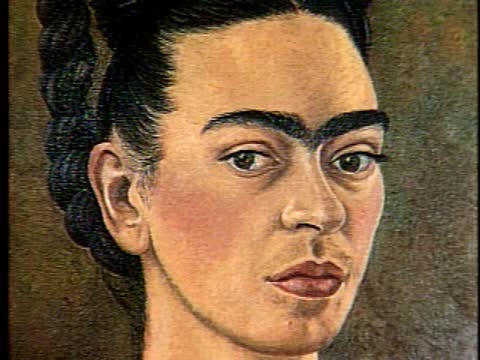
¡Colores!; Colores: Frida Kahlo: Impact of a Woman; 213; Frida Kahlo: Portrait of a Woman, Timothy Cummings
- Transcript
Thank you very much for joining us today, thank you very much for joining us today, thank you very much for joining us today, thank you very much for joining us today, thank you very much for joining us today, thank you very much for joining us today, thank you very much for joining us today, thank you very much for joining us today, thank you very much for joining us today, thank you very much for joining us today, thank you very much for joining us today, thank you very much for joining us today, thank you very much for joining us today, thank you very much for joining us today, thank you very much for joining us today, thank you very much for joining us today, thank you very much for joining us today, thank you very much for joining us today, thank you very much for joining us today, thank you very much for joining us today, thank you very much for joining us today, thank you very much for joining us today, thank you very much for joining us today, thank you very much for joining us today, thank you very much for joining us for joining us today, thank you very much for joining us today, thank you very much for joining us today, thank you very much for joining us today, thank you very much for joining us today ,Silence Oh
oh Ya no I want ya no I want korean好的 Ya no I want ya no korean好的好的 better if seniors are your baby you'll go with me She started off just as a regular little girl. Her father was of German descent, Takalo, and her mother was Mexican.
And her father had immigrated to Mexico because of all the trouble that was starting to happen in Europe. And when she was six, she had her first bout with physical pain. She had polio, and it settled in her right leg. And she was sick for a long time. She used to have, they used to do baths on her leg, well not baths, I believe. That was the therapy at that time. Then when she was a teenager, she was in a terrible bus accident that should have taken her life. But it didn't, she lived through it, and it was to haunt her the rest of her life. Her back was broken in several places. Her right leg was, the same leg that she had the polio, was pretty much crushed. Her right foot was crushed, her pelvis was crushed, her back was broken in several places. Her
collarbone was broken, and then she was skewered by a handrail through the lower back and out the vagina, and had over 30 operations in her lifetime. And it was, she was racked physically with pain for most of her life after that point. She met Diego, he was doing a mural at the preparatory school that she was attending at the time. And I guess it was like love at first sight, and she was a, would kid with her girlfriends that she was going to marry Diego and have his children. At 17 I fell in love with Diego Rivera, but my parents did not like this because they said Diego was a communist, and because he reminded them of a, a proigo, but a moigo or
dito, they said it was like the marriage between an elephant. And I suffered two great accidents in my life, one in which a street car knocked me down, and the other accident is Diego. In the eternal fruit tree, tus
frutas give their aroma, tus flores give their color growing with the joy of the wind and the blossoms, do not stop giving thirst to the tree of which you are the sun, to the tree of treasured your seed, Diego, Diego is the name of love. Oh, he was incredibly charismatic as I understand, I mean he was really ugly, he was probably over six feet tall and weighed two to three hundred pounds, I mean he was an enormous man. But women fell for him, he was always, always had girlfriends and
always, always with women around him, they just flocked to him, and it must have been his personality and his charisma, his own personal charisma, so I can figure, she used to call him the saporlana, which is frog, and he does look like a frog, he has bulging eyes and very round and kind of bulging jowls and kind of a ugly guy. He was a very popular man in Mexico, even you know, he was an artist that was already known in his day, and the Mexican people loved him, they loved his work, and I think she was probably attracted at first, in that way, and then just getting to know him and his personality, he was just always joking and laughing and having fun, and I think she was just attracted
to that. Diego was a womanizer and always was, and during their marriage he had many affairs, and I think probably the one that really finally broke the camel's back was the affair that he had with Frida's younger sister, Christina. He had been such a state of boredom and sadness that I cannot even do a drawing, the situation with Diego is worse every day.
I know, I know that some of the fault for what has happened has been mine, for not understanding what he wanted from the beginning and for having opposed something that could no longer be helped. Now, after months, a real torment for me I have forgiven my sister. I know that for the moment Diego, Diego is more interested in her than me, and that I should understand that it is not his fault, and it is I, it is I who should compromise, but
it cost me so much that you have no idea of what I, what I suffer. La Dosa Frida is a two of herself, very different in nature, the one being that Tejana, which is the dress in the native clothes, and she exposes a full heart, and the vein goes from the heart down the arm and is connected to a small picture of Diego. On the other hand, there's the more Victorian Frida, the colder, the more distant, and her heart is exposed, and it's cut in half, and the vein that comes out of that goes down her arm, and she is holding it with a pair of surgical clamps, and slowly the blood
is just dripping down onto this white pristine Victorian dress. The whole feeling is one of loose in contrast to something that's very stiff and held, taking excerpts from her diaries, she just goes on and on about how much she loves Diego. He is her son, he is her tree of life, I mean, he is everything to her, and she loves him more than anything. Frida knows that he is having affairs, and knows that if she wants to be with this man, that she has to compromise, and actually after that divorce in 1939 -1940, she was not the same Frida anymore. They would be totally independent money -wise, she would not depend on him, they would not have any
sort of sexual relationship whatsoever, and that seemed right to her. She just wanted to be with him, and he wanted to be with her, so they did. She's a fine example to women of all walks of life, people who know her, and you can look at her as the woman who never had children, the woman who suffered with Diego and his many affairs. You can look at her as the woman who was bisexual, it's not easy now, but then it must have been quite difficult. She speaks personally to each one of us, and I've had women say, tell me tell me about Frida, why should I like Frida, why should I know Frida, and I can't tell you why you should like Frida. All I can tell you is, I know why I like Frida, I know what Frida has done in my life. Generally, she's a kind of coaxing, seductive presence in my life, that when I am afraid to do something,
reading my poetry, I think, Frida would have been afraid. In that sense, she gives me the courage, and if she would have been afraid, she would have had a shot of miscal or tequila, and she would have done it anyway, so that's what I did. Like all women, I think the full moon always affects me in an interesting way, and it seems that on come full moon or come new moon, there's always a poem, or at least an itch of a poem trying to come out, and this one is called Calling Down the Moon. There are days when bitter prayers are essential, forces that we deny during the day grow until finally memories erode and give way to revelations that pull and tear body and spirit into. You can see me on those full moon nights, I pray like my mother, if my mother could only pray for
passionate hands and full wounds. On those nights, I am not a hanging ghost, nor the image of the Madonna that you have seen, I see face occasionally warmed and made real, by the candle flame that flickers and gives importance to the ordinary orphans scattered on the dresser, on the dresser bureau. You really do see me on those blue -blue nights calling down the moon. You try to believe that you've imagined me, but you can't deny me, like my mother would, if she could only know me naked on those muffled nights. I call you through stars and moon and water, my chant lacks only their names, the name of your father, the name of your mother. If I knew them, I would need only to light the candles and insert their names into my womb, to make me grow a you, to make me complete. It was Galil Garcia Marquez that coined the term, and it was for literature, magic realism,
and he said the stuff that happens in Latin America is real, but it's so unreal that the only term that could fit it would be magic realism. And he gives us great stories of little girls that die and were buried for 12 years, and then are unearthed and eventually come back to life. And he writes it in such a way that you cease to question, you suspend reality, you believe it. It is, in fact, magic realism. And that's the way, free to paint it. I mean, when she had the image of her thinking of Diego and it shows Diego in her forehead, I can understand that, because I'm compulsive, and when I'm thinking about somebody who's maybe on an airplane, that's all I'm going
to think about, even though I should be thinking other things or doing other things, in the center of my being is that image, and I'm not going to forget, not for one minute. When she painted herself, she painted broken columns, she painted horns in her neck with blood coming out. She painted tears in her eyes. So I thought, all right, I'm going to write what I really think and what I really feel as painful as it might be. And so when I would write about missing somebody or about my heart being broken, I tried to use images as I was feeling them. So I wrote this home for a friend of mine, Elena, and it's entitled Poema para Elena, por el amor del bobo. La meretita verdad es que lo amo, pobre
cita yo, en el primer instante que lo vi cuando mis ojos atrancaron con los del lo adoré, le di mi corazón, mi alma, y últimamente mi cuerpo. No supo el como quererme, se fue, el bobo se fue, y se llevó mi corazón con él, y todas estas horas sé que tiene mi corazón en huelto, en su panio colorado, rojo como mi sangre. No tengo lágrimas, pero tampoco corazón. Recently a woman asked me, does Frida haunt you? And I said, no, Frida doesn't haunt me, she blesses me. And what I mean by that is that a lot of doors have been open because of Frida and Frida's work. So I started doing these little presents, these little Christmas gifts, and they, you know, little Frida pins, little Frida earrings, and then all my male friends were a little bit envious, and they wanted to have a Frida pin. And
so I thought, but I knew that they wouldn't really use them. So I started doing these little Frida cositas, and they were personalized little shrine nets so that if I had a friend who was looking for a home, I put a little Frida image in a little cajita, a little box, and I put an image of a home, and I put little different things that symbolized specifically for him, they meant something. And so I started giving these away, and in their own generosity, they started giving me Frida images and Frida things. When she painted herself, she just, she didn't paint just the exterior of Frida, she opened up and said, here I am. She was a very vivacious and spontaneous woman. You did not see the pain when you went to visit Frida. I mean, there would be laughing and singing and just like a party always around her. You did not see the pain that maybe underneath at all she was really going through. She represents many, many
different factions of society. I think she was an artist that spoke to people. Her work definitely looked at the world from a woman's perspective, and I think a lot of women really are wanting that, are wanting to see that. This integration was a picture that I took out of her diary that was one of the last drawings that she did before she died. I think at that time, her leg had been amputated, and after her amputation, she never really fully recovered. Her spirit never really, really came back. On
my whole body, there is only one, and I want, I want to, in order, in order to have to, have to cut one. It is the one that I do not have, that I have to have, and in order to be able to, to walk, to walk, to the other one, the other one will already be dead.
For just been a big influence on my work, seeing her work, and then reading the biography on her life, and realizing how she was never afraid to really put herself into her painting, and go deep inside to a place that might be a
little frightening to herself and to other people when they see her work. It is nothing that is natural. I think it comes from a place within freedom that was probably a little bit dark, and she put it out there, and I don't think she was an artist who was afraid to bring the pain from her life into her painting, which I think it's all about. I think an artist should always not be conscious of to put something nice down on paper, or on painting, or whatever material they use. There shouldn't be any consideration on not frightening people. It should be personal, and I think when people see freedom's work, it's so personal, it's almost a bit frightening to them. Again, Frida, she was overshadowed by Diego,
who was like this Mexican muralist, who was this major icon, and yet she realized that it was important for her to go ahead and keep on with her artwork and do her small pieces that never really got much publicity till now, but she realized that it was important for herself to represent that, and not to be frightened by the fact that she was just the wife of Diego Rivera that she was important to. She wasn't afraid of the death that she finally met, or the pain that she went through, or the love and life in the celebration. I think she was very strong and into filling all of it, and not being weak or being afraid of it. I think she expressed it all, and she put it on to her painting. I think Frida did a lot of it's Frida looking at herself and really scrutinizing her whole image and the emotion behind it and everything. That's why it's so powerful. It's not just a blank image, and even some of the paintings of her behind
a mask or in a costume, it's all herself. Where she's coming from, we can all guess, but I think that's the whole idea of the artist's kind of play around with the idea and not be afraid to to really experiment with yourself. The dolls I've been doing for about six years, but I've always collected dolls, and people sometimes think dolls are just for babies, little playthings, or something, but they're actually, they've been with us as long as we've been around, and they've always played a really important role. In the Mexican churches, the dolls of Christ and the Madonna, and they're decorated with personal objects and log rows and adorn with old dresses and whatnot, and a lot of people say that my dolls look like me. I think that art has always been people constructing their own image. I try it to when I sit down to a painting or a doll, it's to put whatever I'm going through at that time, or whatever
I'm thinking of at the time, into that piece. I'm not thinking at the time that I'm having a bad time, and I'm going to do this evil portrait or puppet. It's just when I sit down to do it, it will involve and come about. I don't try into the doll's faces. When I'm creating the face, I kind of let the doll come about in its own character. She connected everybody together, I feel. I think everyone can really relate to aspects of her work, because it was a personal intimate thing for her to do a piece. And although her work was her own self in her own world, it didn't leave anybody out. I think it all kind of relate to her pieces no matter
how courageous and her paintings are. Next week, Chaco Body, the Photographs and Poetry of Chaco Canyon by Kirk Giddings and BB
- Series
- ¡Colores!
- Episode Number
- 213
- Contributing Organization
- New Mexico PBS (Albuquerque, New Mexico)
- AAPB ID
- cpb-aacip-191-86b2rmd8
If you have more information about this item than what is given here, or if you have concerns about this record, we want to know! Contact us, indicating the AAPB ID (cpb-aacip-191-86b2rmd8).
- Description
- Description
- No description available
- Media type
- Moving Image
- Duration
- 00:29:22.649
- Credits
-
-
Guest:
Perea, Alicia
Guest: Archuleta, Teresa
Guest: Cummings, Tim
Producer: Reyes, Esther
- AAPB Contributor Holdings
-
KNME
Identifier: cpb-aacip-36b170a5c24 (Filename)
Format: DVD
Generation: Original
Duration: 00:30:00
If you have a copy of this asset and would like us to add it to our catalog, please contact us.
- Citations
- Chicago: “¡Colores!; Colores: Frida Kahlo: Impact of a Woman; 213; Frida Kahlo: Portrait of a Woman, Timothy Cummings,” New Mexico PBS, American Archive of Public Broadcasting (GBH and the Library of Congress), Boston, MA and Washington, DC, accessed October 4, 2026, http://americanarchive.org/catalog/cpb-aacip-191-86b2rmd8.
- MLA: “¡Colores!; Colores: Frida Kahlo: Impact of a Woman; 213; Frida Kahlo: Portrait of a Woman, Timothy Cummings.” New Mexico PBS, American Archive of Public Broadcasting (GBH and the Library of Congress), Boston, MA and Washington, DC. Web. October 4, 2026. <http://americanarchive.org/catalog/cpb-aacip-191-86b2rmd8>.
- APA: ¡Colores!; Colores: Frida Kahlo: Impact of a Woman; 213; Frida Kahlo: Portrait of a Woman, Timothy Cummings. Boston, MA: New Mexico PBS, American Archive of Public Broadcasting (GBH and the Library of Congress), Boston, MA and Washington, DC. Retrieved from http://americanarchive.org/catalog/cpb-aacip-191-86b2rmd8