Basic Black; 3113; Conversation with bell hooks
- Transcript
Up next on Basic Black, celebrated feminist writer Belle Hooks is on a mission for love. In her latest book, Salvation, Hooks looks at how race has shaped our ideas about loving people. And in Salvation, black people in love, we are still grappling with the question of self -esteem. That's coming up next on Basic Black. With over 20 books under her belt and a prestigious nod from the Atlantic Monthly, naming her one of our nation's leading public intellectuals, Belle Hooks turns her attention to the subject of love. On a recent book tour to Boston, I
had an opportunity to talk with Miss Hooks about her latest book, Salvation. And Belle Hooks, welcome to Basic Black. I'm happy to be here because I am Basic Black. You are. And you're wearing it today too. Well, you know it's the only color. You have been described as an intellectual, a scholar, a feminist, and in reading about you a lot of things, but how do you define yourself? I usually define who I am as a seeker on the path of truth, and that takes me in all these different directions through all these different journeys, you know, feminism, Buddhism, you know, the fundamentalist Christianity of my upbringing. So that's how I see myself, a seeker on the path of truth, of love. What about in your writings though, because you run the gamut, you've talked about white supremacy, you've talked about feminism, you've talked about other things, and now you're talking about love, you haven't left any of those things behind, are you passionate about all of them? Absolutely, because I think that I'm fundamentally passionate about justice and about
freedom. And when you are passionate about those basic ethical issues of justice and freedom, it sort of moves over. I think of myself as almost being like a tree, know, where the branches keep expanding, but the root of the tree stays the same. So you are really interested in black people and how they deal with love? Oh, absolutely. I'm interested in, you know, so many of us black folks come from families where we were taught. You don't talk about certain things, don't get personal, the truth of the matter is that the more open we are, the more frank we can be in our dialogues, the greater possibility that we will know love and abiding affection in all our interactions, both in the workplace, to have nothing to hide. You know, it's a really crucial thing, and it's so amazing, I say in salvation, most black folks learn about love in the church, that that's our first school of love often, in terms of really learning an
ethic of love. In part of that first Corinthians love chapter, it's telling us what the ethic of love is. Love is kind, love is forgiving, love is generous, and that's where many of us first learn, but then we don't see it acted out in our daily lives. Yeah, I was going to ask you about that. You know, I'm obsessing about love. I feel divinely, you know, called to be the sort of high priestess of love. I write children's books now more, and I have a new children's book out that's called Homemade Love. Well, it's not quite out yet, but it's coming out, and I'm writing a series of books about boys, because I'm really concerned that we don't have enough books for boys that are alternative and exciting. you one thing about me, Darren, is that if I see an area where I feel that there's a lack of something. You know, it's like you go to the store to buy books for your little nephew, and you see that there's no book with images of little black boys that you like. That charges up my imagination, and I start thinking about, okay, you know, what do I want
to put here? Or, you know, my two books on love have been dedicated to my ex -boyfriend, and he's a grumpy guy, and one of the things that I started thinking about with him is that often boys don't learn how to deal with their bad moods as kids. They learn that it's okay to dump your bad mood on somebody else. So I have this children's book that I wrote. I tease him in honor of him. It's called Grump, Grown, Growl, Bad Mood on the Prowl. It's all about a little boy learning how to deal with his bad mood, learning that it's his responsibility and that he can't act it out on somebody else. Okay, the first book that you dealt with about love. All about love, Musicians. That's about your childhood and the lack of love you thought you received? Well, it's actually a more general discussion of the lovelessness that I think is pervasive in our culture, and I start with a story of my childhood and understanding as a child that I did not feel loved, because we like to think that all kids think they're loved. And I think kids know better than anybody when a household
is not a loving household. And you knew that right away? I knew that because of the pain that I felt, and I don't mean to say that my parents didn't care about me. They did, and they cared about me very deeply. But that sense of love that is without abuse, that is without, because one of the real points in all about love is there can be no love where there's abuse, that the two things are antithetical to one another, so that that sense of not having the love that I longed for was something that carried through as a thread in my life, and it's sort of inspiring a lot of this focus on love right now. From the first book, About Love, what I wanted to offer our nation was a sense that we can't know love unless we have better definitions of it, and that love is an action, not just a feeling, and in salvation, black people and love, I really want people to understand that as black people, we are still grappling with the question of self -esteem and self -love, and that particularly,
you see that if you work in any public school with black children, in fact one of the inspirations for salvation was that so many black children told me in the public school system, fifth graders, there's no such thing as love, and I was just really stunned by this. I thought what kind of culture creates a body of children that feel like, what are we talking about? And I'm not saying this is central just to black people, it's central to our culture as a whole, that there is a lot of lovelessness. Did you discover in talking with children, and you got the research about the book, Salvation, had you already had your mind set on the first book, Dealing with Love, or was that... The first book, part of what's dedicated to my ex -boyfriend, came out of a lot of our discussions about trying to make a relationship together where you realize that you think very differently about love, and I'd ask him, do you love me, like women are often prone to ask the men in their lives, do you love me, or their partners if they're gay,
and it was so clear that we had very different notions of what it means to love. What would he say? Well, he, like many men in our culture, felt that you could say you love somebody and lie to them, or, you know, with whole parts of yourself, and that's why I started thinking about we don't share in our culture a common definition of love, and we don't see honesty as essential to loving, and in Salvation in the chapter on black heterosexuality, I talk about the fact that lots of black men feel that it's absurd to talk about being honest in a relationship, and yet they'll be saying how much they love someone, and when you say well you can't have love in a context where you don't have trust, and trust is rooted in openness and honesty, so these are big, big struggles for us. Well, that's definitely true, but what did you come up with about what a universal definition should be, especially for us, for us as American, for us as black
people? That love is a combination of commitment, responsibility, respect, trust, and openness. It's not in care, it's not one thing, because we often have thought about love is just care, so you can care about me, Darren, we could be dating, and you could care about me, and you could still lie to me, and it wouldn't change the fact that you care about me, but if you were really going to give me love, it would have to be a combination of all of those things, and you wouldn't be able to lie to me, because the very fact that you love me would militate against your thinking that you could lie to me. Now, why do you think men are this way? Well, of course, I think it's tied to patriarchal domination, that patriarchy has taught men that it's okay to lie, and we know that women lie too, men lie more than women. And their lying has graver consequences. This is just from the books that are being done in recent years
online. Now, when you say we know that, I mean, I'm a man, I'm a black man, but are you saying that all of us, mean, there have to be situations where it's not every single one of us who are Oh, absolutely, it's never all of us. I mean, the problem is, we can just look at, for example, among black heterosexuals, the divorce rate to know that there is some dilemma that we're facing as African Americans that must be distinct from other groups in our society, just by looking at, you know, the rates of divorce. When I interview people and I talk about what those things are, dishonesty comes up again and again, and one of the things that I think is very powerful in salvation is I try to talk about survival strategies that we developed during slavery and after slavery, like the idea of wearing a mask. You know, you couldn't just be truthful all the time within this context of white supremacy and racism. So some of those survival strategies
that were good for us in the 19th century and the early part of the 20th century are disastrous for our families now, you know, for our home life now. You know, if you have a man who's bisexual, but he's with a woman, but he doesn't have safe sex with her because he can't tell the truth about his bisexuality, that can have disastrous consequences for that relationship. So the kinds of strategies that may have been useful at one point in time for us, maybe disastrous for us now, and as African Americans and black people in the diaspora, we have yet to change a lot of the survival strategies, telling kids that they should shut up and not be heard. You know, we've got a lot of little black kids in schools afraid to speak because at home they're told, shut up, know your place. Let me ask you this before we get into the children aspect. In doing your research, did you find that, did finally black men say to you, yes, I agree with you, yeah, I do lie, but here are the reasons why my life's been
set up as such, because you see what I mean, did they say that? other night I gave a big talk in New York and a black man, a beautiful black man stood up and he said, you know, women tell you, they want you to tell them the truth. But when you actually tell them the truth, they go crazy and I had to agree with him that I found myself in my relationship, long term relationship saying, tell me the truth. But then in fact, when my male partner told me the truth, I would be deranged, you know. So I think that I had to learn that you cannot ask someone to be honest because I think a lot of men and black men as well were taught as boys that mom and dad would say, tell the truth. You said something interesting. And then when you tell the truth, you'd be really punished. And I think that adult women often carry that same, tell me the truth, but then you get really punished. So the message is, don't really tell the truth. It's not rewarding. Do you think a lot of people, they'll believe that love hurts and when they love someone and it does not work out,
they get so hurt by it, it may take them years and some people never recover? Well, one point I made in all about love is that many of us grow up thinking that love is going to take away every difficulty in your life. And that the truth is that love doesn't take away difficulties. It gives you the strength to deal with difficulties. And that's a very, very different idea of love than the kind of sentimental notion of love that is so popular in our culture. What advice do you have for people, though, are on that road, who think, I've been hurt by this so many times, I've never, I've heard people say, I'm never going to go down this path again. Well, know, I hear that all the time, Darren. I'm stunned by the number of times and I hear a lot of it from men, you know, and from black men who say, oh no, I'm staying away from love. Black women say too. I think that... Right? But I hear more cynicism in terms of men who've been hurt because I think of women almost expect to be hurt by men. You know, you expect that you're going to be, strike out and then maybe if you're lucky, but a lot of men go
into, you know, to love as romantic as we think women are. And really once they're rejected or something bad happens, they may never feel they can give that trust again. Take a seat there. And I think that partially, you know, if you want to learn how to be loving, the first thing to do is to just be giving. Giving to yourself. What do you think you need? If you were in love with me, you'd want me to affirm you. You'd want me to do certain kinds of things. We need to give those things to ourselves and then we can be giving to others. Kindness, generosity, all of those things open up the door to love. Well, there are a couple of mixed messages now. Exactly. But that's the kind of stuff that we have to work on to do the work of love. Has anyone ever talked to you or criticized you about these books and mentioned that maybe you indict one sex over the other? My mother, of course, says, you know, give black men a break. But you know, I don't think so because I'm a real harsh critic there and I'm just as harsh in my critique of black women as I am in the critiques
that I bring to bear on black men. I don't think women, one of the points I make all about love is women do not love more than men or better than men. I think women are allowed to be more interested in love and to talk about it more. Do you think society is embarrassed by love? Oh, absolutely. I think any culture of domination is actually fundamentally anti -love because if you love someone, Darren, you don't want to dominate them. You know, if you love me, you want me to grow, you want me to develop, you want me to be fully self -actualized. So it's in the interest of a racist, sexist, classist society to teach people to turn their backs on love. But would you agree that there are a lot of women in society, black, white, what have you, believe or who expect the man to be that dominating person or the provider and so forth? Absolutely. I mean, one of the wonderful things about the word patriarchy is you can be a patriarch whether you're a female or a male. A lot of single family homes headed by women are patriarchal homes. The fact that there's no man
present doesn't mean that those women don't think that there should be a man present. He should be in charge. He should be doing all the work of economic provision and they should be able to sit at home and do their nails and shop and so I think a lot of people have thought that the single family black home means that it's anti -patriarchal. Sometimes those homes are more patriarchal than homes where a man is present because you can idealize what a male's presence will be if you don't have one there. It's like my sister tells me all the time, oh, you say you want a husband, but if you had one, you'd be trying to get rid of them like the rest of us. That kind of cynicism also made me write this book about love. I was so fascinated by why so many married people would denigrate married unions and I thought, well, what's going on? Why don't people celebrate love in these unions? Well, there are a lot of people who will say that's the last thing they want
because they see so many divorces today and the divorce rate is so high. Exactly. In fact, in her book, Bitch, Elizabeth Wurzel, the sort of young white woman writing about her 30 -something generation, she says, my generation is afraid to love. We've seen the divorces. We've seen the bitterness. We've seen the ongoing rage and we don't want any part of it. Now, you mentioned how children, what they see and how they react. They don't even believe in love. So you're saying that confusion begins back in childhood? Well, exactly. And all about love, the first chapter is what do we teach children about love? You know, oftentimes we teach children that if you do what I say, I will give you affection. And if you don't do what I say, I'll take my affection away. That's domination. That's not love. You know, in my children's book, Homemade Love is what it's called. It starts off saying, my mama calls me girl pie. Her sweet, sweet daddy's honey bun, chocolate dew drop, homemade love. But everything I do cannot be right because there
is no all the time right. But all the time, all hurt can be healed, all wrongs forgiven and all the world made peace again. That's just the first couple of lines. But what that says to a child is, you can make mistakes, but you will still be held in love. I won't abandon you if you make a mistake. I won't abuse you if you make a mistake. I mean, how many times do we see a parent and oftentimes a black parent out in a store speaking to a child like they're just, you know, you stupid idiot, how many times do I have to tell you? You know, that kind of verbal abuse that is shaming, that produces self -dinegration. And that's not love. And what did you find that that came from? Because generations ago or a generation ago, did we have that? I think it was much better. And this is why I think it's such a crisis. You know, black people have access to many more opportunities today. Overall, black people have more money today than ever before. yet the self -esteem of black children seems to be worse than at any other time in our nation's history. And I think
a lot of it has to do with the fact that there were a different set of values that govern people's lives, you know, 20 years ago. The fact is, you know, I don't think we would have met very many black children 20 years ago who, no matter their class, who would have said there's no such thing as love. They might even have said, well, I don't have a loving family, but I hope to have one someday. You know, now when I go into schools, kids talk only about money and the things that money can buy. When you ask them, what do you want for your life? It's all about money. But also there was a time when people would think, oh, love conquers all. Love conquers all. people, love does not conquer all. Love doesn't pay the mortgage. Love doesn't give my child a college education. And the fact is, though, love does, because if you have a child, you take a child like myself, growing up in a home that was not materially privileged. My mother hadn't finished high school. It was a two -parent home. But the fact is, the healthy self -esteem that I developed in the
context of love from my grandfather and the unconditional love that I received is the foundation on which I've built my success. And I say to people all the time, if you have a child that's from a wealthy family that's abused, they may not be any more successful than a child that's from a completely impoverished family. The fact, the difference in people's life is whether they have self -love. What about Bell Hooks? What about you? You've gone far in education. You've written over 20 books now. Did you have to come to good with that? Did you think you were successful but you were missing this love, and that's why you wanted to look inward and see what happened? Well, I don't feel so much as I was missing it because I think what I saw early, what made me a survivor, was creating the self -love for myself. But it was something because you've dedicated your life now, at this point, to dealing with love. Because, you know, Darren, it's because I write so much about domination. And at one point, as we were approaching the year 2000, I looked around me and I thought, what makes people change? What creates the most positive change in someone's
life? I think the Civil Rights Movement is one of the greatest movements for social justice that the world has ever known. And it was rooted in a love ethic. So that's kind of what took me back to love, seeing that fundamentally what most changes people in their life are the things that bring them to love, to positive affirmation of being alive and of choosing life over death. that's why I feel like this is a message that I want to share with the world and with particularly children, children of all races. Do you think our expectations of love should now change as well? I think we should have realistic expectations of love. And the most real way you can think about love is work. Love is not just about fun and games. you know, in the beginning of salvation, there is a wonderful quote by James Baldwin, who wrote many powerful things about love. But he
says in that quote that he's not talking about a sentimental notion of love. He's talking about love that's about quest and daring and love that takes courage. And that's the real vision of love that we all need to bring to our lives. How does the lack of love impact us in our professional settings? When we feel we're not loved, we feel that life doesn't have meaning. So if your life doesn't have meaning, you may find going to work, a drudgery. know, we are a nation of people who feel deeply depressed. And our depressions are often tied to our feeling of not being loved. Because love brings us into greater community and connectedness. And when you have love, you bring it to wherever you are. I I have the great fortune in my life. You asked me earlier about bell hooks. you know, the fact is, I often choose to work in settings with people I love. People often say to me, do you think it's bad to mix love and work? I said, are you kidding? If you have the good fortune to work in an
environment where you have respect and where you love the people you work with, your work life enhances your private life and vice versa. It helps you to be a more whole and dedicated human being. Bell hooks, keep holding out that hope for love. Well, you know, as I said, love is everything. It transforms everything in our lives in a powerful way. Bell hooks, in comments, please contact our website at wgbh .org. Key word, basic black. Thank
you.
- Series
- Basic Black
- Episode Number
- 3113
- Episode
- Conversation with bell hooks
- Producing Organization
- WGBH Educational Foundation
- Contributing Organization
- WGBH (Boston, Massachusetts)
- AAPB ID
- cpb-aacip-15-70zpf87s
If you have more information about this item than what is given here, or if you have concerns about this record, we want to know! Contact us, indicating the AAPB ID (cpb-aacip-15-70zpf87s).
- Description
- Episode Description
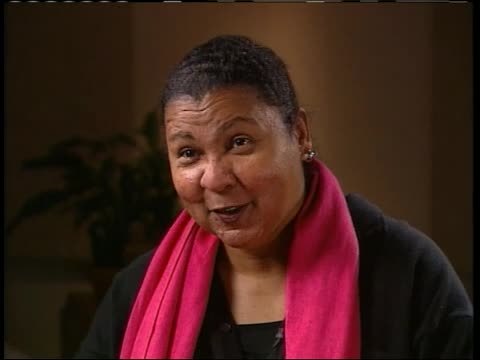
- Feminist author and social critic, bell hooks sits down with Basic Black's Darren Duarte to talk about race, love, and everything in between. Known for such works as, Ain't I a Woman: Black Woman and Feminism and Killing Rage: Ending Racism, hooks is the prolific author of more than twenty books and articles. hooks is currently touring with her new book, Salvation and teaches at the City College of New York. Darren Duarte, host of Basic Black, recently had a lively discussion with acclaimed visionary, writer, intellectual, feminist theorist and cultural critic, bell hooks. "I am happy to be here because I am Basic Black," proclaimed hooks. Known for such works as Ain't I a Woman: Black Woman and Feminism and Killing Rage: Ending Racism, hooks is the prolific author of over twenty books and articles. hooks, who is currently touring with her most recent book, Salvation, took time to visit with Duarte and the Boston community. In Salvation, the second book in a trilogy, she explores the issue of self-love, examining why many of us have not overcome internalized racial hatred. She takes a critical look at the place of love in black family life across class; at the unloving images of blackness we see in mass media daily; and the images that bombard us with the message that black people are not worthy. "I try to talk about survival strategies that we developed during slavery, and after slavery, …you couldn't just be truthful all the time within this context of white supremacy and racism," declared hooks. "I'm obsessing about love…I'm called to be a high priestess of love," said hooks. She went on to share with Duarte why she feels love is essential to our nation's progress. "It is the ultimate force that can heal and renew," she said. "I was intrigued talking with bell hooks because she reveals how passionate she is about the subjects she tackles, and she speaks openly about the personal connection to her work," said host Darren Duarte. "This interview actually made me look inward at my approach to love. We should appreciate the people who are important in our lives." hooks is a professor of English at City College and the Graduate Center of the City University of New York. She was also professor of English at Yale University and Oberlin College. Dr. hooks finished her undergraduate work at Stanford University and completed her doctorate at the University of California, Santa Cruz.
- Description
- No description available
- Broadcast Date
- 2004-03-04
- Created Date
- 2004-03-06
- Media type
- Moving Image
- Duration
- 00:25:15;01
- Credits
-
-
Producing Organization:
WGBH Educational Foundation
- AAPB Contributor Holdings
-
WGBH
Identifier: cpb-aacip-813eb1f8a29 (Filename)
Format: Betacam
Generation: Master
Duration: 00:24:40
If you have a copy of this asset and would like us to add it to our catalog, please contact us.
- Citations
- Chicago: “Basic Black; 3113; Conversation with bell hooks,” 2004-03-04, WGBH, American Archive of Public Broadcasting (GBH and the Library of Congress), Boston, MA and Washington, DC, accessed October 10, 2026, http://americanarchive.org/catalog/cpb-aacip-15-70zpf87s.
- MLA: “Basic Black; 3113; Conversation with bell hooks.” 2004-03-04. WGBH, American Archive of Public Broadcasting (GBH and the Library of Congress), Boston, MA and Washington, DC. Web. October 10, 2026. <http://americanarchive.org/catalog/cpb-aacip-15-70zpf87s>.
- APA: Basic Black; 3113; Conversation with bell hooks. Boston, MA: WGBH, American Archive of Public Broadcasting (GBH and the Library of Congress), Boston, MA and Washington, DC. Retrieved from http://americanarchive.org/catalog/cpb-aacip-15-70zpf87s